Liber II · Ancient Magic · Chapter VI: Mesopotamian Magic
Substitute King Ritual: Eclipses and Royal Doubles in Assyria
The Mesopotamian substitute king ritual (šar pūḫi): eclipse omens, Erra-imitti and Enlil-bani, Esarhaddon's royal doubles and ritual substitution.

The substitute king ritual was a Mesopotamian rite in which, when an eclipse or other omen foretold the death of the king, a substitute (Akkadian šar pūḫi, "king of substitution") was placed on the throne to receive the predicted evil, while the real king withdrew from public view. It is best documented in the seventh century BCE, in letters written by scholars to the Assyrian king Esarhaddon, which show that the substitute could reign for up to a hundred days and was then put to death so that the omen would be fulfilled in him rather than in the true ruler.
What the Substitute King Ritual Was§
Mesopotamian divination assumed that the gods wrote messages into the world: in the stars, in the livers of sacrificed sheep, in unusual births and in the behaviour of animals. These signs announced what the gods had decided, but their decisions could be appealed. Rituals known as namburbi, "its release", were designed to dissolve the evil announced by an omen, and they are outlined in Mesopotamian Magic. The substitute king ritual was the most dramatic form of this reasoning, reserved for the gravest omens, those that predicted the death of the king himself.
The principle was simple. If an omen said "the king will die", then a king would die, but it need not be the real one. A substitute was enthroned with royal regalia, and the evil omens were formally transferred to him. The rightful king lived in seclusion for the duration of the danger, avoiding public duties and addressed by a humble title. When the danger had passed, or when the period allotted to the omen had run out, the substitute's reign ended, and in the documented Assyrian cases he and a substitute queen were put to death and buried with royal honours. The real king then resumed his rule after purification.
Modern readers inevitably find the practice disturbing. The sources themselves present it as a sober religious and political necessity, managed by the king's most learned advisers, and they show some unease and grief about its human cost.
Eclipses, Omens and the Threat to the King§
The main trigger was an eclipse. The great omen series Enūma Anu Enlil, compiled in the late second millennium BCE and running to some seventy tablets, contained many omens drawn from lunar and solar eclipses. Their interpretation depended on details: the month and day, the time of night, the direction in which the shadow moved, the part of the lunar disc that was darkened and which planets were visible. Different quadrants of the moon were associated with different lands, so an eclipse might threaten the king of Akkad (Babylonia), of Subartu (Assyria), of Elam or of the west.
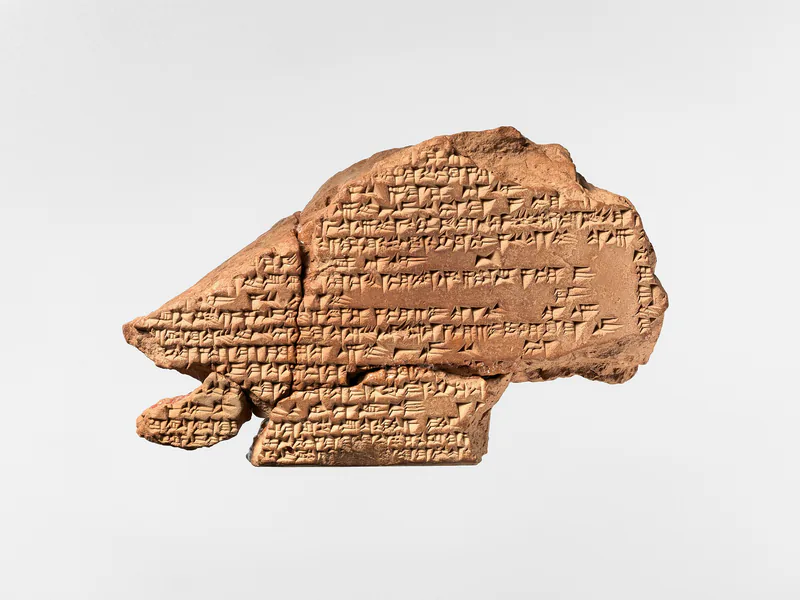
Babylonian astronomers had learned to predict eclipses with considerable accuracy by the seventh century, and the letters show scholars warning the king in advance and watching to see whether the eclipse would actually be visible and whether Jupiter, whose presence could signify safety for the king, would be seen. The growth of this learned sky-watching, discussed in Luck, Omens and Portents, was one of the foundations of later astrology, as explained in Astrology: A Complete Guide.
If the omen was judged to apply, the ritual began. Some letters suggest that the substitute was enthroned shortly before or after the eclipse and that the period could last up to a hundred days, the time within which the omen was thought to take effect.
Erra-imitti and Enlil-bani: An Old Babylonian Precedent§
The earliest account of a substitute king comes from a later Babylonian historical text, the so-called Chronicle of Early Kings, which preserves traditions about rulers of the early second millennium BCE. It records that Erra-imitti, king of Isin in the nineteenth century BCE, installed a gardener named Enlil-bani on his throne as a substitute and placed the royal crown on his head. Erra-imitti then died in his palace while sipping hot broth. Enlil-bani did not give up the throne and became king in his own right.
Enlil-bani is a historical ruler of Isin, known from his own inscriptions, which makes the story more than a fable, though it was told centuries later and its details cannot be verified. Ancient readers seem to have valued it as a cautionary tale about the ritual's dangers: the gods might accept the substitution only to take the real king anyway, and the substitute might refuse to step down. Whatever its accuracy, it shows that the idea of a royal substitute was known long before the Assyrian evidence.
The Substitute Kings of Esarhaddon§
The richest evidence comes from the reign of Esarhaddon (681–669 BCE), a king known from his letters to have been anxious about his health and deeply attentive to omens. The royal archives of Nineveh preserved hundreds of letters and reports from his scholars: astrologers, exorcists (āšipu), diviners and physicians. The Finnish Assyriologist Simo Parpola edited and analysed these letters and showed that the substitute king ritual was performed several times during Esarhaddon's reign and at least once under his son Ashurbanipal.
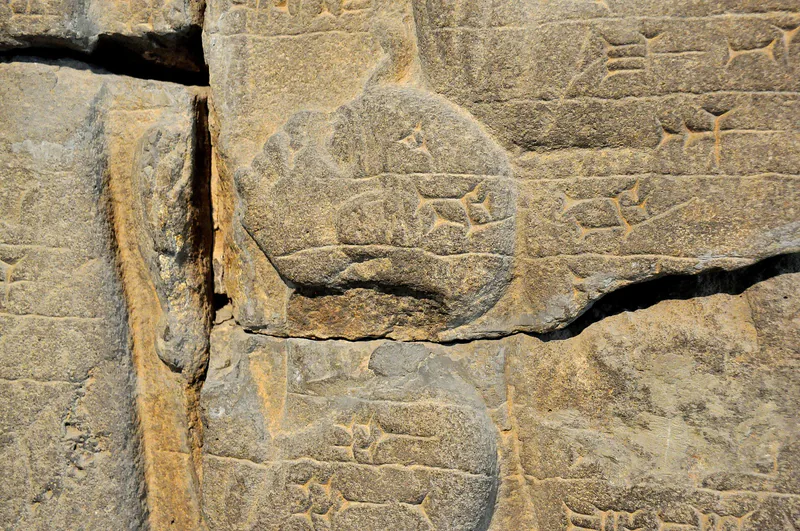
The letters describe practical details. The substitute was enthroned, often in a Babylonian city such as Akkad, since the omen frequently concerned "the king of Akkad", and Esarhaddon ruled Babylonia as well as Assyria. The omens were read out and written down in his presence so that they would attach to him. The real king was referred to as "the farmer" during the period and stayed out of sight, while scholars performed purifications and namburbi rites on his behalf.
The best-known letter, written by the royal agent Mar-Issar around 671 BCE, reports the death of a substitute named Damqî, son of a high temple official of Akkad. It states that he had "ruled" Assyria, Babylon and all the lands, and that he and his queen had gone to their fate as substitutes for the king and his household. Mar-Issar adds that the burial was carried out and that the prescribed rituals were completed. Some scholars have suggested that the choice of a member of a prominent Babylonian family may also have served political ends, removing a potential rival, though the letters do not say so directly.
The Logic of Substitution in Mesopotamian Magic§
The substitute king belongs to a wider pattern. Mesopotamian healing and exorcistic rites frequently used substitutes to carry away illness or evil: figurines of clay or dough, animals such as a young goat placed beside a sick person, or objects that were then destroyed or deposited. The practice of making images to stand in for persons, whether to harm, protect or cleanse them, is examined in Image Magic: Wax Figures and Poppets, and the great anti-witchcraft ritual described in Maqlû burned figurines of witches as substitutes for the real offenders.
Mesopotamian thought framed such rites partly in legal terms. An omen was a verdict of the gods, and the ritual was a kind of appeal or a means of satisfying the verdict in another way. The substitute fulfilled the sentence so that the gods' word was not broken. This logic made the ritual coherent within its own world, even as it reveals the extent to which royal life was valued above all others.
Related Hittite rituals from Anatolia also used living and figurine substitutes for the king, suggesting that the idea circulated widely in the ancient Near East, though the Hittite texts differ in detail and do not always involve the death of the substitute.
Echoes in Alexander's Babylon and Modern Theories§
Greek historians preserved what may be a distorted memory of the ritual. Arrian and Diodorus relate that in Babylon in 323 BCE, shortly before Alexander the Great's death, an unknown man sat on the king's throne wearing his robes and diadem; questioned, he gave no clear explanation, and on the advice of seers he was put to death. The French Assyriologist Jean Bottéro and others have interpreted this episode as a substitute king rite performed by Babylonian priests, misunderstood by Greek observers.
In the late nineteenth century, James George Frazer's The Golden Bough drew on classical reports of mock kings at Babylonian festivals to build a theory of dying kings and seasonal sacrifice. The publication of the Assyrian letters in the twentieth century replaced Frazer's speculation with documentary evidence and showed that the ritual was tied to specific omens rather than to an annual festival. The substitute king is now one of the clearest cases in which historians can follow, through first-hand correspondence, how divination, magic and politics worked together at an ancient royal court, and how the religious view described in Mesopotamian Religion shaped real decisions of state.
Frequently asked questions§
What was the substitute king ritual?§
It was a Mesopotamian rite in which a substitute was enthroned to receive omens predicting the king's death, while the real king lived in seclusion. In Neo-Assyrian practice the substitute was put to death at the end of his reign so that the omen was fulfilled.
Why did eclipses lead to substitute kings?§
According to the omen series Enūma Anu Enlil, certain eclipses foretold the death of a king. Because omens were regarded as warnings that could be diverted, scholars arranged for a substitute to take the king's place and absorb the predicted evil.
Who was Enlil-bani?§
Enlil-bani was a king of Isin in the nineteenth century BCE. According to a later chronicle he was a gardener placed on the throne as a substitute by King Erra-imitti, who then died suddenly, leaving Enlil-bani as the real king.
Was the substitute king always killed?§
In the documented Assyrian cases of the seventh century BCE, the substitute and his queen died at the end of the period. The Erra-imitti story shows a different outcome, and related Hittite rituals do not always involve the substitute's death.
Sources and further reading§
- Letters from Assyrian and Babylonian Scholars — Simo Parpola, 1993
- Astrological Reports to Assyrian Kings — Hermann Hunger, 1992
- Mesopotamia: Writing, Reasoning, and the Gods — Jean Bottéro, 1992
- Mesopotamian Astrology: An Introduction to Babylonian and Assyrian Celestial Divination — Ulla Koch-Westenholz, 1995
- The Heavenly Writing: Divination, Horoscopy, and Astronomy in Mesopotamian Culture — Francesca Rochberg, 2004
- The Golden Bough — James George Frazer, 1890