Liber XXXII · Thelema · Chapter IV: Thelemic Doctrine
Thelemic Doctrine: True Will, the Aeons and the Great Work
Thelemic doctrine explained: True Will and the Law of Thelema, love under will, Nuit and Hadit, the Aeon of Horus, the Holy Guardian Angel and ethics.

Thelemic doctrine is the body of teaching that Aleister Crowley and his successors derived from The Book of the Law (1904): the Law of Thelema ("Do what thou wilt"), the idea of the True Will, the cosmology of Nuit and Hadit, the succession of aeons, and the Great Work of attaining the Knowledge and Conversation of the Holy Guardian Angel. It is less a fixed creed than a set of principles that Thelemites interpret in mystical, magical, philosophical or psychological terms.
True Will and the Law of Thelema§
The opening formula of Thelemic correspondence, "Do what thou wilt shall be the whole of the Law," is easily misread as an invitation to do whatever one likes. Crowley insisted on the opposite. The will in question is the True Will, the deep purpose implicit in a person's nature, which may differ sharply from conscious desires shaped by fear, habit or social pressure. Discovering it requires self-examination, discipline and, in Crowley's system, spiritual attainment. Once known, it is to be followed without "lust of result," that is, without attachment to the outcome, a principle Crowley related to the teaching of the Bhagavad Gītā on action without craving.
From this follows a characteristic Thelemic view of sin. The Book of the Law calls restriction the only sin: the thwarting of a being's true nature, whether by others or by oneself. A person doing their True Will is, in Crowley's image, like a star moving in its proper orbit, which does not need to collide with the orbits of others. The phrase "Every man and every woman is a star" expresses this sovereignty and the equality of all individuals in principle.
Love Under Will§
The Law has a second half: "Love is the law, love under will." Crowley read love broadly as the drive toward union, between lovers, between subject and object, between the individual and the universe, and treated every act of experience as a kind of marriage of opposites. The qualification "under will" means that such union should serve the True Will rather than be blind. Thelemites note that the Greek thelēma (will) and agapē (love) share the gematric value 93, the basis of the common greeting "93" and "93 93/93" in letters.
Nuit, Hadit and Ra-Hoor-Khuit§
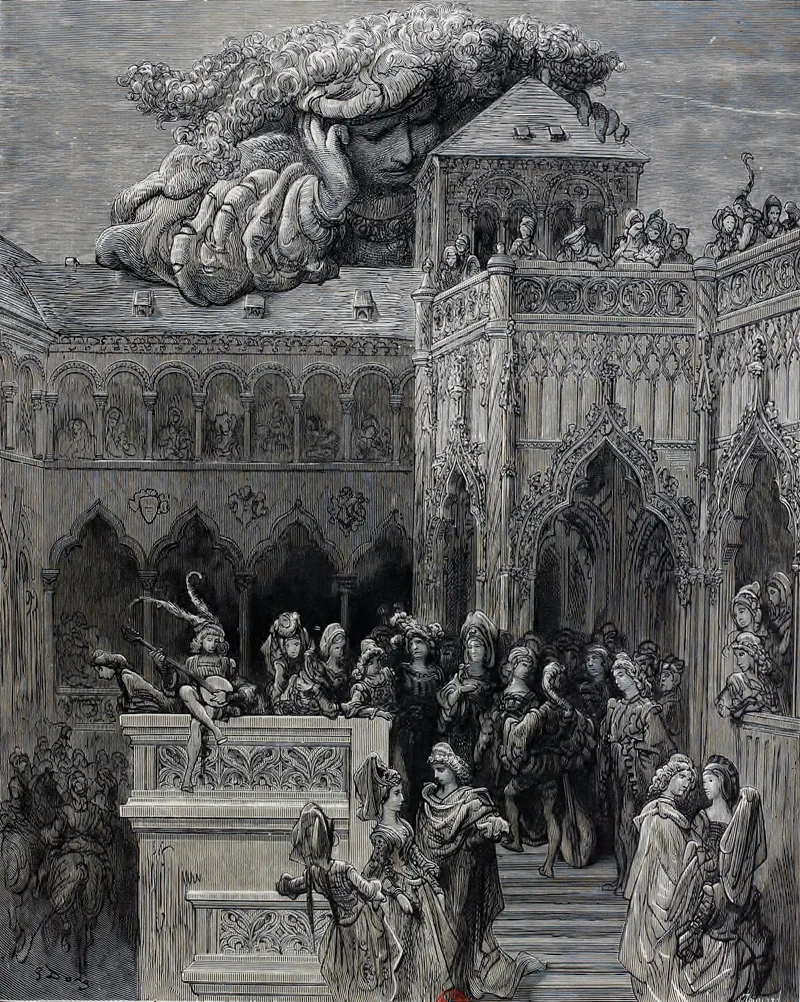
The three chapters of The Book of the Law are spoken by three deities, discussed in Thelema and The Book of the Law. Doctrinally they are often read as metaphysical principles. Nuit, the star-goddess drawn from the Egyptian sky-goddess Nut, is infinite space and the totality of possibility. Hadit is the infinitely small point at the core of every being, the principle of individual consciousness and motion. Their interaction produces experience; Crowley's Liber Aleph and his commentaries describe the universe as Nuit explored by Hadit. Ra-Hoor-Khuit, a form of Horus, is the active manifestation of the new age, warlike, solar and self-assertive, and with his passive twin Hoor-paar-kraat forms the composite Heru-ra-ha.
These figures can be approached devotionally, as gods; mystically, as descriptions of the relationship between the self and the absolute; or psychologically. Crowley himself moved among these interpretations, and modern Thelemites follow him in doing so.
The Aeons: Isis, Osiris and Horus§
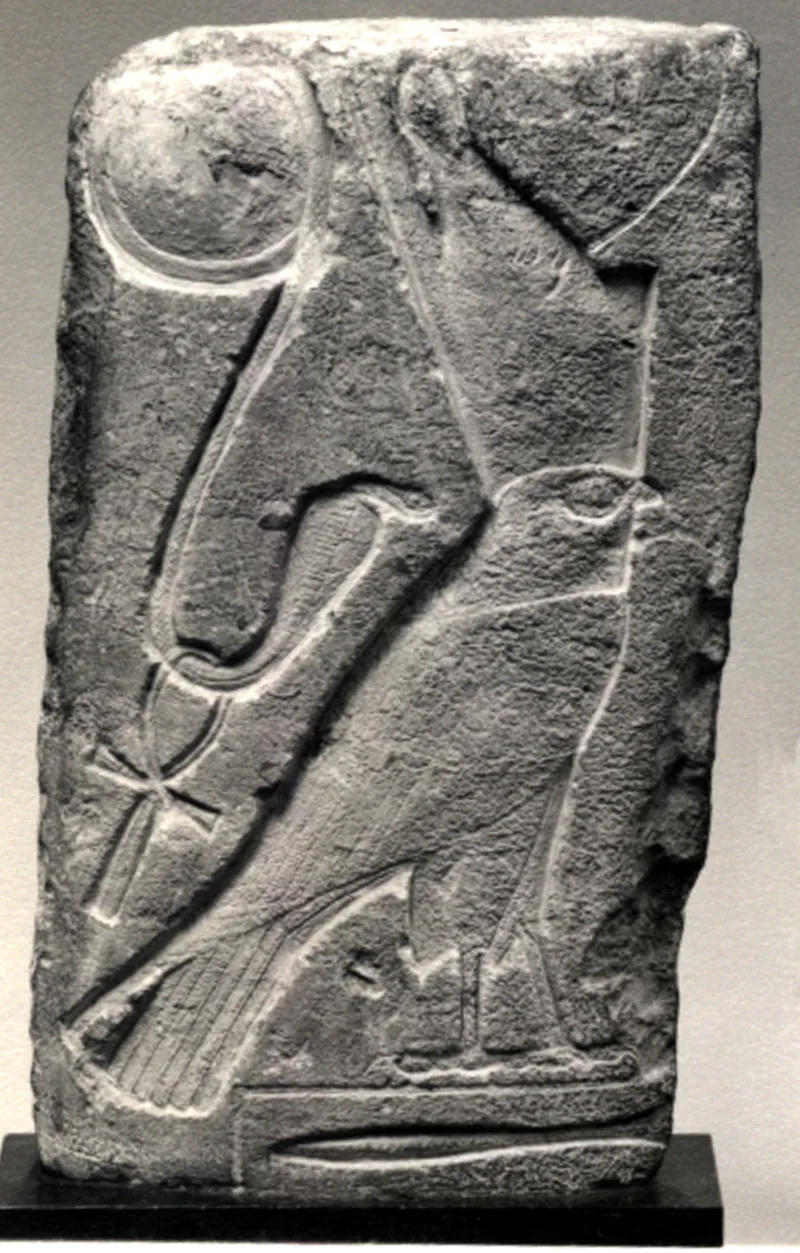
Crowley taught that human history passes through aeons of roughly two thousand years, each governed by a "formula." The Aeon of Isis was an age of the mother, centred on nature and fertility. The Aeon of Osiris, the age of the father, was characterised by the dying and resurrected god, sacrifice and patriarchal religion, including Christianity. The Aeon of Horus, the crowned and conquering child, began with the reception of The Book of the Law at the vernal equinox of 1904, an event Crowley called the Equinox of the Gods. It is an age of the individual, of growth rather than death and resurrection, and Crowley saw its violent beginnings reflected in the world wars.
Crowley's aeonic scheme drew on the nineteenth-century idea of a primeval matriarchy and on Golden Dawn ritual, where the "Equinox" ceremony marked the change of officers. Later Thelemites added refinements: Crowley's student Charles Stansfeld Jones (Frater Achad) proclaimed a forthcoming Aeon of Ma'at, of justice and balance, and the Typhonian current of Kenneth Grant developed its own aeonic speculations. Most Thelemites hold to the Horus aeon as the present age.
The Great Work and the Holy Guardian Angel§
For the individual, Thelemic doctrine centres on the Great Work, a term borrowed from alchemy. Its first major goal is the Knowledge and Conversation of the Holy Guardian Angel, a phrase Crowley took from the grimoire The Book of Abramelin, which presents itself as a fifteenth-century work and describes a long retreat culminating in communion with one's guardian angel. In Thelema the Angel is closely linked with the True Will: to know the Angel is to know one's Will. Crowley treated the Angel at times as an objective being and at times as the higher self, refusing to settle the question.
Beyond this lies the crossing of the Abyss, the gulf between the lower sefirot of the Tree of Life and the supernal triad. The adept must surrender the ego entirely, confronting the demon of dispersion, Choronzon, and pouring their blood, in a symbolic sense, into the cup of Babalon, the sacred feminine figure of the Vision and the Voice. Those who succeed become Masters of the Temple. The grades of this path in the A∴A∴ are described in Tarot and Qabalah in Thelema.
Magick and Scientific Illuminism§
Crowley defined magick as the science and art of causing change to occur in conformity with will, a definition broad enough to include any purposeful act. The motto of The Equinox, "The method of science, the aim of religion," expressed his programme of Scientific Illuminism: spiritual claims were to be tested by experiment, recorded in diaries and verified by experience, rather than accepted on faith.
Thelemic Ethics, Liber OZ and Interpretation§
Thelema's ethics emphasise individual liberty and responsibility. Liber OZ (1941), a one-page declaration, lists the rights of each person to live, work, play, think, speak, love and die as they will. Crowley's essay "Duty" sets out obligations to oneself, to others, to humanity and to all beings, notably not to interfere with the wills of others. Critics have pointed to the elitist and violent passages of The Book of the Law, particularly its third chapter, and to Crowley's own conduct; Thelemites respond with a range of interpretations, from literal to allegorical.
A short text appended to The Book of the Law, known as the "Comment" or "Tunis Comment" (1925), instructs readers to destroy the book after a first reading and forbids discussing its contents, telling each to refer to Crowley's writings. Thelemites interpret this variously, but it has encouraged an individualistic culture in which no authority can impose an official reading of the book. Scholars such as Marco Pasi have described Thelema as a modern religion of the self, which combines older esoteric materials with characteristically twentieth-century themes of autonomy and liberation. For an overview of the movement see What Is Thelema? and Aleister Crowley.
Frequently asked questions§
What is True Will in Thelema?§
True Will is a person's authentic purpose or course in life, as distinct from passing desires. Thelemites believe that discovering and following it is the essence of the Law of Thelema.
Does "do what thou wilt" mean anything goes?§
No. Crowley distinguished the True Will from whim and emphasised discipline, self-knowledge and non-interference with the wills of others. The Law is balanced by the principle "love under will."
What is the Holy Guardian Angel?§
In Thelema the Holy Guardian Angel is the spiritual being or higher self whose "Knowledge and Conversation" is the first great goal of the adept. The term comes from the grimoire The Book of Abramelin.
What is the Aeon of Horus?§
It is the present age in Thelemic doctrine, which Crowley believed began in 1904 with The Book of the Law. It follows the Aeons of Isis and Osiris and is associated with the individual, growth and self-realisation.
Sources and further reading§
- The Law Is for All — Aleister Crowley, ed. Israel Regardie, 1975
- Magick: Liber ABA, Book Four — Aleister Crowley, ed. Hymenaeus Beta, 1997
- Liber Aleph vel CXI: The Book of Wisdom or Folly — Aleister Crowley, 1962
- The Book of the Sacred Magic of Abramelin the Mage — S. L. MacGregor Mathers (trans.), 1898
- Aleister Crowley and the Temptation of Politics — Marco Pasi, 2014
- Aleister Crowley and Western Esotericism — Henrik Bogdan and Martin P. Starr (eds.), 2012