Liber II · Ancient Magic · Chapter II: Amulets & Talismans
Ancient Egyptian Amulets: Scarab, Wedjat Eye, Djed and Ankh
Ancient Egyptian amulets explained: the scarab, wedjat eye, djed, tyet and ankh, their materials and colours, and how they protected the living and the dead.

Ancient Egyptian amulets were small objects, worn on the body or placed in the wrappings of the dead, that were believed to protect, heal and grant particular powers through their shape, material, colour and the words spoken over them. From prehistoric beads to the gold and stone amulets laid on royal mummies, they were among the most common products of Egyptian craft, and forms such as the scarab, the wedjat eye and the ankh remain the best-known magical images of the ancient world.
Egyptian Words for Amulets and Protection§
The Egyptian language had several words that modern scholars translate as "amulet", and their meanings show what Egyptians expected such objects to do. Sa and meket both carry the sense of protection; nehet is connected with guarding or keeping safe; and wedja relates to the root for being sound, whole and well, the same root that appears in the name of the wedjat eye. An amulet was therefore not only a lucky charm but a means of keeping the wearer whole against the many forces that could harm body and soul.
These words belong to the wider Egyptian concept of heka, the creative power used by gods, priests, physicians and ordinary people alike. As explained in What Is Ancient Magic?, Egyptians did not draw a sharp line between this power and religion: the same priest who recited temple hymns might prepare a protective amulet. Healing texts often end by instructing that a spell be recited over a knotted thread tied to the patient.
The earliest pendants that seem to have had an amuletic purpose come from the predynastic cultures of Upper Egypt, before about 3100 BCE; by the Late Period (664–332 BCE) a richly equipped mummy might carry dozens of different amulets.
Materials, Colours and the Making of Amulets§
Egyptians believed that the substance of an amulet contributed to its effect. The most widespread material was faience, a glazed quartz-based ceramic that could be pressed into moulds and mass-produced in shades of blue and green. Blue-green was the colour of vegetation, the Nile flood and new life, so the cheap faience amulet already spoke of regeneration.

Stones were chosen with care. Red carnelian and red jasper evoked blood, energy and the fierce protective power of goddesses; dark blue lapis lazuli, imported over great distances from what is now Afghanistan, recalled the night sky and was said in myth to form the hair of the gods; turquoise and green feldspar stood for freshness and growth. Gold, the incorruptible metal, was associated with the flesh of the gods and the sun. Several chapters of the Book of the Dead specify the material an amulet should be made of, which shows that the choice was a matter of ritual correctness, not only of taste or wealth.
Funerary rubrics instruct that a spell be spoken over an amulet of a particular stone before it is placed on the mummy. Workshops produced amulets in large numbers, and faience moulds survive from several sites, but most Egyptians owned only a few simple pieces: a faience eye, a small scarab or a household god on a string.
The Scarab and the Heart Scarab§
The scarab is the dung beetle, which rolls a ball of dung across the ground and from which young beetles seem to emerge as though self-created. Egyptians linked it with the god Khepri, the rising sun who pushes the solar disc into the sky each morning, and with the verb kheper, "to come into being". A scarab amulet therefore carried the idea of renewal and self-generating life.
Scarabs became extremely common from the Middle Kingdom onward, their flat undersides engraved with names, titles or good-luck formulas, so that they served both as seals and as amulets.
The heart scarab was a special funerary form. Egyptians believed that the heart, the seat of thought and memory, would be weighed in the judgement of the dead against the feather of Ma'at. A large scarab, often of dark green or black stone, was inscribed with a version of Book of the Dead spell 30B, which asks the heart not to stand up as a witness against its owner before the divine tribunal. It was placed over the chest of the mummy. The judgement scene and its spells are discussed in The Egyptian Book of the Dead.
The Wedjat Eye, Djed Pillar, Tyet and Ankh§
The Wedjat Eye§
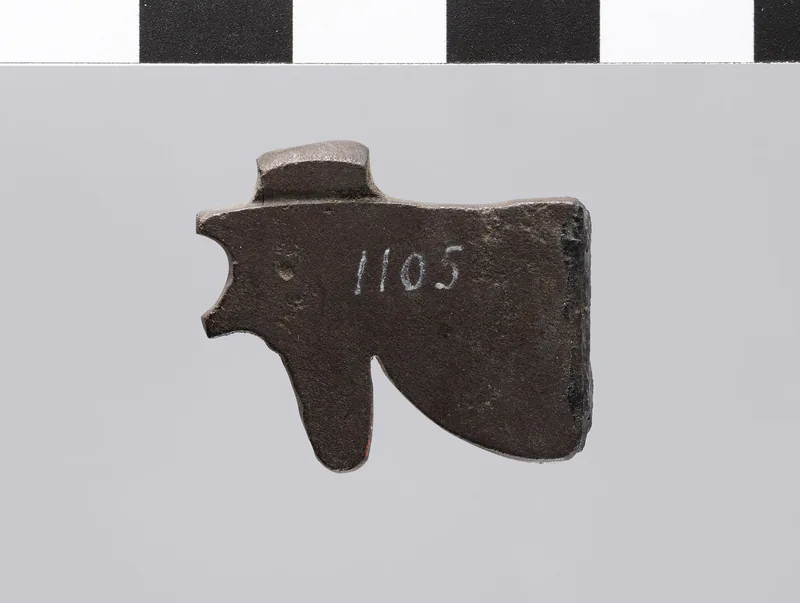
The wedjat, or "sound eye", represents the eye of Horus, which in myth was injured by Seth during their struggle for the throne and later restored, in most versions by Thoth or Hathor. It became an image of healing and completeness. Wedjat amulets, with falcon markings beneath a human eye, were worn by the living and placed on the dead in very large numbers.
The Djed Pillar and the Tyet§
The djed is a pillar with horizontal bars at its top, interpreted in the New Kingdom as the backbone of Osiris and a symbol of stability and endurance. Book of the Dead spell 155 is to be spoken over a djed of gold set at the throat of the deceased. The tyet, a knotted cloth sometimes called the "knot of Isis", was linked to the goddess Isis and to protective blood; spell 156 calls for it to be made of red jasper. Djed and tyet often appear together on amulets, furniture and temple decoration as a paired image of Osiris and Isis.
The Ankh§
The ankh, the hieroglyph for "life", is the most famous Egyptian symbol today. In Egyptian art gods hold it to the nose of the king, giving him the breath of life, and it appears in names, mirrors, vessels and jewellery. Ankh-shaped amulets exist, but specialists note that they are less common among excavated funerary amulets than the sign's later fame might suggest; its power was expressed as much through writing and decoration as through pendants.
Amulets for the Living: Childbirth, Children and the Household§
Many amulets served the dangers of daily life. Pregnancy, childbirth and infancy were the times of greatest risk, and the deities most often worn for protection were those connected with them. Bes, a dwarf-like god with a lion's mane and protruding tongue, and Taweret, a goddess combining hippopotamus, lion and crocodile, guarded mothers and infants. Their images appear on amulets, on carved ivory "wands" from the Middle Kingdom used in rites around birth, and on beds and headrests. Practices around them are described in the spellbook entry on Bes and Taweret house protection.
Other amulets imitated parts of the body or depicted animals such as the frog of the birth goddess Heqet, the cat of Bastet and the falcon of Horus.
A distinctive form of written protection arose in the Third Intermediate Period, around the eleventh to ninth centuries BCE. These are the so-called oracular amuletic decrees: narrow strips of papyrus on which a god such as Amun, Mut or Khonsu promises, in the form of a divine decree, to protect a named child from illnesses, demons, dangerous animals, the evil eye and the anger of other gods. The strip was rolled tightly, placed in a small case and worn around the neck. By this period an amulet could be a document as well as an image.
Amulets on the Mummy§
Funerary use is the best-documented side of Egyptian amulets, because tombs preserve them. Embalmers placed amulets in particular positions within the layers of linen: the heart scarab on the chest, the djed and tyet at the throat, wedjat eyes over the embalming incision, and from the Late Period a small "two-finger" amulet of dark stone near the abdomen. Papyri and coffin decorations sometimes list or depict which amulets belonged where, and the arrangement on well-excavated mummies confirms that the placements followed accepted rules, though these varied by period and region.
The wrappings of Tutankhamun, opened in 1925, contained well over a hundred items of jewellery and amulets, and even modest burials often included a few faience pieces. The purpose was the same as that of the spells in the Pyramid Texts and the Book of the Dead: to protect the body, which the soul needed to return to, and to equip the deceased with the powers of the gods for the dangerous passage into the next world. The religious background is described in Ancient Egyptian Religion.
Egyptian Amulets after the Pharaohs§
Egyptian amulets did not disappear with the end of native rule. Under the Ptolemies and Romans they continued to be made, and Egyptian images such as the scarab, Harpocrates and the wedjat entered the repertoire of Greco-Roman magical gems. The Greek Magical Papyri, written in Roman Egypt, instruct practitioners to engrave stones and inscribe metal sheets in ways that combine Egyptian, Greek and Jewish elements, and the broader history of these objects is traced in Amulets and Talismans. Egyptian protective rituals also continued in other forms, among them the cursing of enemies discussed in Egyptian Execration Texts.
Renaissance collectors read Egyptian amulets through Hermetic speculation until Champollion's decipherment of 1822, and in the nineteenth century scarabs were mass-produced for travellers, so many "ancient" scarabs in private hands are modern. The ankh and the eye of Horus were later adopted by occult orders, the 1960s counterculture and modern Kemetic groups; these modern uses should be kept distinct from the ancient context.
Frequently asked questions§
What was the most popular amulet in ancient Egypt?§
The scarab and the wedjat eye were probably the most widespread, produced in huge numbers in faience and stone from the Middle Kingdom onward. Figures of protective deities such as Bes and Taweret were also very common among the living.
What was a heart scarab used for?§
A heart scarab was a large scarab placed on the chest of a mummy, usually inscribed with Book of the Dead spell 30B. The spell asks the heart not to testify against the deceased when it is weighed in the judgement of the dead.
What does the Eye of Horus amulet mean?§
The wedjat or Eye of Horus recalls the myth in which Horus' eye was damaged by Seth and then healed. As an amulet it stood for wholeness, healing and protection, and it was worn by the living and placed on the dead.
Sources and further reading§
- Amulets of Ancient Egypt — Carol Andrews, 1994
- Magic in Ancient Egypt — Geraldine Pinch, 1994
- The Mechanics of Ancient Egyptian Magical Practice — Robert K. Ritner, 1993
- Amulets: Illustrated by the Egyptian Collection in University College, London — W. M. Flinders Petrie, 1914
- Oracular Amuletic Decrees of the Late New Kingdom — I. E. S. Edwards, 1960
- The Ancient Egyptian Book of the Dead — R. O. Faulkner, 1985