Liber XXXI · Taoism & Chinese Religion · Chapter VII: Mo Pai & Neigong
The Magus of Java: Kosta Danaos, John Chang and Mo Pai
The Magus of Java explained: how Kosta Danaos met John Chang, what his books The Magus of Java and Nei Kung say about Mo Pai, and how to read them.

The Magus of Java: Teachings of an Authentic Taoist Immortal (2000) is a first-person book by Kosta Danaos describing his apprenticeship to John Chang, a Chinese-Indonesian healer in Java, and the secret neigong school called Mo Pai. Together with its sequel, Nei Kung: The Secret Teachings of the Warrior Sages (2002), and the Blair brothers' documentary Ring of Fire (1988), it is the main source for everything the wider world knows about Chang and his tradition.
Ring of Fire and the First Footage of John Chang§
Lorne Blair (1945–1995) and his brother Lawrence Blair spent much of the 1970s and 1980s travelling through the Indonesian archipelago, filming its peoples, rituals and wildlife. The result was Ring of Fire, a series of documentary films released in 1988 and accompanied by a book, Ring of Fire: An Indonesian Odyssey. The series is a mixture of anthropology, adventure and the brothers' strong interest in spirituality and the paranormal, and it includes encounters with healers, shamans and mystics across the islands.
In one sequence the Blairs visit a man they call John Chang, a Chinese-Indonesian healer. On camera he appears to set a piece of paper smouldering by holding it between his hands, and the brothers react with evident shock when he touches them, describing the sensation as something like electricity. The footage is brief and was filmed by sympathetic visitors rather than under test conditions, but it was memorable, and in the age of VHS copies and, later, online video it reached a large audience among martial artists and seekers. It is the point from which the modern story of Mo Pai begins.
Kosta Danaos and the Search for a Master§
According to his own account, Kosta Danaos saw footage of Chang, was struck by it, and set out to find him in Java. The books present Danaos as a European, of Greek background, with long experience of martial arts, who was working in Indonesia at the time. He describes repeated visits, initial reluctance on Chang's part, and his eventual acceptance as a student, along with the disciplines, setbacks and doubts of training. "Kosta Danaos" is the name on the books; little about the author can be confirmed from other sources, which is not unusual for writers on esoteric subjects who wish to keep a private life.
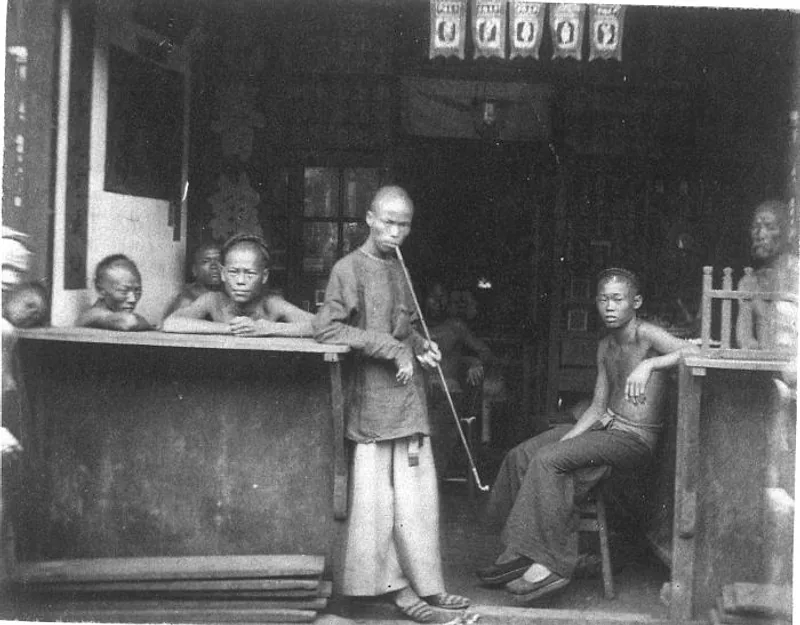
Danaos writes as a convert who wants to communicate his astonishment and to persuade a sceptical readership. He describes witnessing Chang's abilities close up on many occasions, sometimes in front of other students or visitors, and he presents his own progress, and its limits, as further evidence that the system is real. These are the features that made the book compelling to many readers and that make it difficult to use as a historical source.
The Magus of Java (2000): Contents and Narrative§
Published by Inner Traditions, a press specialising in spirituality and esotericism, The Magus of Java combines several kinds of writing. Much of it is memoir: Danaos's arrival, his meetings with Chang and his family, his training sessions and conversations. Interwoven with this are accounts of demonstrations, in which Chang is said to produce heat and current, to move or affect objects, and to diagnose and heal patients with qi, together with stories about other masters and about the lineage's past.
The book also sets out, in outline, the Mo Pai system of levels: the accumulation of yang qi in the lower dantian, the later introduction of yin qi, and the higher stages concerned with spirit and immortality, which are summarised in The Levels of Mo Pai Neigong: Yin and Yang Qi. Danaos repeatedly stresses that he is not giving a manual and warns readers against trying to practise on their own. Finally, there are passages of speculation in which he tries to reconcile what he saw with modern physics, describing qi in terms of bioelectricity, fields and energy. These speculations are his own, and they should be distinguished from the Chinese concepts they attempt to translate.
Nei Kung (2002): The Second Book§
Nei Kung: The Secret Teachings of the Warrior Sages returns to the same material at greater length. It gives more space to theory, to the place of Mo Pai among Chinese traditions, and to Chang's life and teaching circle, and it reflects on the reception of the first book and on the questions readers had raised. Danaos also says more about the ethical and spiritual framework of the training: the discipline required, the dangers of misuse, and the idea that the higher levels concern the soul's fate after death.

The title uses nei kung, the Wade-Giles spelling of neigong, "internal work", a general term in Chinese martial arts and self-cultivation for training that develops the body's inner resources rather than its outward strength. Linking Mo Pai to this broad category places it within a recognisable family of practices, surveyed in Qigong and the Internal Arts, while the books continue to insist that it is a distinct and rare lineage.
The Chinese-Indonesian Context: Healers, Temples and Java§
Chang's world, as the books describe it, is that of the Chinese communities of Java, who have lived in the archipelago for centuries and built their own institutions: temples (klenteng) honouring Buddhist, Taoist and popular deities, clan associations, schools of Chinese martial arts and traditional physicians. Under Indonesia's New Order government (1966–1998), public expressions of Chinese culture were heavily restricted, and much religious and cultural life continued privately within families and small groups. A secretive, family-centred lineage of the kind Danaos describes would not be out of place in that setting.
Java also has its own rich traditions of mysticism and spiritual power. The anthropologist Clifford Geertz's The Religion of Java (1960) described the healers (dukun), mystical societies and ideas of inner potency that shaped Javanese religious life. Danaos's account touches on this wider landscape, in which claims of extraordinary power were part of everyday religious talk. Readers interested in comparable traditions may turn to the library's article on shamanism and on Chinese ideas of immortality and the elixir.
Reading the Books Critically§
How should a careful reader approach The Magus of Java? It is best understood as a work of spiritual testimony. Danaos reports what he says he saw and was told, interpreted through his own beliefs and hopes, and he is open about wanting readers to accept the reality of qi. Like many classics of the genre, from Alexandra David-Néel's Tibetan travels to Carlos Castaneda's very different and now discredited books, it invites readers to share an initiation, and its persuasive power depends on the narrator's sincerity rather than on evidence that can be checked.
Several features call for caution. The lineage history rests on oral tradition passed through Chang to Danaos and cannot be compared with Chinese records. The demonstrations were witnessed by friendly observers, without the controls that would rule out error or trickery. The theoretical chapters mix traditional Chinese terms with modern scientific vocabulary in ways that a historian of Chinese thought would not recognise as traditional. None of this proves the books false; it means their claims remain claims. The issues are explored in Mo Pai, Evidence and Scepticism, and the system as a whole is introduced in Mo Pai: The Neigong School of John Chang.
Frequently asked questions§
Is The Magus of Java a true story?§
It is presented as a true account of the author's experiences, but its central claims, about Chang's abilities and the antiquity of Mo Pai, cannot be confirmed from independent sources. It is best read as personal testimony rather than as established history.
Who are the Blair brothers?§
Lorne and Lawrence Blair were British filmmakers who documented the cultures of Indonesia over two decades, producing the series Ring of Fire (1988) and a companion book. Their footage of John Chang inspired Danaos's search.
What is the difference between The Magus of Java and Nei Kung?§
The Magus of Java is mainly a memoir of meeting and training with Chang. Nei Kung revisits the same material with more theory, more on the lineage and its ethics, and responses to questions raised by the first book.
Do the books teach Mo Pai practice?§
No. They describe the levels in outline and repeatedly warn against practising without a teacher. They are not training manuals.
Sources and further reading§
- The Magus of Java: Teachings of an Authentic Taoist Immortal — Kosta Danaos, 2000
- Nei Kung: The Secret Teachings of the Warrior Sages — Kosta Danaos, 2002
- Ring of Fire: An Indonesian Odyssey — Lawrence Blair and Lorne Blair, 1988
- The Religion of Java — Clifford Geertz, 1960
- Qigong Fever: Body, Science and Utopia in China — David A. Palmer, 2007
- Chinese Martial Arts: From Antiquity to the Twenty-First Century — Peter A. Lorge, 2012