Liber XXVII · Sikhism · Chapter IV: The Khalsa
Sikh Rehat Maryada and the Rahitnamas: The Khalsa Code
The Sikh Rahit, or code of conduct: the eighteenth-century rahitnamas, the Sikh Rehat Maryada of 1950, the four kurahits, tankhah and modern debates.

The Rahit (also spelled Rehat) is the code of conduct of the Khalsa, the order of initiated Sikhs. It was first set down in a series of manuals called rahitnāmās, written mostly in the eighteenth and nineteenth centuries and attributed to companions of Guru Gobind Singh, and it is today expressed above all in the Sikh Rehat Maryada, a code drafted by a committee of the Shiromani Gurdwara Parbandhak Committee (SGPC) between 1931 and 1945 and published in 1950. The Rahit governs daily prayer, outward identity, diet, ceremonies and the discipline of the community.
What the Rahit Means§
The word rahit comes from a Punjabi root meaning "to live" or "to remain", and denotes the way of life expected of a Sikh, especially of the initiated Khalsa. Sikh teachers stress that it is not mere outward show: the Rahit is meant to express inwardly held devotion through disciplined living. When a person receives amrit in the initiation ceremony described in The Khalsa and the Five Ks, the Panj Piare, the five initiated Sikhs who conduct the rite, explain the essentials of the Rahit and the newly initiated promise to keep it.
The Rahit sits alongside two higher authorities. The first is gurbānī, the teaching of the Guru Granth Sahib, which Sikhs regard as the source of all doctrine. The second is the corporate authority of the Khalsa Panth, exercised historically through assemblies of the Sarbat Khalsa and decisions called gurmatā, and today through the Akal Takht in Amritsar.
The Eighteenth-Century Rahitnamas§
The earliest written codes are known collectively as rahitnamas. Among the best known are the Tankhāhnāmā and the Prashan-Uttar, attributed to Bhai Nand Lal, a Persian poet at Guru Gobind Singh's court; rahitnamas bearing the names of Bhai Prahilad Singh, Bhai Desa Singh and Bhai Daya Singh; and the long prose Chaupā Singh Rahitnāmā, attributed to Chaupa Singh Chhibbar, tutor to the young Guru Gobind Singh. Some take the form of dialogues in which the Guru answers a disciple's questions about how a Sikh should live.
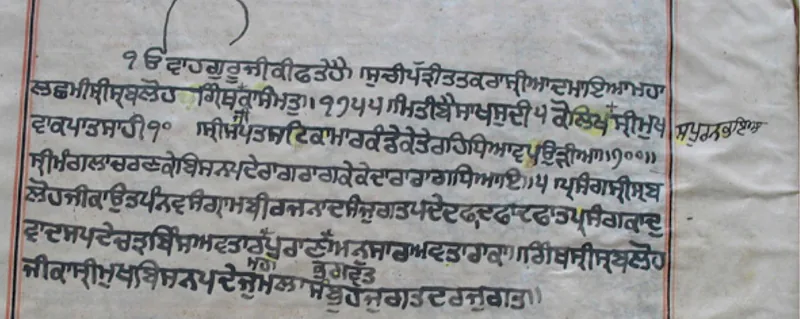
Modern scholarship, especially the work of W. H. McLeod, has shown that most of these texts in their present form date from well after the Guru's lifetime. McLeod regarded the Chaupa Singh text, probably compiled around the middle of the eighteenth century, as the earliest that can be dated with some confidence, and placed most others between the later eighteenth and the nineteenth century. The attribution of Punjabi rahitnamas to Bhai Nand Lal, whose authenticated works are in Persian, is widely doubted. Sikh scholars who accept a closer link to the Guru argue that the texts preserve earlier oral instruction even where their wording is later.
Themes and Prohibitions in the Early Codes§
Despite their differences, the rahitnamas share a core. They require the Khalsa to keep the hair uncut, to bear arms, to recite the scriptures daily, to honour the Guru's word and to avoid tobacco. They forbid eating kuṭhā meat, interpreted as meat slaughtered by the slow Muslim method, and they warn against association with groups considered hostile to the Guru's line, such as the followers of the rival lineages of the Minas, Dhir Mal and Ram Rai, and the deposed masands. Some condemn female infanticide and the giving of dowry; others include rules that reflect the hostile political conditions of the time and would not be repeated today.
The rahitnamas also show change over time. A formal list of the Five Ks, all beginning with the letter k, appears clearly only in later sources, although the individual items, above all uncut hair and the sword, are emphasised from early on. Sources disagree on matters such as diet, the place of non-Khalsa Sikhs and the precise form of initiation. For historians these variations are valuable evidence of how the Khalsa understood itself in the turbulent century after Guru Gobind Singh, a period also reflected in the customs of the Nihang orders.
Drafting the Sikh Rehat Maryada§
The reformers of the Singh Sabha movement wanted a single, authoritative code purged of what they regarded as non-Sikh accretions. The Chief Khalsa Diwan published a manual of rites, Gurmat Prakāsh Bhāg Sanskār, in 1915, but it did not win universal acceptance. After the SGPC was established by law in 1925, it appointed a committee of scholars and religious leaders in 1931 to draft a code for the whole Panth; among its members was the lexicographer Bhai Kahn Singh of Nabha. After lengthy consultation the draft was approved in 1945, and it was published as the Sikh Rehat Maryādā in 1950. It has since been reprinted many times and translated into English and other languages.
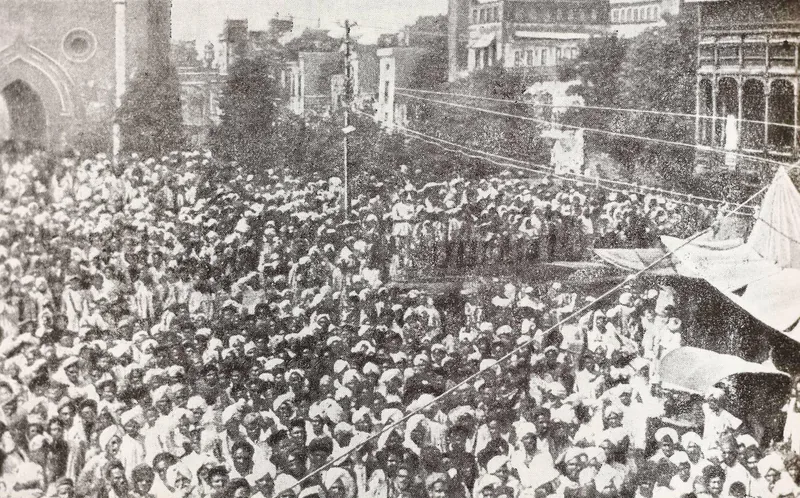
The document is short. It begins by defining a Sikh as any person who believes in one Immortal Being, the Ten Gurus from Guru Nanak to Guru Gobind Singh, the Guru Granth Sahib, the utterances and teachings of the Ten Gurus and the initiation bequeathed by the tenth Guru, and who does not owe allegiance to any other religion. It then sets out two spheres: personal life (shakhsī rahit) and corporate or Panthic life (panthak rahit).
Daily Discipline and the Four Kurahits§
In personal life, the Maryada prescribes nitnem, the daily recitation of set compositions: in the morning the Japji Sahib, Jaap Sahib and the Ten Savaiyas; at sunset Rehras Sahib; and at night Kirtan Sohila. It encourages rising early, meditation on the divine Name, attendance at the gurdwara, honest work, sharing with others and service. It describes the conduct of worship in the gurdwara, the treatment of the scripture, kīrtan, Ardas and karāh prasād, and lays down simple forms for naming a child, the Anand Karaj wedding and funerals, rejecting caste considerations in marriage, dowry and practices such as the veiling of women.
For the initiated, the code names four kurahits, cardinal violations: dishonouring the hair by cutting or removing it; eating kuṭhā meat; sexual relations with anyone other than one's spouse; and using tobacco. A Khalsa Sikh who commits one of these becomes patit, "fallen", and must seek re-initiation after penance. The Five Ks and the prohibitions on alcohol and other intoxicants are also stressed.
Tankhah, Authority and the Akal Takht§
Breaches of the Rahit are handled by tankhāh, a penance imposed by five initiated Sikhs acting in the presence of the Guru Granth Sahib, typically consisting of additional recitation and humble service such as cleaning shoes or washing dishes at a gurdwara. A person declared tankhāhīā is expected to appear, accept the penance and be restored. Major questions affecting the Panth, and cases involving prominent public figures, are decided by the Akal Takht, whose jathedār issues edicts known as hukamnāmās. Political leaders have more than once performed penitential service at the Golden Temple at the Akal Takht's direction, as in 2024, when senior leaders of the Akali Dal were assigned such service.
Variant Codes and Contemporary Debates§
The Sikh Rehat Maryada is not the only code in use. The Damdami Taksal, a traditional seminary, follows its own maryādā with a longer daily liturgy; the Akhand Kirtani Jatha treats the keskī, a small under-turban, as one of the Five Ks and insists on a strictly vegetarian diet; and the Nihang orders keep distinctive customs of dress, language and diet. The great Takhts at Patna and Nanded preserve some practices that differ from those at Amritsar. Groups described in Sikh Sects and Movements, such as the Namdharis, have their own rules.
Debates continue on several points: whether meat other than kuṭhā is permitted, which compositions of the Dasam Granth belong in daily prayer, the full participation of women in roles such as the Panj Piare, and the status of Sahajdhari Sikhs, who revere the Gurus without being initiated or keeping uncut hair. In 2016 an amendment to the Sikh Gurdwaras Act removed the right of Sahajdharis to vote in SGPC elections. These arguments show that the Rahit remains a living tradition, interpreted by the community in each generation.
Frequently asked questions§
What is the Sikh Rehat Maryada?§
It is the Sikh code of conduct and conventions, drafted by a committee of the SGPC from 1931, approved in 1945 and published in 1950. It defines who is a Sikh and sets out daily prayers, gurdwara worship, ceremonies and the discipline of the Khalsa.
What are the four kurahits?§
They are the four cardinal violations for initiated Sikhs: cutting or removing hair, eating kutha (ritually slaughtered) meat, sexual relations outside marriage and using tobacco. A Sikh who commits one must undergo penance and re-initiation.
What is a tankhaiya?§
A tankhaiya is a Sikh who has been found to breach the code of conduct and is assigned a tankhah, or penance. It usually involves extra prayer and humble service at a gurdwara, after which the person is restored to good standing.
Sources and further reading§
- Sikhs of the Khalsa: A History of the Khalsa Rahit — W. H. McLeod, 2003
- The Chaupa Singh Rahit-nama — W. H. McLeod, 1987
- Textual Sources for the Study of Sikhism — W. H. McLeod, 1984
- Who Is a Sikh? The Problem of Sikh Identity — W. H. McLeod, 1989
- The Construction of Religious Boundaries: Culture, Identity and Diversity in the Sikh Tradition — Harjot Oberoi, 1994
- Sikh Identity: An Exploration of Groups among Sikhs — Opinderjit Kaur Takhar, 2005
- The Sikhs: Their Religious Beliefs and Practices — W. Owen Cole & Piara Singh Sambhi, 1978