Sikh Sects and Movements: Udasis, Nirmalas, Namdharis, Nirankaris
Diversity within Sikhism: the ascetic Udasis and Nirmalas, the Namdhari and Nirankari reformers, rival Guru lineages and modern groups such as Sikh Dharma.

Sikhism has no formal denominations in the Christian sense, but over five centuries a number of distinct orders, lineages and movements have grown up within or alongside the Sikh Panth. The most important are the ascetic Udasis and the scholarly Nirmalas, the nineteenth-century reform movements of the Nirankaris and the Namdharis, the early rival lineages of the Guru's family, and modern groups such as the Sant Nirankari Mission and the largely Western Sikh Dharma. Their relationship with mainstream Khalsa Sikhism ranges from close kinship to open rejection.
Unity and Diversity in the Sikh Panth§
The mainstream Sikh community recognises the Ten Gurus from Guru Nanak to Guru Gobind Singh and, since 1708, the scripture as the eternal Guru, as explained in What Is Sikhism?. Within this frame there has always been diversity: of caste and region, of degree of observance between initiated Khalsa Sikhs and Sahajdhari Sikhs who do not keep the full discipline, and of interpretation among seminaries and devotional associations (jathebandīs) such as the Damdami Taksal and the Akhand Kirtani Jatha.
The groups discussed here go further. Some developed their own forms of life, such as celibacy or distinctive dress; some accept human Gurus after Guru Gobind Singh; some have their own scriptures alongside or instead of the Guru Granth Sahib. Historians such as Harjot Oberoi and W. H. McLeod have argued that before the reforms of the late nineteenth century such variety was a normal part of Sikh life, while the reformers of the Singh Sabha movement drew the boundaries of orthodoxy more sharply.
Rival Lineages in the Age of the Gurus§
Disputes over succession produced the first breakaway groups. Guru Nanak's son Sri Chand was passed over in favour of Guru Angad; Guru Arjan's elder brother Prithi Chand founded the line called the Minas; Dhir Mal, a grandson of Guru Hargobind, kept an early manuscript of the scripture at Kartarpur and challenged Guru Tegh Bahadur; and Ram Rai, elder son of Guru Har Rai, was disowned for altering a verse of the scripture to please the Mughal court and later established a centre at Dehradun. The Khalsa codes discussed in Sikh Rehat Maryada and the Rahitnamas forbid association with these lineages, and most of them faded in the eighteenth century, although the Ram Rai darbār at Dehradun survives as a shrine.
The Udasis: Ascetic Custodians of the Shrines§
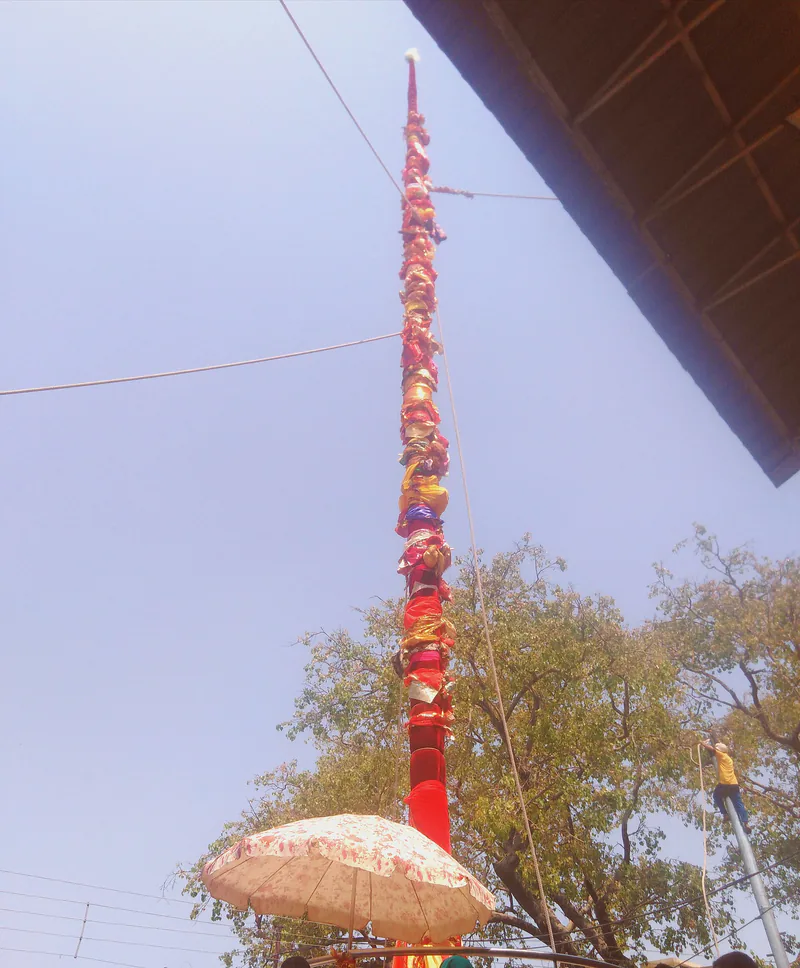
The Udasis, whose name means "the detached", regard Sri Chand (traditionally born 1494), Guru Nanak's elder son, as their founder. Unlike his father, who rejected renunciation in favour of the householder's life, Sri Chand is remembered as a celibate yogi. Tradition holds that he nominated Baba Gurditta, Guru Hargobind's eldest son, as his successor, and that Gurditta's disciples founded the four principal Udasi lineages, called dhūāṅ, "hearths", after the sacred fires of the ascetic's camp. Later centres, the bakhshīshāṅ, were added.
Udasi sadhus traditionally keep matted hair or shave the head, smear the body with ash, wear ochre or other ascetic dress, and honour the Guru Granth Sahib alongside Hindu deities and the writings of Sri Chand. During the eighteenth century, when Khalsa Sikhs were persecuted and often in arms, Udasi mahants looked after many gurdwaras and preached the Gurus' teachings across India, and Sikh rulers, including Maharaja Ranjit Singh, endowed their establishments generously. The hereditary control of shrines by some Udasi mahants became the target of the Akali reform movement, and after 1925 most historic gurdwaras passed out of their hands. Today the Udasis are organised in their own akharas, two of which are counted among the thirteen recognised ascetic orders that process at the Kumbh Mela, and many no longer regard themselves as Sikhs in the mainstream sense.
The Nirmalas: Sikh Scholars of Sanskrit Learning§
The Nirmalas, "the spotless", trace their origin to a tradition that Guru Gobind Singh sent five Sikhs to Banaras to study Sanskrit learning so that they could interpret Indian philosophy for the community. Some historians date the emergence of a distinct Nirmala order later, to the late eighteenth century. Nirmala scholars, usually celibate and dressed in ochre, became the principal interpreters of the Gurus' hymns in the nineteenth century, often reading them in the light of Vedanta, and produced commentaries, grammars and histories; Pandit Tara Singh Narotam (1822–1891) is among the best known.
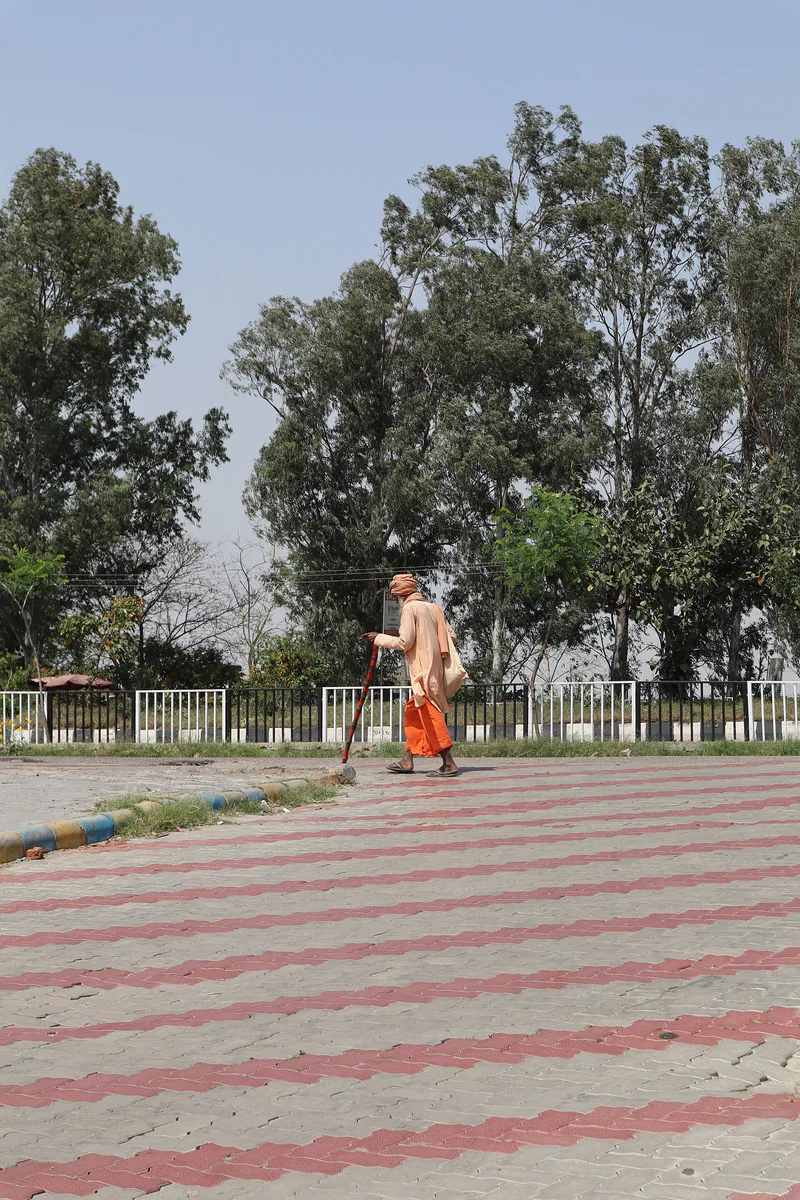
Like the Udasis, the Nirmalas maintain an akhara with its headquarters at Kankhal near Haridwar and take part in the Kumbh Mela. Their Vedantic approach was criticised by Singh Sabha reformers, who wanted the scripture read on its own terms, but Nirmala learning shaped much traditional Sikh exegesis, and some important seminaries and saintly lineages in the Punjab have Nirmala roots.
Nirankaris and Namdharis: Nineteenth-Century Reformers§
The Nirankari movement was founded by Baba Dayal (1783–1855), a Sahajdhari Sikh of Peshawar and Rawalpindi, who preached devotion to God as Nirankār, "the Formless One", and campaigned against image worship, Brahmin-led rites and costly customs. He introduced a simple marriage ceremony centred on the scripture, which anticipated the Anand Karaj later promoted by the Singh Sabhas. The Nirankaris accept the Guru Granth Sahib and have been led by a line of descendants of Baba Dayal; after the Partition of 1947 their centre moved from Rawalpindi to Chandigarh.
The Namdhari or Kuka movement was founded on Vaisakhi 1857 by Baba Ram Singh (1816–1885) at Bhaini Sahib near Ludhiana, building on the teaching of his master, Baba Balak Singh of Hazro. Namdharis wear white homespun clothes and a turban tied flat across the forehead, use a white woollen rosary, practise strict vegetarianism and protection of the cow, and celebrate marriage with the recitation of the Anand around a sacred fire. Their name Kūkā, "shouter", recalls the ecstatic cries of their early gatherings. Ram Singh urged a boycott of British goods, courts, schools and postal services, and Indian nationalists later hailed him as a pioneer of non-cooperation. In 1872, after attacks by Kukas on butchers and an armed raid on Malerkotla, the British Deputy Commissioner of Ludhiana had about sixty-five Kukas blown from cannon without trial, and Ram Singh was exiled to Burma, where he died in 1885.
Namdharis differ most sharply from mainstream Sikhs in holding that the line of living Gurus did not end with Guru Gobind Singh. They believe Ram Singh still lives and have been led by a succession of Satgurus at Bhaini Sahib; Satguru Jagjit Singh (died 2012) was also a noted patron of Hindustani classical music. A succession dispute followed his death.
Modern Movements on the Edges of the Panth§
Several twentieth-century movements draw on Sikh scripture and vocabulary but are not accepted as Sikh by mainstream authorities. The Sant Nirankari Mission, founded in 1929 and distinct from the older Nirankaris, follows a living Guru and its own scripture. On Vaisakhi 1978 a clash between its followers and Sikh protesters in Amritsar left sixteen people dead, and the Akal Takht called on Sikhs to shun the Mission; the event fed into the crisis of the 1980s. Sant Mat groups such as the Radha Soami Satsang at Beas, and the Ravidassia community, which in 2010 adopted its own scripture, are discussed in Sikhism and the Sant Tradition.
In the West, Sikh Dharma International, founded in 1969 by Harbhajan Singh Khalsa, known as Yogi Bhajan, brought many non-Punjabi converts to a form of Khalsa Sikhism combined with his teaching of Kundalini Yoga. Its members, often dressed in white, keep the Khalsa discipline, though allegations of abuse made against the founder after his death were the subject of an independent inquiry in 2020.
Frequently asked questions§
Does Sikhism have sects?§
Sikhism has no formal denominations, but it includes distinct orders and movements such as the Udasis, Nirmalas, Namdharis and Nirankaris, as well as seminaries and devotional associations with their own customs. Mainstream Sikhs accept the Ten Gurus and the Guru Granth Sahib as the eternal Guru.
Who are the Namdhari Sikhs?§
Namdharis are followers of a movement founded by Baba Ram Singh in 1857. They wear white, keep strict vegetarianism and, unlike most Sikhs, believe in a continuing line of living Gurus.
Are Udasis Sikhs?§
Udasis revere Guru Nanak and the Guru Granth Sahib and trace their order to his son Sri Chand, but they are celibate ascetics who also honour Hindu deities. Historically they were part of the wider Sikh world; today many identify with the Hindu ascetic orders.
Sources and further reading§
- The Construction of Religious Boundaries: Culture, Identity and Diversity in the Sikh Tradition — Harjot Oberoi, 1994
- Sikh Identity: An Exploration of Groups among Sikhs — Opinderjit Kaur Takhar, 2005
- Who Is a Sikh? The Problem of Sikh Identity — W. H. McLeod, 1989
- The Oxford Handbook of Sikh Studies — Pashaura Singh & Louis E. Fenech (eds.), 2014
- The Sikhs of the Punjab — J. S. Grewal, 1990
- A History of the Sikhs — Khushwant Singh, 1963