Liber XXVI · Shinto · Chapter IX: Yokai & Folklore
Tengu: Mountain Goblins of Japanese Religion and Folklore
Tengu in Japanese religion and folklore: from celestial dog and Buddhist demon of pride to long-nosed mountain goblin, yamabushi ally and protective kami.

Tengu (天狗, "heavenly dog") are supernatural beings of Japanese religion and folklore who live in mountains and forests, usually pictured either as bird-like creatures with beaks and wings or as red-faced men with long noses dressed as mountain ascetics. Over a thousand years they changed from an omen in the sky into Buddhist demons of pride, then into mischievous goblins who abduct people, and finally into protective kami venerated at mountain shrines.
From Celestial Dog to Mountain Spirit: Origins of the Tengu§
In Chinese texts the tiangou was a celestial omen, a meteor or shooting star whose fall resembled a dog descending and which foretold war or disaster. The word first appears in Japan in the Nihon shoki for the year 637, when a great star crossed the sky from east to west with a sound like thunder; a monk recently returned from China explained that it was not a star but a "heavenly dog" whose bark resembled thunder. The Japanese gloss given for the term was amatsukitsune, "heavenly fox".
After this single early appearance the word disappears for some centuries, and when tengu re-emerge in Heian literature they are no longer celestial phenomena but spirits haunting mountains and trees. How the Chinese omen became a Japanese mountain being is not documented. Scholars suggest that the name was attached to existing beliefs about mountain spirits and to the Buddhist idea of the Māra, the tempter who obstructs enlightenment, and that birds of prey, especially the kite, shaped the early bird-like image.
Demons of Pride: Tengu in Medieval Buddhist Tales§
The great collection of tales Konjaku monogatari shū, compiled in the early twelfth century, contains a series of tengu stories. In one, a tengu from China called Zegaibō comes to Japan to test the monks of Mount Hiei but is humiliated by the power of their esoteric rites. In another, a tengu sits in a persimmon tree disguised as a buddha, radiating light and showering flowers, until a minister stares at it steadily for hours and it falls to the ground as an exhausted kite. Tengu in these tales deceive the faithful with false visions, possess people, and lead monks astray.
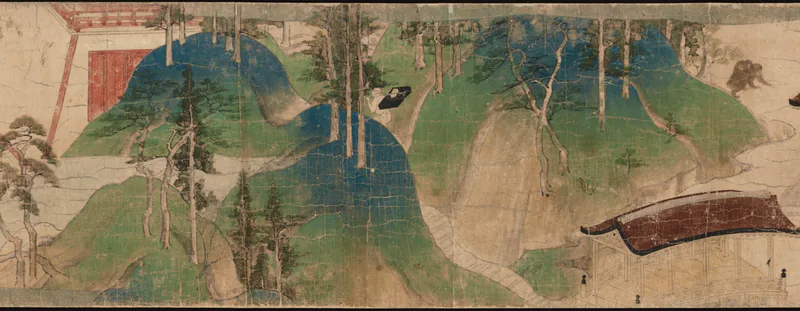
By the Kamakura period tengu had become a symbol of the vices of the clergy themselves. Monks who were proud, ambitious or attached to learning without true practice were said to be reborn after death on the "tengu path" (tengudō), outside the ordinary six realms of rebirth. A set of picture scrolls of 1296, the Tengu zōshi, satirised the monks of the great temples of Nara and Kyoto, as well as followers of new movements such as the dancing nembutsu and Zen, by depicting them as tengu. Haruko Wakabayashi has shown how such images expressed rivalries between temples and anxieties about legitimacy in medieval Buddhism.
Tengu also entered political legend. The war tales describe the retired Emperor Sutoku, who died in exile in 1164 after defeat in the Hōgen disturbance, as having become a great tengu who brought disorder to the realm, and the fourteenth-century Taiheiki tells of a council of tengu, including former emperors and eminent monks, gathered on Mount Atago to plot the turmoil of the age.
Karasu-tengu and Hanataka-tengu: How Tengu Are Depicted§
Two main images of the tengu developed. The karasu-tengu ("crow tengu") or kotengu ("little tengu") has a bird's beak, wings and claws, often combined with a human body in monk's or ascetic's dress; this is the dominant image in medieval scrolls. The hanataka-tengu ("high-nosed tengu") or ō-tengu ("great tengu") has a human form with a red face, an extremely long nose, wings, a fan of feathers, and the costume of a yamabushi: a small black cap (tokin), a stole with pompoms and high one-toothed clogs.
The long-nosed type became common from the Muromachi period, and paintings attributed to the Kanō school helped fix it. Its origin is uncertain; suggestions include the influence of the long-nosed masks of ancient gigaku theatre and of images of the kami Sarutahiko, who is described in the myths as having a long nose. In later folklore the great tengu are usually leaders, served by crowds of crow tengu. Familiar idioms preserve their character: to "become a tengu" (tengu ni naru) in Japanese means to become conceited.
Tengu, Yamabushi and the Sacred Mountains§
The costume of the great tengu is that of the mountain ascetics of Shugendō, and the two figures have long been intertwined. Yamabushi lived in the same remote mountains as tengu, claimed supernatural powers acquired through austerities, and were themselves regarded by villagers with a mixture of respect and suspicion. Some tales present tengu as fallen ascetics, others as protectors whom ascetics could command.
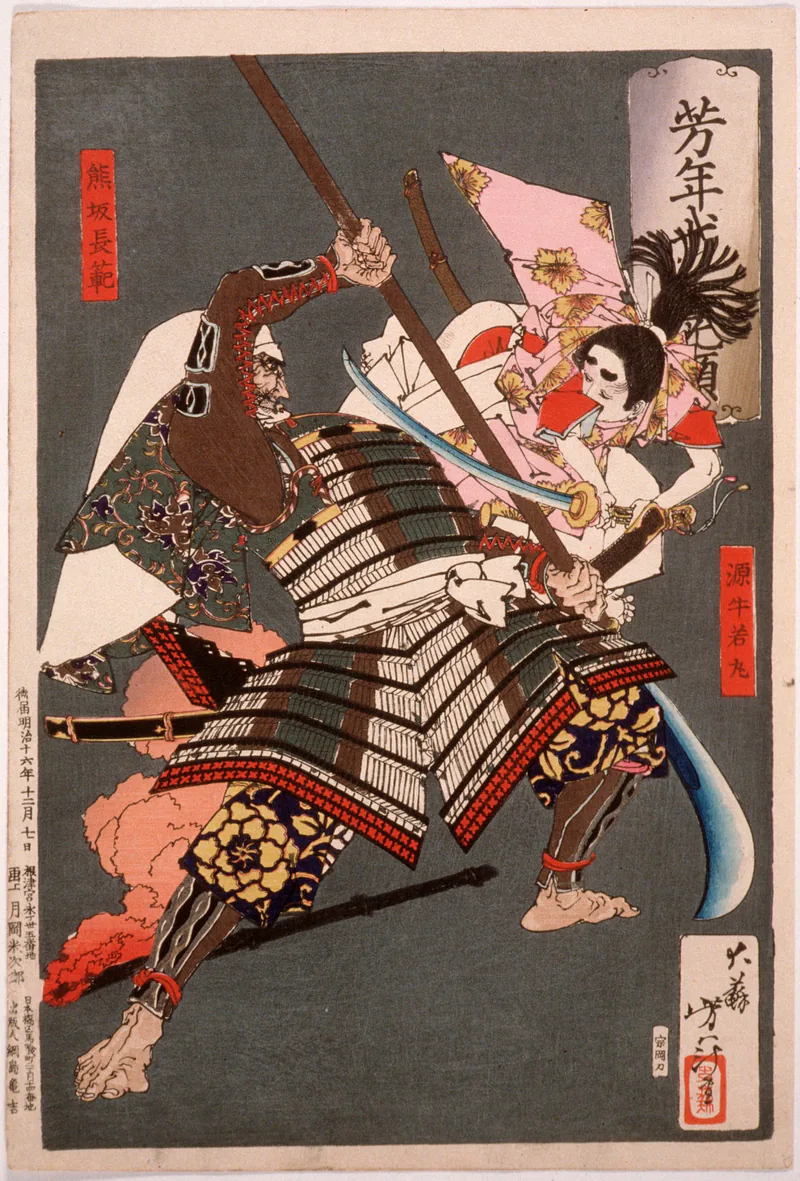
Particular mountains became known as the seats of named great tengu. Sōjōbō of Mount Kurama north of Kyoto is the most famous: legend, dramatised in the Muromachi-period Noh play Kurama Tengu, says that he taught swordsmanship to the boy Ushiwakamaru, the future warrior Minamoto no Yoshitsune. Tarōbō of Mount Atago, Hōkibō of Daisen, Buzenbō of Mount Hiko and the tengu of Iizuna, Akiba and Takao were also honoured. At Mount Takao near Tokyo, Akiba in Shizuoka and other temples and shrines, tengu are revered as protective deities against fire and misfortune, and images of tengu with fans and staffs guard the halls. In such places the tengu is less a demon than a mountain kami in Buddhist dress, an example of the fluid world described in Shinto and Buddhism.
Kamikakushi: Abductions and the Tengu Boy Torakichi§
In Edo-period folklore tengu were blamed for kamikakushi, "hidden by the kami": the sudden disappearance of children and young men, who sometimes reappeared days or years later with strange tales of flights to distant places. Villagers searching for the lost beat drums and called out their names. Unexplained sounds in the mountains were attributed to tengu, such as the crash of a great tree falling that leaves no trace (tengu-daoshi), loud laughter in the forest (tengu-warai) and showers of stones (tengu-tsubute).
The most famous case was examined by the nativist scholar Hirata Atsutane, a leading figure of kokugaku. In 1820 he met a boy named Torakichi, who claimed that he had been taken by a mountain being to Mount Iwama in Hitachi and trained there in magic, medicine and the ways of the other world. Hirata questioned him at length and published the results in Senkyō ibun ("Strange Tidings from the Realm of Immortals", 1822). Wilburn Hansen's study treats the work as a kind of ethnography of the unseen world, in which Hirata sought evidence for his theology of the hidden realm of kami and spirits.
Tengu in Modern Japan§
In the Meiji period reformers such as Inoue Enryō classified tengu among the superstitions to be eliminated by science, while the folklorist Yanagita Kunio collected tengu legends as evidence of older mountain beliefs (see Yōkai). Michael Dylan Foster and Komatsu Kazuhiko have since shown how tengu, like other yōkai, moved from objects of fear to figures of play and nostalgia in prints, toys and popular entertainment.
Today tengu masks are sold at mountain temples, tengu dance in local festivals, often leading processions as a form of the kami Sarutahiko, and tengu appear widely in manga, anime and games. At Takao, Kurama and other mountains they remain objects of genuine devotion, honoured as guardians of the forests and of those who walk there. Like the fox spirits of Kitsune, they reveal how Japanese religion combines fear, humour and reverence toward the powers of the natural world.
Frequently asked questions§
What is a tengu?§
A tengu is a supernatural being of Japanese folklore associated with mountains and forests, depicted either as a bird-like creature or as a red-faced, long-nosed figure dressed as a mountain ascetic. Tengu have been regarded at different times as demons, tricksters and protective deities.
Are tengu good or evil?§
Both. In medieval Buddhist tales they are proud and deceitful spirits who obstruct religious practice, but in later folklore and local cults some tengu protect mountains, teach martial arts and guard against fire. Their character depends on the period and the story.
Why do tengu have long noses?§
The long-nosed image became standard only from around the fifteenth and sixteenth centuries; earlier tengu were bird-like with beaks. Its origin is uncertain, but scholars point to the influence of long-nosed theatrical masks and of the kami Sarutahiko.
Sources and further reading§
- Nihongi: Chronicles of Japan from the Earliest Times to A.D. 697 — W. G. Aston, 1896
- Tales of Times Now Past: Sixty-Two Stories from a Medieval Japanese Collection — Marian Ury (trans.), 1979
- When Tengu Talk: Hirata Atsutane's Ethnography of the Other World — Wilburn Hansen, 2008
- The Seven Tengu Scrolls: Evil and the Rhetoric of Legitimacy in Medieval Japanese Buddhism — Haruko Wakabayashi, 2012
- The Book of Yōkai: Mysterious Creatures of Japanese Folklore — Michael Dylan Foster, 2015
- An Introduction to Yōkai Culture: Monsters, Ghosts, and Outsiders in Japanese History — Komatsu Kazuhiko, 2017