Liber XXIX · Superstitions · Chapter V: European Superstitions
Vampire Folk Belief in Eastern Europe: Upir to Arnold Paole
Vampire folk belief in Eastern Europe: upir, strigoi and vrykolakas, the Habsburg cases of 1725–1732, Calmet, anti-vampire burials and decomposition.

In the folk belief of Eastern and South-Eastern Europe, a vampire was not an aristocrat in a cape but a dead villager who would not stay in the grave: a corpse that returned to trouble its family and neighbours, bringing sickness and death until it was dug up and destroyed. The belief was recorded under many names, including the Slavic upir and vampir, the Romanian strigoi and the Greek vrykolakas. It reached the wider European public through Habsburg military reports of the 1720s and 1730s, provoked an Enlightenment debate, and was later transformed into the literary vampire of Polidori, Le Fanu and Stoker.
Upir, Vampir, Strigoi: Words and Regional Types§
The oldest Slavic evidence for the word is a personal name. A Russian priest who copied a manuscript in Novgorod in 1047 signed himself Upir Likhyi, "the wicked upir", presumably a nickname. An Old Russian sermon of uncertain date, transmitted among the anti-pagan writings attributed to Saint Gregory, complains that the Slavs had once made offerings to upyri and beregyni, suggesting a class of spirits or dangerous dead. The origin of the word itself is disputed among linguists, and no explanation has won general agreement.
Across the region the revenant had many local names and characters. The South Slavic vampir or lampir of Serbia and Bosnia, the Polish upiór and Kashubian vješči, the Romanian strigoi and moroi, the Albanian shtriga, and the Greek vrykolakas overlap without being identical. In Romanian tradition a strigoi could be a living person with a dangerous soul as well as a dead one; in Greek belief the vrykolakas, a word borrowed from Slavic and once meaning "werewolf", was often a body that would not decay because it had been excommunicated or cursed. What unites them is the conviction that some of the dead remain physically active in the grave, a belief related to, but distinct from, the ghost lore discussed in Ghosts and Hauntings.
The Habsburg Cases: Petar Blagojević and Arnold Paole§
The folk vampire entered European print after the Treaty of Passarowitz (1718) brought northern Serbia under Austrian control. Imperial officials now administered villages whose customs were unfamiliar to them, and they wrote reports.
In 1725 an officer named Frombald reported from the village of Kisiljevo that the peasant Petar Blagojević, ten weeks dead, was blamed for the sudden deaths of nine villagers, who said he had visited them in their sleep. The villagers insisted on opening the grave. Frombald recorded that the body appeared fresh, with new skin and nails, and fresh blood at the mouth; the villagers drove a stake through the heart and burned the corpse. The report was printed in a Vienna newspaper and used the local word vampyri.
The more influential case concerned Arnold Paole, a former soldier of Medveđa who was said to have been troubled by a vampire while serving in the south and who died around 1726 after a fall from a hay wagon. After further deaths in the village, a commission led by the military surgeon Johann Flückinger exhumed a series of bodies in January 1732 and described their condition in a report known as Visum et Repertum. Flückinger listed which corpses were "in the vampire condition" and noted that they had been decapitated and burned. Published and widely reprinted, the report caused a sensation in the German and French press and prompted a flood of pamphlets and dissertations. It is through these texts that "vampire" entered English and other Western languages in the early 1730s.
Who Became a Vampire: Causes and Signs in Folk Belief§
Folk tradition offered many explanations of why a person might return. Commonly cited causes included an unnatural or violent death, suicide, death without the rites of the church, excommunication, being born with a caul or with teeth, or simply leading a wicked life. In some places it was said that a cat or other animal jumping over the corpse before burial could make it rise, which is why the dead were watched carefully during the wake.
The signs of a vampire were usually noticed in the community rather than in the grave. A run of deaths in one household or village, livestock dying, a sense of pressure on the chest at night, or dreams in which the dead appeared could all point to a revenant. Only after suspicion fell on a particular person was the grave opened, and the condition of the body was then read as confirmation. This sequence, from misfortune to accusation to verification, resembles the logic of witchcraft accusations described in Maleficium, Curses and Protective Magic. The family of the dead person, rather than strangers, was often thought to be the first to suffer.
The Enlightenment Debate: Calmet, van Swieten and Maria Theresa§
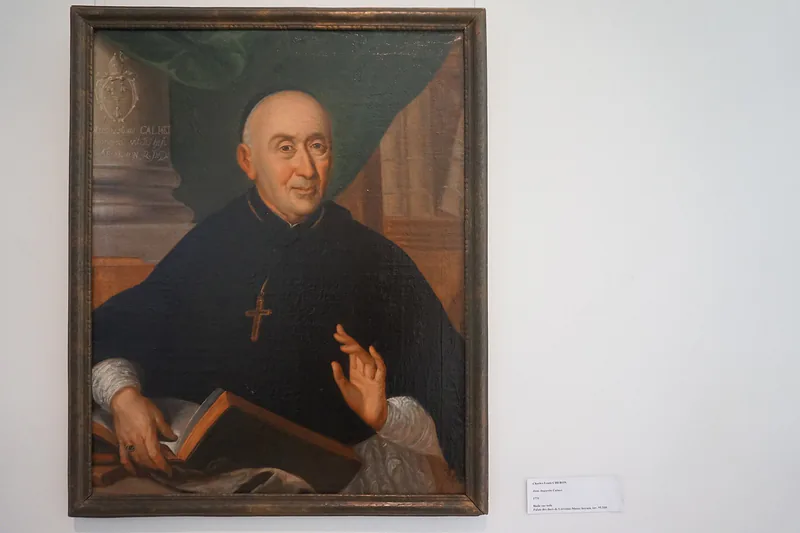
The Serbian reports reached a European public already arguing about miracles, apparitions and the limits of credulity. Some writers explained vampirism by natural causes, others by the devil, others by the imagination of frightened peasants. The Benedictine scholar Augustin Calmet published his Dissertations on apparitions and on the revenants and vampires of Hungary, Bohemia, Moravia and Silesia in 1746, revised in 1751 as a Treatise on the Apparitions of Spirits and on Vampires, collecting the reports and weighing them cautiously. He doubted most of them but did not dismiss all, and the book was widely read, and sometimes mocked, as evidence of credulity in an enlightened age.
The decisive response came from Vienna. In 1755, after reports of exhumations in Moravia, the empress Maria Theresa sent her physician Gerard van Swieten to investigate. His report attributed the supposed signs of vampirism to natural processes and to fear, and the empress issued decrees forbidding the opening of graves and the mutilation of corpses without official sanction, transferring such matters from clergy and village to the state. Voltaire later devoted a mocking article to vampires, remarking that the real bloodsuckers of his age were speculators and men of business who lived in palaces rather than cemeteries. The episode became a case study in how the Enlightenment defined superstition, a theme followed in The Origins of Superstition.
Burials Against the Returning Dead: Archaeological Evidence§
Archaeologists across Central and Eastern Europe have excavated graves that seem to reflect fear of the returning dead. Bodies have been found with stones placed on the chest or in the mouth, with sickles laid across the neck, pinned by stakes or iron bars, decapitated with the head placed between the legs, or buried face down. Well-publicised examples include early modern graves at Drawsko in Poland with sickles across the throat or abdomen, and a seventeenth-century burial at Pień in Poland, excavated in 2022, of a woman with a sickle across her neck and a padlock on her toe.
Archaeologists usually describe these as "deviant" or "atypical" burials and are careful about calling them vampire graves. The practices are varied, span many centuries and may have had different motives, including fear of contagion, punishment of criminals or the treatment of outsiders and suicides. Still, they match closely what later folklorists recorded about preventing the dead from walking, and they show that fear of the revenant was not an invention of eighteenth-century journalists.
Decomposition and the Folk Vampire: Modern Explanations§
In Vampires, Burial, and Death (1988), the folklorist Paul Barber compared the eighteenth-century reports with forensic knowledge of how bodies decay. Many of the features that officials took as signs of vampirism are normal stages of decomposition: bloating from internal gases, which can make a corpse look well fed; dark fluid at the mouth and nose, which looks like fresh blood; skin slippage revealing a new layer beneath, which looks like new skin; and the retraction of tissue, which makes hair and nails appear to have grown. When a stake was driven into a bloated body, escaping gas could produce a groan. Barber argued that villagers were careful observers interpreting what they saw within a framework that made the dead active.
Other scholars have emphasised epidemics. Clusters of deaths from infectious diseases such as tuberculosis, which spreads within households, fit well with the pattern of a vampire killing its own relatives, as the later New England "vampire" exhumations of the nineteenth century also show. Psychological explanations focus on sleep paralysis and the night-time sensation of a presence pressing on the chest.
From Village Revenant to Gothic Fiction§
The literary vampire grew out of the eighteenth-century reports but changed the creature almost entirely. John Polidori's The Vampyre (1819) made the vampire an aristocratic seducer; Sheridan Le Fanu's Carmilla (1872) gave it a female and erotic form; and Bram Stoker's Dracula (1897) fixed the image of the Transylvanian count. Stoker drew some of his local colour from Emily Gerard's essay "Transylvanian Superstitions" (1885) and her book The Land Beyond the Forest (1888). The folk vampire, by contrast, was usually a recently dead peasant, swollen and ruddy rather than pale, who preyed on those closest to him. For the wider context of beliefs about the dead and the uses made of them, see Necromancy in the Middle Ages and European Superstitions and Folk Beliefs.
Frequently asked questions§
Where does the word "vampire" come from?§
The word came into Western languages through German reports on Serbia in the 1720s and 1730s, which used the local South Slavic form vampir. Related words such as upir are attested in Slavic from the eleventh century, but the ultimate origin of the word is still debated.
Who was Arnold Paole?§
Arnold Paole was a villager of Medveđa in Serbia who died around 1726 and was later blamed for causing deaths as a vampire. A military commission exhumed bodies in the village in 1732, and its report, Visum et Repertum, became the most famous document of the eighteenth-century vampire controversy.
What is a strigoi?§
A strigoi is a dangerous being of Romanian folklore. It may be a living person with a harmful soul or a dead person who returns from the grave to trouble the living, and folk tradition records many ways of identifying and preventing it.
Were people really buried to stop them becoming vampires?§
Archaeologists have found many graves in which bodies were weighted with stones, pinned, decapitated or laid with sickles at the neck. These are usually described as deviant burials, and while their motives varied, many appear to reflect fear that the dead might return.
Sources and further reading§
- Vampires, Burial, and Death: Folklore and Reality — Paul Barber, 1988
- The Vampire: A Casebook — Alan Dundes (ed.), 1998
- Treatise on the Apparitions of Spirits and on Vampires — Augustin Calmet, 1751
- The Land Beyond the Forest — Emily Gerard, 1888
- The Vampire in Europe — Montague Summers, 1929
- Dracula — Bram Stoker, 1897