Liber XXIX · Superstitions · Chapter IX: Origins of Superstition
Origins of Superstition: From Roman Superstitio to Folklore
Where superstitions come from: Greek and Roman ideas of excess piety, Christian lists of pagan practices, Reformation polemic, and the folklorists' survivals.

Superstitions come from many sources at once: fragments of older religion, Christian rites taken out of church, practical caution, puns and homophones, misunderstood history and, surprisingly often, modern print. The idea of "superstition" itself has a separate history, running from Greek and Roman criticism of excessive piety through Christian condemnations of paganism and Protestant attacks on Catholic ritual to the nineteenth-century folklorists who saw every custom as a survival from a pagan past.
Superstition in Greece and Rome§
In classical Greece, deisidaimonia could at first describe proper reverence. By the fourth century BC it had come to mean anxious over-scrupulousness. Theophrastus' portrait of the superstitious man in his Characters (about 319 BC) is the earliest catalogue of everyday superstitions in Europe: he purifies himself at springs, will not step on a tombstone, is disturbed by a weasel crossing his path, consults interpreters when a mouse gnaws a flour sack, and is alarmed by an owl's cry. Several of these, notably the animal crossing the road, have parallels in much later folk belief, although no direct line of descent can be shown.
Plutarch, writing around AD 100, devoted an essay to superstition, arguing that it was a worse error than atheism because it made the gods objects of terror. The Latin superstitio had a comparable range. Cicero contrasted it with religio; Roman law and historians applied it to private, foreign or disorderly cults, including astrology, magic and the religions of Egyptians and Jews. Tacitus called Christianity a "deadly superstition", Suetonius a "new and mischievous" one, and Pliny the Younger, investigating Christians in Bithynia, found nothing worse than a "depraved and immoderate superstition". The word therefore began as a term of religious and political boundary-making, a story analysed in Dale Martin's Inventing Superstition.
The Christian Redefinition: Augustine and the Penitentials§
Christian writers kept the Roman contrast but changed its contents. True religion was now Christianity; superstition was idolatry, demon worship and the observance of signs. In On Christian Doctrine (begun about 397), Augustine listed practices he regarded as superstitious: wearing amulets and ligatures, returning to bed if one sneezed while putting on one's shoes, going home if one stumbled on setting out, and the belief that a friendship was threatened if a stone, a dog or a child passed between two people walking together. Augustine explained such signs as a kind of language agreed with demons, an idea that dominated Christian thought for a thousand years.
Bishops of the following centuries repeated and expanded his lists. Caesarius of Arles preached against New Year masquerades and vows at trees and springs; Martin of Braga's sermon De correctione rusticorum (about 572) condemned lighting candles at stones, trees, springs and crossroads, observing days and watching birds and sneezes. The Indiculus superstitionum et paganiarum, an eighth-century Frankish list of some thirty headings, names practices such as amulets, rites at springs and observances of the moon. Around 1010 Burchard of Worms included in his Decretum a penitential, the "Corrector", that asked penitents whether they had, for example, set a table for the Fates on certain nights.
These texts are invaluable but tricky. Bernadette Filotas and other historians have shown that compilers copied earlier lists, sometimes centuries old and from other regions, so a condemned practice in a text does not prove it was being done where and when the text was written. The lists tell us what churchmen feared at least as much as what peasants did.
Scholastic Theology: Superstition as a Sin§
Medieval scholastic theologians gave superstition a precise place in moral theology. In his Summa Theologiae, Thomas Aquinas defined it as the vice opposed to religion by excess, giving divine worship to what does not deserve it or in an improper way, and divided it into improper worship, idolatry, divination and "vain observances", which included the use of charms and the observance of lucky and unlucky times. Because such practices were thought to work, when they worked at all, through a tacit pact with demons, they could be treated as serious sins.
In practice the line between superstition and approved devotion was hard to draw. Blessed candles, holy water, consecrated bells rung against storms and prayers written on parchment were all accepted by the Church, and the popular use of such things is described in Folk Christianity. Late medieval theologians such as Jean Gerson tried to set criteria, and Michael Bailey's Fearful Spirits, Reasoned Follies shows how these debates sharpened in the fifteenth century, feeding into the demonology of the witch trials described in European Witch Trials.
Reformation and Enlightenment: Superstition as Popery and Ignorance§
The Protestant Reformation transformed the word again. Reformers applied "superstition" to much of Catholic worship itself: the Mass as sacrifice, the veneration of saints and relics, pilgrimages, holy water and the blessing of objects. English Protestants called these "popish superstitions", and the campaign against them, examined in Keith Thomas's Religion and the Decline of Magic, also targeted popular charms, holy wells and calendar customs. Catholic reformers after the Council of Trent likewise tried to purge popular devotion of what they judged superstitious, as Euan Cameron's Enchanted Europe shows.
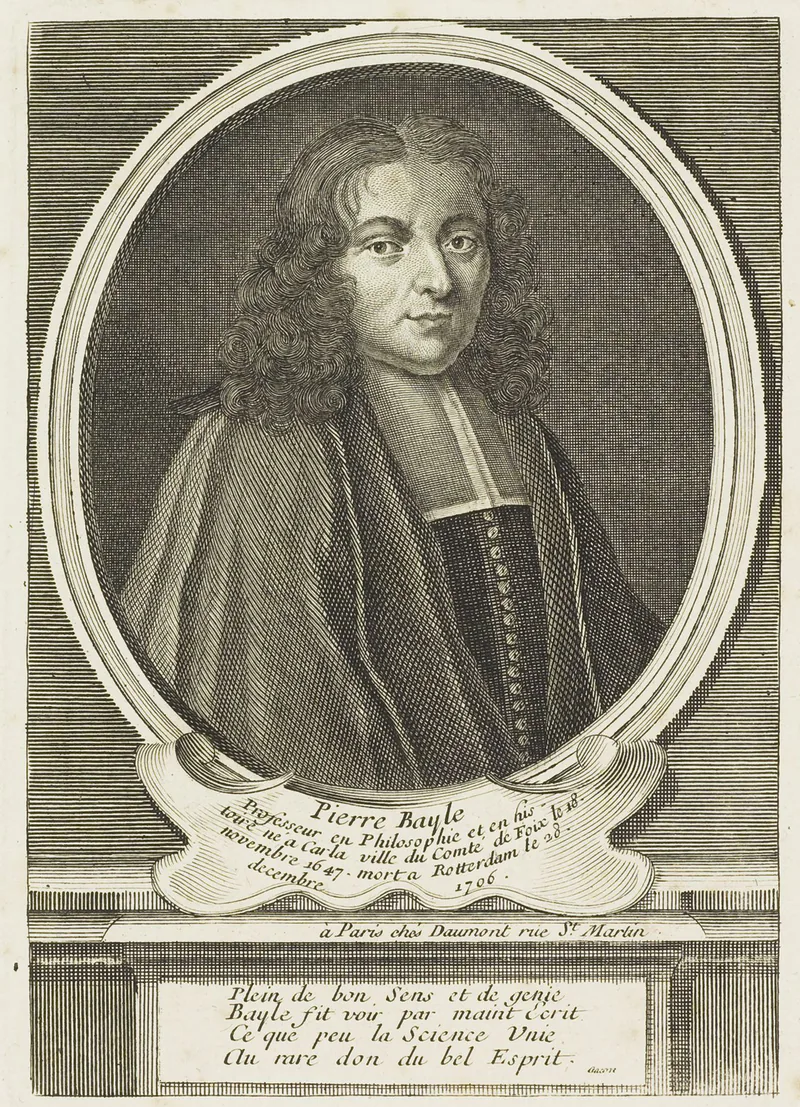
From the later seventeenth century the attack broadened from religion to reason. Thomas Browne's Pseudodoxia Epidemica (1646) examined "vulgar errors" from the basilisk to the belief that a dying swan sings. Pierre Bayle's reflections on the comet of 1680 (1682) argued that comets portended nothing. David Hume's essay "Of Superstition and Enthusiasm" (1741) traced superstition to fear and ignorance, and Voltaire's Philosophical Dictionary (1764) mocked it as the enemy of true religion. By 1800 "superstition" had become, for the educated, a mark of the uneducated: rural people, women, servants and colonised peoples.
Folklorists and the Theory of Survivals§
Antiquarians had begun collecting popular customs earlier. Henry Bourne's Antiquitates Vulgares (1725) sought to separate harmless customs from popish and pagan ones, and John Brand expanded it as Observations on Popular Antiquities (1777), later re-edited by Henry Ellis (1813). In 1846 William Thoms coined the word "folk-lore", and the Folklore Society was founded in London in 1878.
The decisive theory came from anthropology. In Primitive Culture (1871), Edward Burnett Tylor argued that customs which had lost their original purpose survived in modern society as "survivals", relics of an earlier stage of culture. James Frazer's The Golden Bough (1890) applied this to European folk custom, interpreting harvest rites, fire festivals and charms as remains of pagan fertility religion. These ideas are discussed in Theories of Magic.
Survivals theory shaped popular explanation more than any other. It is the source of countless claims that a superstition goes back to the druids, the Romans or a forgotten goddess. Historians such as Ronald Hutton, in The Stations of the Sun, have shown that many customs once labelled pagan are medieval, early modern or Victorian, and that continuity has to be demonstrated rather than assumed.
How Superstitions Really Arise§
Modern research suggests that superstitions have many origins, and that a single belief may have several.
- Religious practice taken out of church. Blessing a sneeze, crossing oneself, the unlucky number thirteen associated with the Last Supper, and the protective power of iron and salt draw on Christian ideas, sometimes on older ones.
- Fear of thresholds and transitions. Doorways, births, weddings, deaths and the turn of the year attract protective customs in most cultures, a pattern discussed in the articles on the household and on birth, marriage and death.
- Practical caution. Not walking under a ladder or not opening a wet umbrella indoors make sense without any magical reason, though the magical explanation may come later.
- Language and puns. The East Asian fear of four rests on its sound resembling the word for death, as explained in Lucky and Unlucky Numbers and Days.
- Print and commerce. Newspapers, almanacs, novels, advertisers and souvenir makers spread and sometimes invented beliefs. Friday the thirteenth owes much to early twentieth-century journalism, and lucky charms were mass-produced from the late nineteenth century.
Opie and Tatem's dictionary, which records each superstition's earliest dated appearance, shows how many familiar beliefs surface only in the eighteenth and nineteenth centuries. That does not mean they were invented then, since oral tradition precedes writing, but it does mean that claims of immense antiquity need evidence. The broader overview is in What Is Superstition?.
Frequently asked questions§
What does the word superstition originally mean?§
The Latin superstitio meant excessive, fearful or improper religion, especially foreign cults. Cicero derived it from people who prayed that their children would survive them, though modern scholars doubt this etymology. Only later did it come to mean beliefs about luck.
Are superstitions pagan survivals?§
Some customs preserve elements of pre-Christian practice, but the nineteenth-century idea that superstitions in general are pagan survivals is now regarded as unproven. Many beliefs are medieval Christian, early modern or modern in origin.
Who first wrote about superstitions?§
The earliest European catalogue is Theophrastus' portrait of the superstitious man in his Characters (about 319 BC). Augustine, medieval penitentials, early modern antiquaries and Victorian folklorists all compiled later lists.
Why did Protestants call Catholic practices superstitious?§
Reformers held that worship of saints, relics, holy water and the sacrifice of the Mass gave honour to created things or human inventions instead of God alone, which was the classic theological definition of superstition.
Sources and further reading§
- Inventing Superstition: From the Hippocratics to the Christians — Dale B. Martin, 2004
- Pagan Survivals, Superstitions and Popular Cultures in Early Medieval Pastoral Literature — Bernadette Filotas, 2005
- Fearful Spirits, Reasoned Follies: The Boundaries of Superstition in Late Medieval Europe — Michael D. Bailey, 2013
- Enchanted Europe: Superstition, Reason, and Religion, 1250–1750 — Euan Cameron, 2010
- The Religion of Fools? Superstition Past and Present — S. A. Smith and Alan Knight (eds), 2008
- On Christian Doctrine (De doctrina christiana) — Augustine of Hippo, 397
- Pseudodoxia Epidemica — Thomas Browne, 1646
- Primitive Culture — Edward Burnett Tylor, 1871
- The Stations of the Sun: A History of the Ritual Year in Britain — Ronald Hutton, 1996