Liber XXVIII · Superstitions · Chapter VI: Home & Hearth
Household Superstitions: Horseshoes, Salt, Mirrors and Hearth
Household superstitions and their history: horseshoes over the door, witch bottles, the hearth, spilled salt, broken mirrors and opening umbrellas indoors.
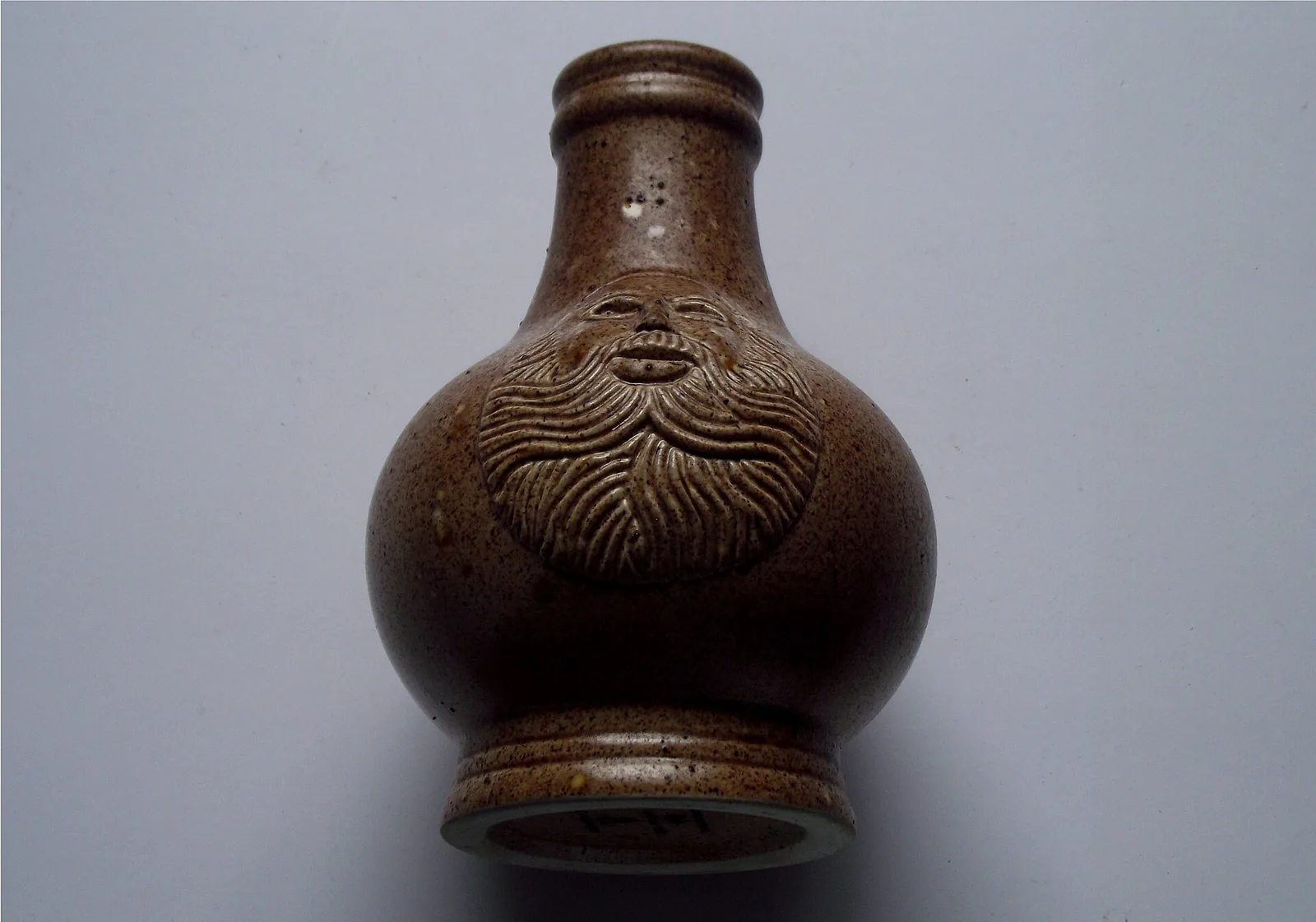
Household superstitions are the beliefs and customs that protect the home and regulate everyday life within it: nailing a horseshoe over the door, throwing spilled salt over the left shoulder, not opening an umbrella indoors, fearing a broken mirror, touching wood. Some are well documented from the seventeenth century, and archaeology has revealed hidden protective objects in thousands of old houses, but many of the explanations now given for these customs, from Roman mirror lore to the Holy Trinity under a ladder, are modern inventions.
The House as a Protected Space§
In most traditional societies the house was more than shelter. It held the family, its food, animals and luck, and it had to be guarded against witches, fairies, evil spirits, disease and envy as well as thieves and weather. The points of danger were its openings: the threshold, windows, the chimney and, in older buildings, gaps in the roof and walls. Many household superstitions concern these boundaries, and the same logic of protecting the boundary appears in the ritual of the magic circle and in the protective texts examined in Protective Magic.
The house also had a moral economy of luck. Luck could enter with a visitor or leave with the dust swept out of the door; it could be "broken" by careless acts inside the house. This idea explains customs such as not sweeping on New Year's Day or not giving away fire, salt or a light from the house at certain seasons.
Horseshoes, Iron and the Threshold§
Iron has a long reputation as a protection against supernatural beings, especially fairies and witches in British and Irish folklore, and the horseshoe combines iron with the skill of the smith and the strength of the horse. The earliest clear English evidence comes from John Aubrey's Miscellanies (1696), which states that "it is a thing very common to nail horse-shoes on the thresholds of doors", to hinder the power of witches, and adds that many houses in the West End of London had them. Horseshoes were also nailed to stable doors and, it was said, to the masts of ships.

The legend that Saint Dunstan, a tenth-century archbishop and goldsmith, nailed a horseshoe on the Devil's hoof and released him only on condition that he never enter a house with a horseshoe over the door is a popular tale whose horseshoe form seems to be post-medieval; earlier stories have Dunstan seizing the Devil's nose with tongs. The modern debate over whether the horseshoe should point up, to hold the luck in, or down, to pour luck over those entering, is recorded mainly from the nineteenth and twentieth centuries, and both orientations appear in old photographs. Brian Hoggard's Magical House Protection gives the archaeological context.
Other threshold customs include sprinkling salt or chalking patterns on the doorstep, burying objects under the threshold, and carrying a bride over it, discussed in Superstitions of Birth, Marriage and Death.
Hidden Protection: Witch Bottles, Concealed Shoes and Apotropaic Marks§
Building archaeology has transformed the study of household superstition by revealing what people actually did. Worn shoes, usually single and often a child's, have been found concealed in walls, under floors and especially near chimneys in thousands of British houses, mostly from the sixteenth to the nineteenth centuries; the Concealed Shoes Index begun by June Swann at Northampton Museum records many of them. Their purpose was not written down, but the locations, at openings and weak points, suggest protection, possibly by trapping or decoying evil.
Witch bottles, typically salt-glazed stoneware "Bellarmine" jugs of the seventeenth century, were filled with pins, nails, hair, nail clippings and urine and buried under hearths or thresholds. Contemporary writers such as Joseph Blagrave (1671) describe them as counter-magic intended to torment a witch and break her spell. One found intact at Greenwich in 2004 was analysed scientifically, confirming the contents described in the texts. Dried cats, horse skulls and written charms have also been found in walls and floors.
Apotropaic marks, sometimes called witch marks, are carved or burned on timbers and stone around doors, windows and fireplaces: hexafoils or "daisy wheels", interlaced V-shapes often read as Virgo Virginum (an invocation of the Virgin Mary), and deliberate candle-flame burn marks. Surveys in the 2010s recorded them in churches, houses and caves. Ralph Merrifield's The Archaeology of Ritual and Magic and the essays in The Materiality of Magic discuss this evidence.
The Hearth, the Chimney and the Fire§
The hearth was the centre of the traditional home, and the fire was ideally never allowed to go out; to let it die, or to give fire away from the house, especially at New Year or Christmas, was unlucky in many regions. The chimney, an unclosed opening, was a natural route for witches and spirits, which is why concealed shoes and marks cluster near fireplaces, and why chimney sweeps came to be seen as lucky figures to meet, particularly at weddings.
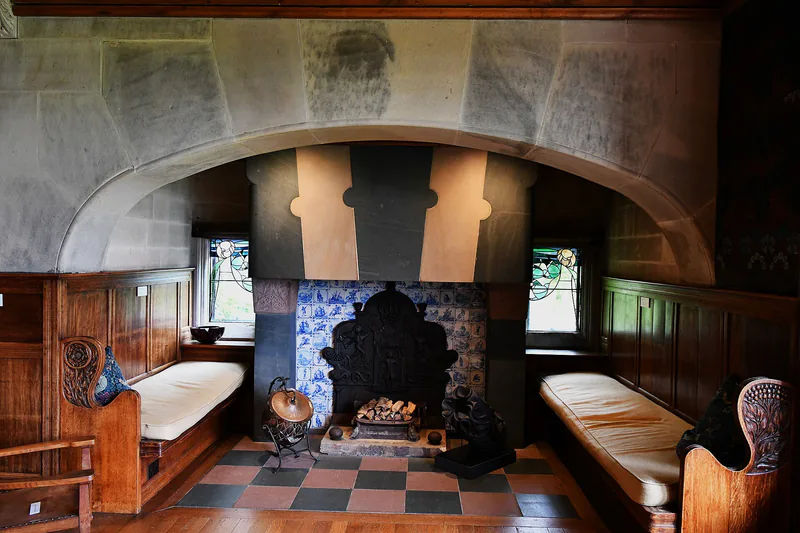
Eighteenth- and nineteenth-century collectors, among them Francis Grose in his Provincial Glossary (1787), recorded many hearth omens. A cinder flying out of the fire was examined for its shape: an oblong one was a "coffin", foretelling death, while a round or hollow one was a "purse" or "cradle", foretelling money or a birth. A fire burning on one side of the grate meant a wedding or a parting. Propping a poker upright against the bars was thought to draw a slow fire, perhaps because it made the sign of a cross. Placing a pair of bellows on a table was unlucky. Ritual fires of the calendar, such as the Yule log, belong to the seasonal customs surveyed in Wheel of the Year.
Salt, Bread and the Kitchen Table§
Salt, valued for preserving food and used in Christian exorcism and holy water, was a natural carrier of luck. Spilling it was unlucky, and the remedy of throwing a pinch over the left shoulder, said to go into the eyes of the Devil waiting there, is recorded in the early modern period and later. Leonardo da Vinci's Last Supper (about 1495–98) shows Judas with an overturned salt cellar at his elbow, which shows how easily the spill could be linked with betrayal, though it does not prove the superstition began there.
Bread was nearly as sacred. Housewives marked a cross on dough before baking; a loaf turned upside down on the table was unlucky; bread and salt were the traditional first gifts to a new house. One kitchen belief is genuinely ancient: Pliny the Elder recorded that people broke or pierced the shells of eggs after eating them to guard against spells, and the custom of crushing eggshells, later explained by the need to stop witches using them as boats, was still current in Britain in the nineteenth century. Crossed knives on a table foretold a quarrel, and a knife given as a gift "cut" a friendship unless a coin was given in return.
Indoors and Out: Umbrellas, Mirrors, Ladders and Touching Wood§
Several of the best-known superstitions are demonstrably modern in their recorded form.
- Umbrellas indoors. Umbrellas spread in Britain only from the mid-eighteenth century, and the belief that opening one indoors is unlucky is first recorded in the late nineteenth century. The story that it derives from ancient Egyptian sunshades is a modern invention.
- Broken mirrors. Breaking a mirror was taken as an omen of death in the house from at least the eighteenth century, but the specific "seven years' bad luck" appears in nineteenth-century sources. The often-repeated claim that Romans believed mirrors held the soul, or that life renewed itself every seven years, is speculation offered to explain it.
- Walking under a ladder. Recorded from the late eighteenth and nineteenth centuries. Explanations involving the Trinity triangle or the gallows ladder are later rationalisations; the practical danger of falling objects is a sufficient reason.
- Shoes on the table. Placing new shoes on a table is unlucky in many British families, a belief recorded from the late nineteenth century and sometimes linked to the laying out of the dead or to mining deaths; neither explanation is documented.
- Touching wood. There is no reliable record before the nineteenth century, and Steve Roud notes the children's chasing game "tig touchwood" as a possible influence. Claims that it began with tree spirits, the druids or touching the True Cross are unproven.
These examples illustrate the general argument of What Is Superstition?: a belief can be widely held and still recent, and its origin story may be younger than the belief itself. The professional charmers and cunning-folk who dealt with suspected witchcraft in the house are described in Folk Magic.
Frequently asked questions§
Why do people hang a horseshoe over the door?§
Iron was believed to repel witches and fairies, and John Aubrey recorded in 1696 that horseshoes were commonly nailed to thresholds to hinder witches. Over time the horseshoe came to be seen as simply lucky.
Why is it bad luck to open an umbrella indoors?§
The belief is first recorded in the late nineteenth century, after umbrellas had become common. Claims of ancient Egyptian origins are modern; the practical nuisance of a wet umbrella with spokes in a crowded room may have helped it spread.
Why throw salt over your left shoulder?§
Spilling salt was considered unlucky, and throwing a pinch over the left shoulder was said to blind or drive off the Devil standing behind. The custom is recorded in early modern and later sources.
What were witch bottles?§
They were stoneware or glass bottles filled with pins, nails, hair and urine, buried under hearths or thresholds in the seventeenth century and later, as counter-magic against a suspected witch. Hundreds have been found in Britain.
Sources and further reading§
- Magical House Protection: The Archaeology of Counter-Witchcraft — Brian Hoggard, 2019
- The Archaeology of Ritual and Magic — Ralph Merrifield, 1987
- The Materiality of Magic: An Artefactual Investigation into Ritual Practices and Popular Beliefs — Ceri Houlbrook and Natalie Armitage (eds), 2015
- Miscellanies — John Aubrey, 1696
- A Provincial Glossary, with a Collection of Local Proverbs and Popular Superstitions — Francis Grose, 1787
- A Dictionary of Superstitions — Iona Opie and Moira Tatem, 1989
- The Penguin Guide to the Superstitions of Britain and Ireland — Steve Roud, 2003
- Cunning-Folk: Popular Magic in English History — Owen Davies, 2003