Liber XII · Hermeticism · Chapter II: Corpus Hermeticum
The Hermetic Asclepius: The Perfect Discourse and Its Legacy
The Hermetic Asclepius explained: the Latin Perfect Discourse, humanity as a great miracle, the animated statues, the lament for Egypt and its legacy.

The Asclepius is a Hermetic dialogue preserved in Latin, a translation of a lost Greek work called the Perfect Discourse (Logos teleios), in which Hermes Trismegistus teaches his disciple Asclepius about God, the cosmos and the human being. Composed in Roman Egypt and translated probably in the fourth century, it was the only substantial Hermetic text available in the Latin West for a thousand years. It is famous for calling humanity "a great miracle", for its account of statues animated by divine powers, and for a prophetic lament over the abandonment of Egypt.
Origins of the Latin Asclepius§
The Greek original, which Hermetic tradition called the Perfect Discourse because it was meant to crown Hermes' teaching, is lost as a whole. Its existence is confirmed by Lactantius, the Christian rhetorician who quoted it in Greek in his Divine Institutes in the early fourth century. A substantial section, corresponding to chapters 21 to 29 of the Latin, survives in Coptic in Codex VI of the Nag Hammadi library, and the concluding prayer exists in Greek on a magical papyrus now in Paris as well as in Coptic.
The Latin translation was probably made in the fourth century by an unknown hand. Because it travelled in medieval manuscripts together with genuine philosophical works of the second-century author Apuleius of Madaura, it was often attributed to him, an attribution modern scholars reject on grounds of style. The Latin is sometimes free and expansive, and comparison with the Coptic shows that the translator adapted as well as rendered.
The setting is solemn. Hermes, Asclepius, Tat and Ammon gather in the inner sanctuary of an Egyptian temple. Hermes admits only these few, for a discourse full of divine majesty must not be profaned by a crowd, and he begins his teaching on the nature of all things.
Humanity as a Great Miracle§
The best-remembered phrase in the dialogue comes early: magnum miraculum est homo, "a great miracle is man". Hermes explains that the human being is a living creature worthy of reverence and honour, who passes into the nature of a god as though he were a god, and who knows the race of daimons because he shares their origin. Uniquely, humanity has a double nature: a divine part made of mind and a mortal part made of the elements of the world.
This double nature is not a misfortune but a vocation. God made humanity so that it could do two things, admire and worship the heavens and care for the earth, tilling fields, building and governing. A human who fulfils both roles completes the order of the world. Here the Asclepius differs in tone from the Poimandres, which emphasises the fall into the body and the escape from it; the Asclepius praises the cultivation of the world as a sacred duty.
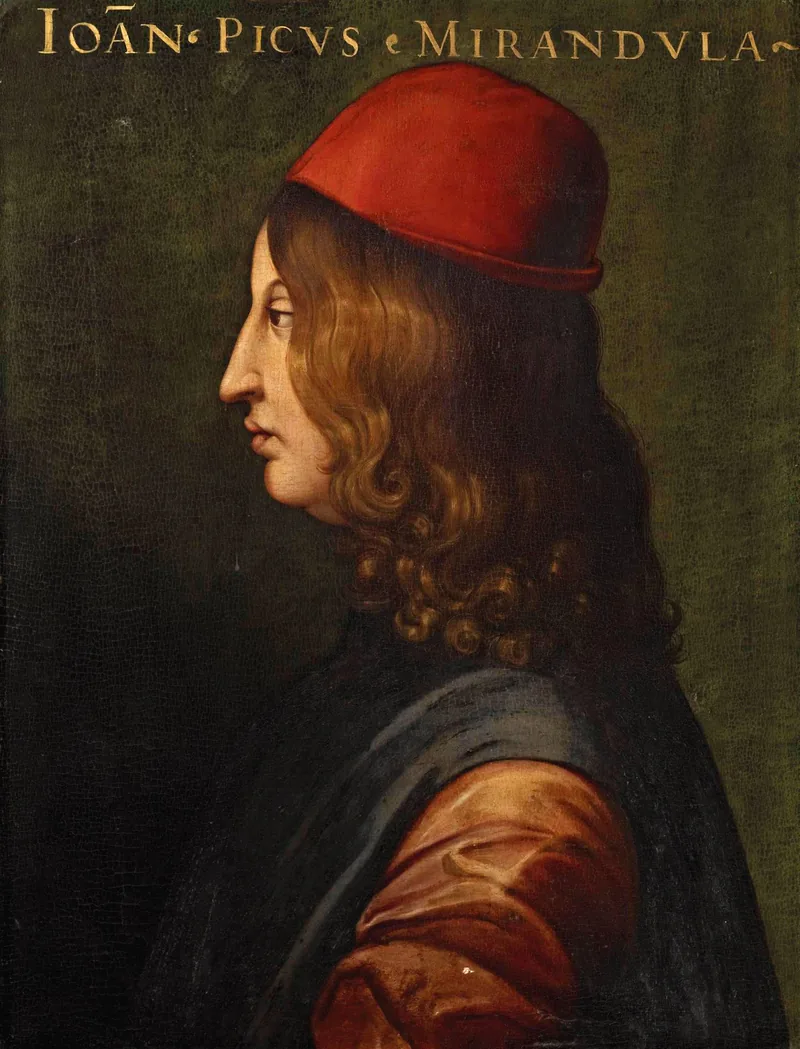
Giovanni Pico della Mirandola opened his Oration of 1486 with the words "a great miracle, Asclepius, is man", attributing them to Hermes. The phrase became a slogan for Renaissance ideas of human dignity, though Pico's own argument, that humans have no fixed place in the hierarchy of beings, goes beyond the Hermetic text.
God, Matter and the Living Cosmos§
The Asclepius offers a broad theology of the world. God is one and all, the source of everything and yet beyond name; he contains the fertility of both sexes and is therefore spoken of as both father and mother of creation. Beneath God are the heavens, the world and matter, which the dialogue, unusually, describes as ungenerated yet possessing the power of generation. Spirit pervades and animates all things.
Between the highest God and the sensible world stand intermediate divine powers, the "chiefs of essences" (ousiarchai), which govern the heavens, the stars, the elements and the decans, the thirty-six star groups of Egyptian astronomy. The cosmos itself is a second god, the image of the first, and its beauty is an object of reverence. Such teaching underlies the doctrine of sympathy and correspondences that later readers took from Hermetic writings.
The Statues and the Making of Gods§
Two passages (chapters 23–24 and 37–38 of the Latin) gave the Asclepius its notoriety. Hermes explains that just as God made the heavenly gods, so humans make earthly gods: statues in the temples, "ensouled and conscious, full of spirit". Their makers, the ancestors of the Egyptians, discovered an art of drawing the souls of daimons or angels into images by means of herbs, stones and spices possessing divine power, together with hymns and praises that delight the heavenly beings. The animated statues foretell the future, send dreams and cause or heal illness.
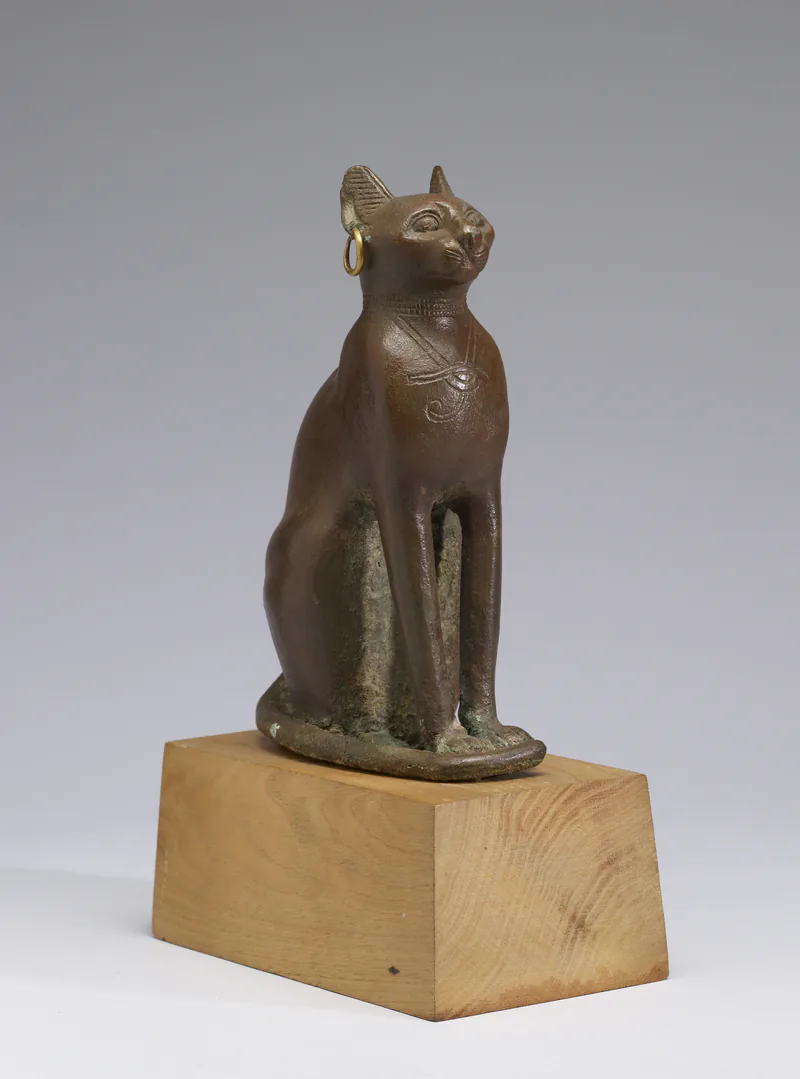
These passages describe the cult statues of Egyptian temples in a philosophical idiom and should be read in that context, not as a manual. Their reception, however, was dramatic. Augustine devoted several chapters of The City of God (Book VIII) to refuting them, arguing that the gods drawn into such images were demons. In the Renaissance Marsilio Ficino cited the god-making passage in his Three Books on Life (1489) while discussing talismans, and Frances Yates later made it a cornerstone of her argument that Renaissance magic was inspired by the Hermetica (see astral magic).
The Lament for Egypt and Its Prophecy§
Chapters 24 to 26 contain the dialogue's most dramatic passage, often called the Lament or the Apocalypse. Hermes declares that Egypt is the image of heaven and the temple of the whole world, yet a time will come when it will seem that the Egyptians honoured the gods in vain. Foreigners will fill the land, religion will be forbidden by law, and the gods will withdraw to heaven. Egypt will become a land of tombs and of the dead, darkness will be preferred to light, and the pious will be counted mad.
The prophecy does not end in despair. When the world has grown old in disorder, God will restore it, purging evil by flood, fire or plague and returning the cosmos to its ancient beauty. Scholars have long debated whether the Lament reflects the Christianisation of Egypt in the fourth century, in which case parts of the Latin may have been updated, or older Egyptian traditions of prophecy such as the Potter's Oracle, which also foretold disaster followed by renewal. The presence of the Lament in the Coptic version suggests that its core predates the closure of the temples.
Medieval Readers and the Renaissance§
For the Latin Middle Ages the Asclepius was "Hermes" in philosophical form. Twelfth-century theologians, among them Peter Abelard, quoted its references to God begetting a second god whom he loved as his son as pagan testimony to the Trinity, and the text continued to be cited by scholastic writers, among them the fourteenth-century theologian Thomas Bradwardine. Other medieval Hermetic works, catalogued by Paolo Lucentini and Vittoria Perrone Compagni, show how widely the name of Hermes travelled.
In the Renaissance the Asclepius was printed with the works of Apuleius from 1469 and later with Ficino's Pimander; the 1505 Paris edition of Jacques Lefèvre d'Étaples combined both with commentary, adding a cautionary note on the statue passages. Through these editions it reached Agrippa, Bruno and the English translators of the seventeenth century. The library's Divine Pymander includes an early English version of the Asclepius among its books. For the broader collection see the Corpus Hermeticum and the life of Hermes Trismegistus.
Frequently asked questions§
Is the Asclepius part of the Corpus Hermeticum?§
Not strictly. The Corpus Hermeticum is a Greek collection of seventeen treatises, while the Asclepius survives as a separate Latin work. Modern translations usually print them together because they share the same teachers, ideas and history.
Did Apuleius write the Asclepius?§
No. The attribution arose because medieval manuscripts copied the Asclepius together with Apuleius' philosophical works. Its style and content show that it was translated by an unknown writer, probably in the fourth century.
What does "a great miracle is man" mean in the Asclepius?§
In context it expresses the dignity of humanity as a being with a divine mind and a mortal body, able both to worship the heavens and to care for the earth. Renaissance writers, especially Pico della Mirandola, adopted it as a motto of human dignity.
Why did Augustine criticise the Asclepius?§
Augustine objected to its praise of statues into which, it said, divine powers were drawn by human art. He argued that such powers were demons and that the prophecy of Egypt's desolation actually foretold the end of idolatry.
Sources and further reading§
- Hermetica: The Greek Corpus Hermeticum and the Latin Asclepius — Brian P. Copenhaver, 1992
- Corpus Hermeticum (Budé edition, 4 vols.) — A. D. Nock & A.-J. Festugière, 1945
- The Nag Hammadi Library in English — James M. Robinson (ed.), 1988
- The City of God — Augustine of Hippo, 426
- I testi e i codici di Ermete nel Medioevo — Paolo Lucentini & Vittoria Perrone Compagni, 2001
- Hermetica II: The Excerpts of Stobaeus, Papyrus Fragments, and Ancient Testimonies — M. David Litwa, 2018
- The Egyptian Hermes — Garth Fowden, 1986