Liber XVIII · Jainism · Chapter III: Jain Cosmology
Jain Gods and Goddesses: Devas, Yakshas, Yakshis and Guardians
Jain gods explained: the four classes of devas, Indra, the yakshas and yakshis who guard each Tirthankara, Ambika, Padmavati and protector deities.

Jainism has no creator god, and the beings Jains worship most — the Tirthankaras — are liberated souls who no longer act in the world. Yet the Jain universe is full of gods (devas) and goddesses: heavenly kings such as Indra, the yakshas and yakshis who guard the teaching of each Tirthankara, goddesses of knowledge and prosperity, and local protector deities. Jains regard all of them as souls still bound by karma, powerful but not liberated, who may help with worldly needs but cannot grant liberation.
Gods Without a Creator: The Jain View of the Divine§
In Jain teaching the universe is eternal and uncreated, governed by its own laws, as explained in Jain Cosmology. The highest beings are the Jinas or Tirthankaras, who have conquered the passions and attained omniscience, and the Siddhas, liberated souls at the summit of the cosmos. Jains often call these liberated beings Bhagavan or "God," but they do not create, judge or intervene; worship of them is a meditation on their qualities, as described in Jain Temples and Pilgrimage.
The devas are something else. Birth as a god is one of the four destinies (gatis) of the soul, alongside birth as a human, an animal or plant, and a hell-being. It is the reward of good karma, and gods enjoy long lives, great power and pleasure. But their merit eventually runs out, and they die and are reborn elsewhere. Because heavenly life offers little scope for renunciation, Jain texts say that a god cannot attain liberation directly and must first be born as a human being. In this sense the human state is spiritually superior to the divine.
The Four Classes of Jain Gods§
The Tattvartha Sutra and the cosmological texts classify gods into four groups:
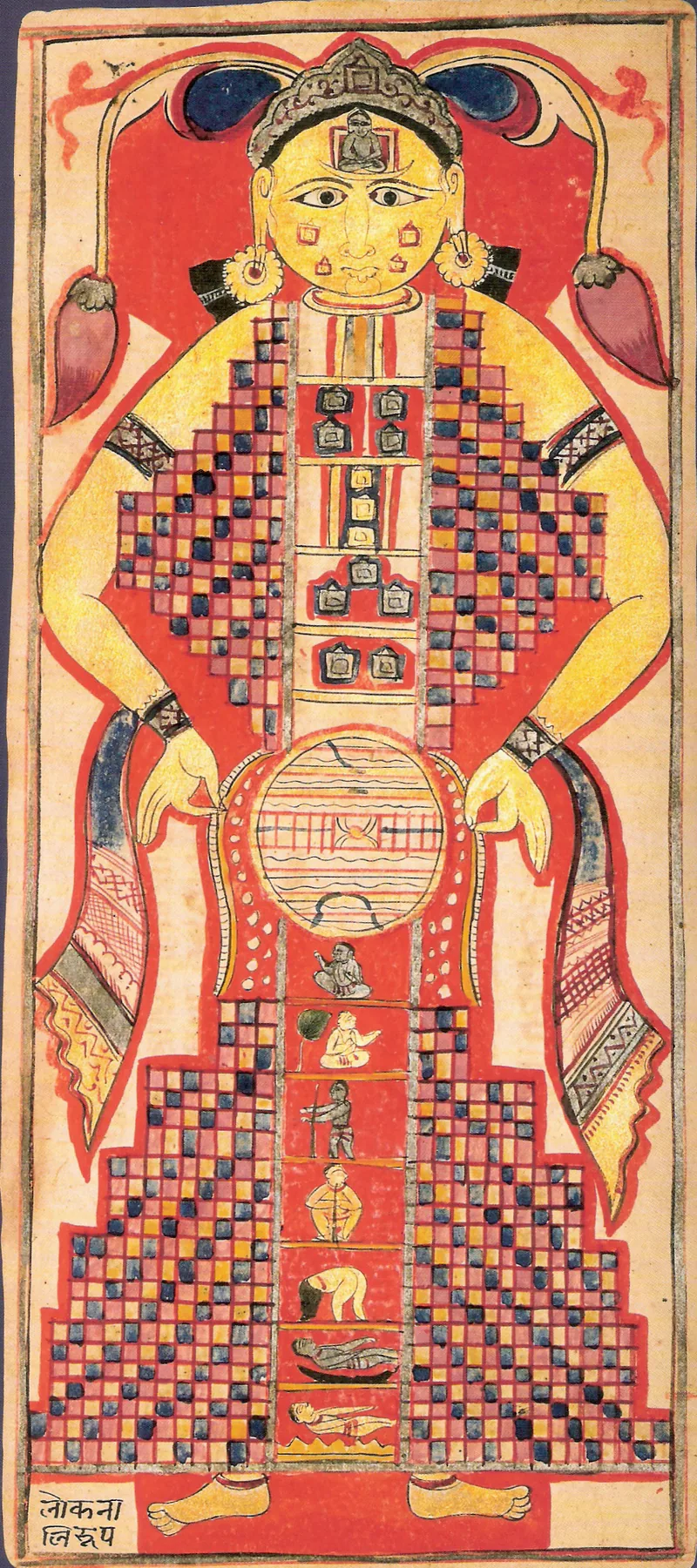
- Bhavanavasis ("residence-dwellers") live in palaces in the upper levels of the lower world. They include ten kinds, such as the serpent deities (nagakumaras), whose king Dharanendra plays a central role in the story of Parshvanatha.
- Vyantaras ("intermediate" or "wandering" gods) inhabit the middle world and the region just below it. They include eight kinds, among them yakshas, rakshasas, bhutas, pishachas, kinnaras and gandharvas — figures familiar from wider Indian folklore, reclassified within the Jain scheme.
- Jyotishkas ("luminaries") are the sun, moon, planets, lunar mansions and stars, which in Jain cosmology are vehicles occupied by gods moving around Mount Meru.
- Vaimanikas ("dwellers in celestial vehicles") occupy the heavens of the upper world, ranked in tiers up to the highest abodes just below the realm of the liberated.
Each class has its kings, the Indras, of whom the most prominent is Shakra (Saudharmendra), lord of the first heaven. Not every god has right faith: Jain texts distinguish deities who accept the Jain teaching (samyagdrishti devas) from those who do not.
Indra and the Gods in the Lives of the Tirthankaras§
The gods appear above all as worshippers of the Tirthankaras. At each of the five auspicious events of a Tirthankara's life — conception, birth, renunciation, omniscience and liberation — Indra and the gods come down to celebrate. At the birth, Indra carries the infant to the summit of Mount Meru and bathes him with water from the ocean of milk, an episode re-enacted in Jain temples in the bathing ritual of the image (abhisheka or snatra puja), in which lay men and women take the parts of Indra and Indrani. When a Tirthankara attains omniscience, the gods build the samavasarana, a great circular assembly hall in which humans, animals and gods listen to his teaching. The theme is developed in Mahavira and the 24 Tirthankaras.
In this imagery the gods are servants and devotees of a human being who has surpassed them, an inversion that Jain writers used deliberately to express the superiority of renunciation over worldly power.
Yakshas and Yakshis: Guardians of the Teaching§
Origins in popular religion§
Yakshas and yakshis were among the oldest objects of popular worship in ancient India: nature spirits and guardians of trees, wealth, villages and towns, honoured with shrines and offerings. Early Jain and Buddhist texts mention yaksha shrines (chaityas) where Mahavira and the Buddha stayed. The art historian Ananda Coomaraswamy showed how the iconography of these figures fed into early Jain, Buddhist and Hindu sacred art.
The shasana devatas§
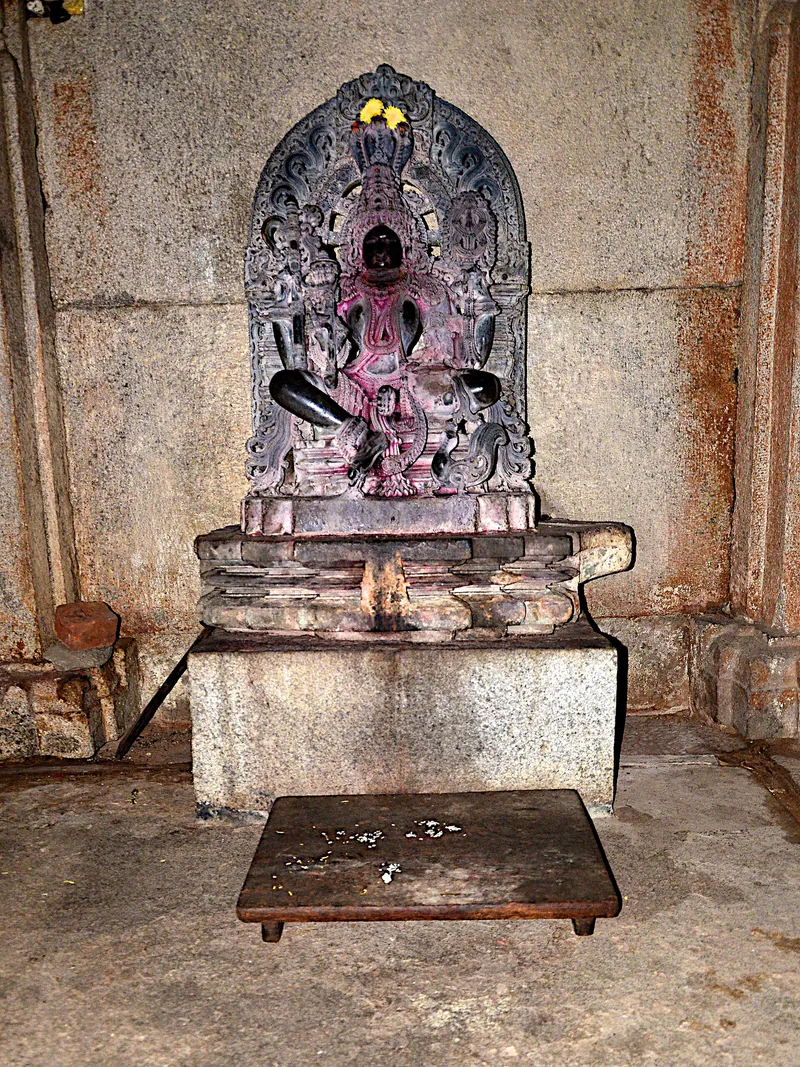
From roughly the sixth century CE, Jains began to associate particular yakshas and yakshis with individual Tirthankaras as shasana devatas, "deities of the dispensation," who protect the teaching and the community. By about the eleventh century complete lists of twenty-four pairs had been fixed, with some differences between Shvetambara and Digambara versions. The yaksha usually appears at the right of the Tirthankara's image and the yakshi at the left. Examples include:
| Tirthankara | Yaksha | Yakshi |
|---|---|---|
| Rishabha (1st) | Gomukha | Chakreshvari |
| Neminatha (22nd) | Gomedha | Ambika |
| Parshva (23rd) | Dharanendra | Padmavati |
| Mahavira (24th) | Matanga | Siddhayika |
The Great Jain Goddesses§
Ambika§
Ambika ("mother"), the yakshi of Neminatha, is one of the earliest Jain goddesses to receive an independent cult; bronze images from Akota in Gujarat, of about the sixth or seventh century, already show her. She is depicted with a child on her lap, another at her side, a bunch of mangoes and a lion as her mount. Her legend tells of a devout wife driven from home after offering food to a Jain monk, who became a goddess after her death; she is worshipped for the protection of children and family.
Padmavati and Chakreshvari§
Padmavati, the yakshi of Parshva, is shown with a serpent canopy and is especially popular in Karnataka and Maharashtra; her temple at Humcha in Karnataka has long been a major centre. She became the focus of an elaborate Jain mantra literature, including the Bhairava-Padmavati-Kalpa attributed to the eleventh-century Digambara monk Mallishena, which contains rites for worldly ends of the kind found in wider Indian tantric traditions discussed in Tantra: History and Practice. Chakreshvari, the yakshi of Rishabha, rides a garuda and holds discuses.
Sarasvati, Lakshmi and the vidyadevis§
Jains also worship Sarasvati, as Shrutadevi, goddess of scripture and learning; the marble Sarasvati figures from Pallu in Rajasthan, of about the twelfth century, are celebrated masterpieces. Lakshmi is honoured by Jain merchants, especially at Diwali. A group of sixteen vidyadevis, goddesses of magical knowledge, appears in temple sculpture, notably at the Dilwara temples of Mount Abu. Comparisons with the Hindu pantheon can be drawn in Hindu Gods and Goddesses.
Protector Gods and the Debate Over Worship§
Alongside the yakshis stand protector deities: the kshetrapalas (guardians of the temple ground), Bhairava figures such as Nakoda Bhairava in Rajasthan, Ghantakarna Mahavira at Mahudi in Gujarat, and Manibhadra, the guardian of the Tapa Gaccha. The Kharatara Gaccha venerates its deceased great teachers, the Dadagurus, whose shrines attract petitions for help. The anthropologist Lawrence Babb has shown how these figures complement the "absent" Tirthankaras: the Jina is worshipped as an ideal, while the guardians respond to requests.
Jain authorities have always taught that such worship serves worldly ends only and does not lead to liberation. Some reform movements went further. The Sthanakvasis and Terapanthis reject image worship altogether, and among Digambaras the Terapanth movement of the seventeenth century rejected the worship of yakshis and kshetrapalas, while the older Bispanth tradition retained it. The debate continues, and illustrates the range of religious life within Jainism discussed in Digambara and Shvetambara Jainism. A broader survey of divine beings across religions is offered in Gods and Goddesses.
Frequently asked questions§
Do Jains believe in God?§
Jains do not believe in a creator or ruler of the universe. They revere the liberated Tirthankaras and Siddhas, sometimes called God, and also accept the existence of many gods (devas) who are powerful but still subject to rebirth.
Who is Padmavati in Jainism?§
Padmavati is the yakshi, or guardian goddess, of the twenty-third Tirthankara, Parshvanatha. In a previous life she was a snake rescued by Parshva, and she is widely worshipped for protection and help in worldly matters.
Can Jain gods grant liberation?§
No. Jain teaching holds that gods are themselves bound by karma and must be reborn as humans before they can attain liberation. They may help with worldly concerns, but liberation depends only on a person's own faith, knowledge and conduct.
Sources and further reading§
- Absent Lord: Ascetics and Kings in a Jain Ritual Culture — Lawrence A. Babb, 1996
- Framing the Jina: Narratives of Icons and Idols in Jain History — John E. Cort, 2010
- Jaina-Rupa-Mandana — Umakant P. Shah, 1987
- Jaina Iconography — Jyotindra Jain & Eberhard Fischer, 1978
- Yaksas — Ananda K. Coomaraswamy, 1928
- The Peaceful Liberators: Jain Art from India — Pratapaditya Pal, 1994