Liber XIV · Hinduism · Chapter I: Bhakti & Saints
Mirabai: The Rajput Poet-Saint of Krishna, Life and Legend
Mirabai, the sixteenth-century Rajput poet-saint devoted to Krishna: her life and legends, her songs of longing, the authorship question and her legacy.

Mirabai, or Meera, was a sixteenth-century Rajput noblewoman of Rajasthan who, according to tradition, renounced the duties of a royal widow to devote herself entirely to Krishna, whom she called her only husband, and whose songs of love and longing are among the most beloved devotional poems in India. Her life survives mainly in legend, and many of the poems sung in her name were composed or reshaped long after her death, but "Mira" has become a powerful figure of devotion, defiance and spiritual freedom.
Who Was Mirabai? Life and Legend§
The traditional account, assembled from hagiographies and from her songs, runs as follows. Mira was born, perhaps around 1498, into the Rathore Rajput family that ruled Merta in Marwar, a granddaughter of its founder Rao Duda. As a child she is said to have been given a small image of Krishna, and to have declared, after seeing a wedding procession, that Krishna was her bridegroom. Around 1516 she was married to Bhoj Raj, heir of Rana Sanga, the powerful ruler of Mewar at Chittor.
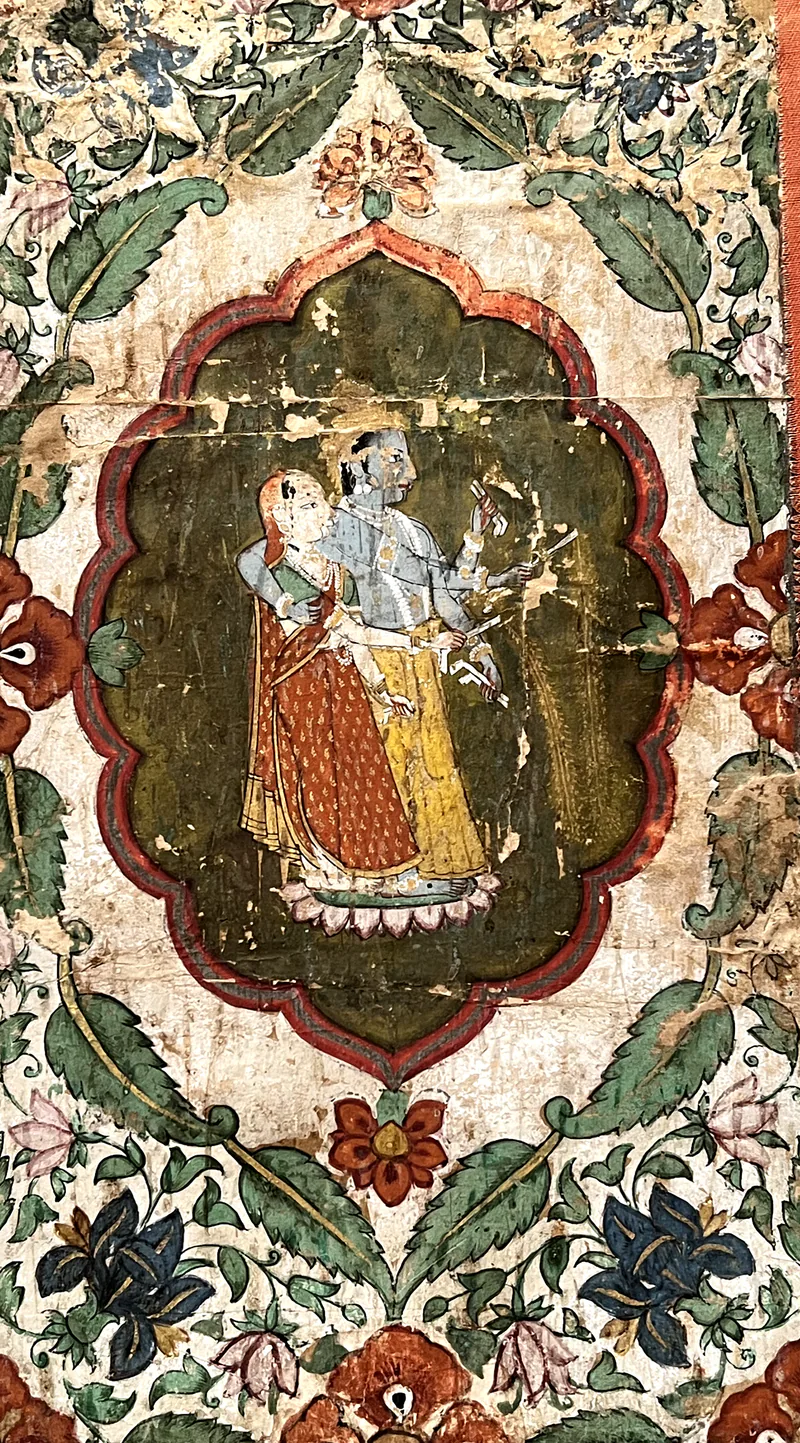
Her husband died within a few years, before he could succeed to the throne. According to legend Mira refused to become a sati, burning on her husband's pyre, saying that her true husband could not die, and she refused also the restricted, secluded life expected of a Rajput widow. Instead she sang and danced before Krishna's image and kept company with wandering holy men, to the dismay of her husband's family. Eventually she left Chittor, travelled to Vrindavan, the land of Krishna's youth, and finally settled in Dvaraka on the coast of Gujarat. Tradition says that when emissaries came to bring her back, she entered the temple of Krishna as Ranchhodrai and vanished into the image, around 1547.
Little of this is documented in contemporary records. The earliest datable reference to Mira is a short verse in Nabhadas's Bhaktamal, the "Garland of Devotees," composed around 1600, which praises her fearless devotion and her disregard for social shame. A commentary on that work by Priyadas, completed in 1712, filled in the stories that later biographers repeated.
The Legends of Persecution and Escape§
The best-known episodes concern the hostility of the rana, the ruler of Mewar, usually understood as her brother-in-law Vikramaditya. He is said to have sent her a cup of poison, which she drank as Krishna's offering and which turned to nectar; to have sent a venomous snake hidden in a basket, which became a flower garland or an image of the god; and to have prepared a bed of spikes, which turned to flowers. Her songs refer to these trials and to the slander of her relatives, in phrases that suggest the poems and the legends grew up together.
Another story sets Mira in Vrindavan, where a renowned ascetic, often identified with Jiva Gosvami of the Gaudiya school, declined to meet her because he had vowed not to look at a woman. Mira is said to have replied that she had thought there was only one male in Vrindavan, Krishna, and that all others were his gopis. The anecdote expresses a recurring theme of her tradition: before God, social distinctions of gender and rank lose their meaning.
The legends also gave Mira a guru. Some songs name Raidas, the leather-worker saint known in the Sikh tradition as Ravidas, as her teacher. The chronology is difficult, since Ravidas is usually placed earlier, but the claim matters to the low-caste communities who sing her songs, as discussed below and in Sikhism and the Sant Tradition.
Mira's Poetry: Themes and Language§
Mira's songs are short lyrics (padas) meant to be sung, in a mixture of Rajasthani, Braj Bhasha and Gujarati, varying with the regions where they were collected. Most end with a signature line naming the poet and her Lord, typically as "Giridhar Nagar" or "Giridhar Gopal," Krishna as the lifter of Mount Govardhana, the episode told in the Bhagavata Purana.
The dominant mood is viraha, the longing of separation. Mira waits through sleepless nights for a beloved who does not come, watches the monsoon clouds that should bring lovers home, and describes herself wasting with a sickness no physician can heal. In other songs she speaks as the wife who has already given herself away: she has no husband but Krishna, the world's opinion means nothing to her, and she has dyed herself in the colour of her lord. Some poems picture Krishna as a wandering yogi whom she wishes to follow, a theme that joins devotional love to the ascetic world of the holy men she kept company with.
A famous image shows Mira dancing with bells tied to her ankles while the people call her mad and her family call her a disgrace. Her defiance is seldom angry; it is the calm refusal of someone for whom the claims of the world have already lost their force. In the classifications of later scholars she belongs to the saguna stream of North Indian bhakti, devoted to a God with form and name, alongside Surdas and Tulsidas, as described in The Bhakti Movement.
The Problem of Authorship and the Growth of the Mira Corpus§
Printed collections of Mira's poems contain hundreds of songs, but scholars have found that only a handful can be traced to manuscripts earlier than the eighteenth century. The historian of religion John Stratton Hawley, who has studied the manuscript tradition of the North Indian saints, concluded that the great majority of "Mira" poems were composed by later singers who adopted her name and voice. In a living oral tradition, attaching a song to a beloved saint was a way of honouring her, and the boundary between an original and a later poem meant little to performers.
This does not make the corpus worthless as evidence. It records how communities across Rajasthan, Gujarat and North India imagined Mira and what they heard in her voice. Scholars therefore speak of a "Mira tradition" rather than trying to reconstruct the works of a single sixteenth-century author, much as they do for Kabir and Surdas. Scholars differ on how much of the historical woman can be recovered at all: some stress how thin the evidence is, while others think the core of the legend reflects a real widow of the Merta and Mewar houses.
Mirabai Among Rajputs, Low-Caste Singers and Women§
Mira's memory has been contested. The sociologist Parita Mukta, in a study of Mira singing in Rajasthan and Saurashtra, found that the Rajput aristocracy long regarded her with embarrassment, since her flight from the family was a stain on its honour, while peasant, artisan and low-caste communities, including weavers and leather-workers, kept her songs alive as an expression of their own refusal of hierarchy. In their versions Mira chooses the company of the poor and of Raidas the leather-worker over the palace.
For many women Mira has been a model of a life lived on one's own terms in the name of God, and feminist scholars have read her songs as a rare female voice of resistance to patriarchal control. Others caution that the devotional tradition did not usually present her as a social reformer; her freedom is grounded in surrender to Krishna, not in an argument about rights.
Mirabai in Modern India: Gandhi, Film and Song§
In the twentieth century Mira became a national figure. Mahatma Gandhi admired her as an example of nonviolent resistance, a woman who suffered persecution without retaliating, and her songs were sung at his ashrams. The great Carnatic singer M. S. Subbulakshmi played her in the film Meera (Tamil 1945, Hindi 1947), and her recordings of Mira bhajans made the songs familiar across India. Further films, comic-book retellings and countless recordings followed.
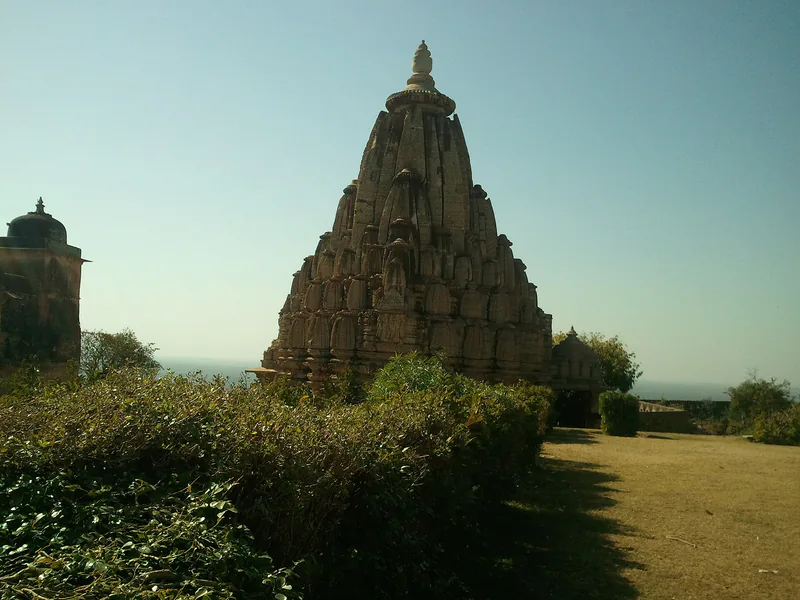
Today temples dedicated to Mira stand at Chittorgarh and at Merta, and her songs are sung in homes, temples and concerts, in classical and popular styles, and in English versions by modern poets. Her figure links Hindu devotion with the wider history of mystical love poetry, and readers often compare her with the women mystics of other traditions, such as the poets of Sufism and of Christian bridal mysticism.
Frequently asked questions§
When did Mirabai live?§
Tradition places Mira's life roughly between 1498 and 1547, but these dates are not documented in contemporary sources. The earliest reliable mention of her is in Nabhadas's Bhaktamal of around 1600.
Did Mirabai write all the poems attributed to her?§
Almost certainly not. Only a small number of Mira poems appear in early manuscripts, and most were composed by later singers in her name, a common practice in North Indian devotional song.
Who was Mirabai's guru?§
Some songs and later traditions name the saint Raidas (Ravidas) as her guru, though the chronology makes a meeting doubtful. Other stories link her with Vaishnava teachers in Vrindavan, and many devotees regard Krishna himself as her only teacher.
Sources and further reading§
- Three Bhakti Voices: Mirabai, Surdas, and Kabir in Their Times and Ours — John Stratton Hawley, 2005
- Songs of the Saints of India — John Stratton Hawley and Mark Juergensmeyer, 1988
- Upholding the Common Life: The Community of Mirabai — Parita Mukta, 1994
- A Storm of Songs: India and the Idea of the Bhakti Movement — John Stratton Hawley, 2015
- The Devotional Poems of Mīrābāī — A. J. Alston, 1980