Liber V · Chaos Magick · Chapter II: Contemporary Occultism
Ramsey Dukes and SSOTBME: Lionel Snell's Philosophy of Magic
Ramsey Dukes (Lionel Snell) and SSOTBME (1974): magic, religion, science and art as modes of thought, the information model and his influence on chaos magick.

Ramsey Dukes is the best-known pen name of Lionel Snell, an English writer, magician and publisher whose SSOTBME: An Essay on Magic (1974) argued that magic, religion, science and art are distinct "modes of thought", each with its own logic and uses. Trained as a mathematician, Snell became one of the most original theorists of British magic in the 1970s and 1980s, and his ideas about belief, information and the usefulness of magical thinking strongly influenced chaos magick.
Lionel Snell: Mathematician, Magician and Publisher§
Snell was born in Kings Langley, a village in Hertfordshire north-west of London, and won a series of scholarships that took him to Emmanuel College, Cambridge, where he graduated in pure mathematics. Mathematical habits of thought, a fondness for paradox and an interest in systems and computation run through all his writing.
By the early 1970s he was writing on magic for the small occult press of the time; an essay on Austin Osman Spare appeared in the Agape Occult Review in 1972. He published most of his books through his own imprint, The Mouse That Spins, and wrote under several pseudonyms, of which Ramsey Dukes became the most familiar. His writing combines rigorous argument with satire, mock self-help and deliberate provocation, a mixture that has sometimes led readers to underestimate its seriousness. He was associated with the Ordo Templi Orientis and with the Illuminates of Thanateros, and from 2015 he has also presented his ideas in talks published online.
SSOTBME: The Title and the Argument§
SSOTBME was first published in 1974 and later revised, most fully in a 2002 edition. Its cryptic title is an acronym for "Sex Secrets of the Black Magicians Exposed", a joke at the expense of sensational occult publishing; the subtitle, An Essay on Magic, Its Foundations, Development and Place in Modern Life, describes its real content more accurately.
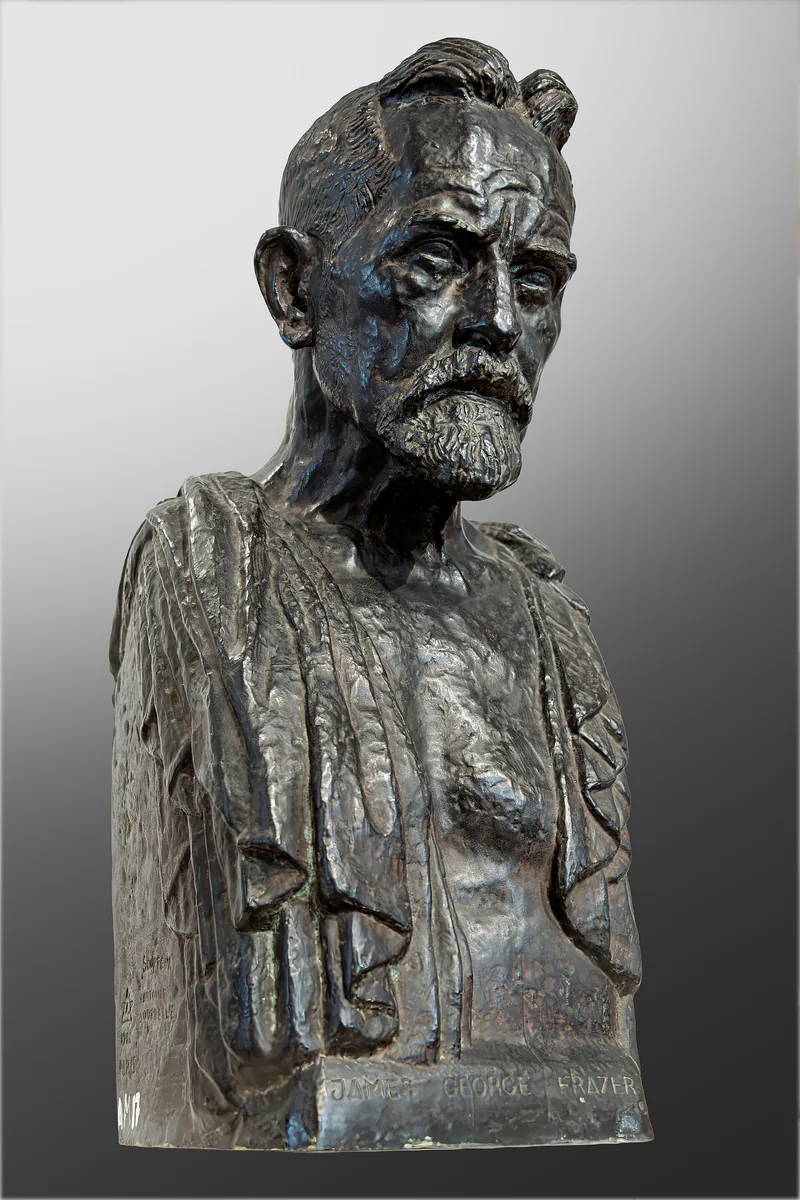
The book's starting point is a question that had troubled anthropologists since Edward Tylor and James Frazer: why has magic persisted if, as the Victorians argued, it is simply mistaken science? Frazer's answer, that magic is a primitive and erroneous attempt to manipulate nature, is discussed in Theories of Magic. Dukes rejected the premise. Magic, he argued, is not bad science, because it is not trying to be science at all. It is a different way of thinking, with its own characteristic strengths, and it should be judged by its own standards.
The Four Modes of Thought§
At the centre of SSOTBME is a scheme of four modes of thought: magic, religion, science and art. Each is a recognisable way in which human beings approach the world and solve problems, and each looks foolish when judged by the criteria of another. Science seeks impersonal, repeatable knowledge and suspends personal feeling. Religion orients the self toward a greater power through faith and surrender. Art works through personal expression and response without claiming objective truth. Magic, in Dukes's account, combines a practical, experimental interest in getting results with a willingness to use subjective, symbolic and apparently irrational means.
Dukes did not claim that any one mode is superior. A scientist who dismisses magic and a magician who dismisses science make the same error: applying the rules of one mode outside its proper domain. Most people, he suggested, move between modes all the time without noticing, praying in a crisis, reasoning at work and responding to music in the evening. He also proposed, half seriously, that cultures tend to pass through phases dominated by one mode or another, and that a civilisation as heavily invested in science as the modern West might be expected eventually to turn toward other modes.
Why the essay mattered§
The importance of this argument for later magicians lay in its permission to move. If belief systems are modes rather than rival truths, then a magician need not choose one once and for all but can adopt whichever is most useful for the task at hand. This is precisely the attitude that chaos magicians would call paradigm shifting, and SSOTBME is regularly listed among the movement's precursors in surveys such as Chaos Magick Books.
Words Made Flesh and the Information Model§
In Words Made Flesh (1987) Snell turned to a different question: what kind of universe would make magic possible? Drawing on his interest in computing, he explored the idea that reality might be best understood as information, and that the cosmos could resemble a vast computation or virtual reality. In such a universe, he suggested, magic would be comparable to manipulating the program from within, and phenomena such as synchronicity or the efficacy of symbols would be less mysterious than they appear in a purely material model.
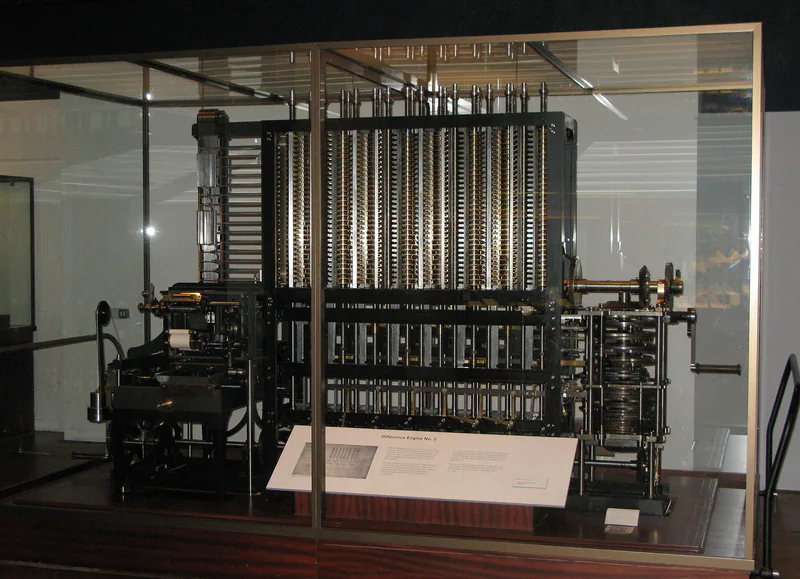
The book is speculative and openly so, but it was an early statement of what other writers, especially the German magician Frater U∴D∴, would call the "information model" of magic, alongside the spirit, energy and psychological models. It also anticipated, by many years, the popular discussion of the "simulation hypothesis" in philosophy and technology. Snell's interest was less in proving the hypothesis than in showing how a change in one's model of the universe changes what seems possible.
Abramelin, Demons and Later Writings§
Snell's work is not purely theoretical. He has written that he performed the Abramelin operation in 1977, the months-long retreat of prayer and purification described in the grimoire translated by S. L. MacGregor Mathers in 1898, whose aim is the Knowledge and Conversation of the Holy Guardian Angel. His diaries and reflections on the experience were published as The Abramelin Diaries and Thoughts on Abramelin in 2019, offering a rare first-hand account of the operation by a modern magician.
His other books range widely. What I Did in My Holidays (1999) gathers essays on black magic, Satanism and related subjects, examining why such labels arise and what they reveal about the people who use them. Uncle Ramsey's Little Book of Demons (2005) argues that personifying the forces that drive people and institutions, treating them as "demons" with which one can negotiate, can be a practical and humane way of thinking. BLAST Your Way to Megabuck$ with My SECRET Sex-Power Formula parodies the money-making manuals of the self-help industry while making serious points about desire and success. Later titles address magical thinking in contemporary politics, including the phenomenon of "post-truth".
Influence on Chaos Magick and the Study of Magic§
Snell was active in the British occult scene in exactly the years when chaos magick emerged, and his ideas formed part of its intellectual background. Peter J. Carroll, Ray Sherwin and their associates shared his conviction that magic should be approached pragmatically and that no belief system has a monopoly on truth, and his combination of Crowley's experimental attitude, Spare's psychology of desire and the counterculture's interest in altered states has been described as a "magical libertarianism". His association with the Illuminates of Thanateros connected him directly with the movement, though he never became one of its organisers.
Historians of British magic, notably Dave Evans in The History of British Magick After Crowley (2007), regard Dukes as one of the period's most interesting thinkers, and his "modes of thought" invite comparison with academic discussions of rationality, such as the anthropologist Tanya Luhrmann's study of how English magicians of the 1980s learned to interpret their experiences. His writing remains a reference point in debates about whether magic is better understood as belief, practice or a style of thinking, debates traced in What Is Chaos Magick?.
Frequently asked questions§
Who is Ramsey Dukes?§
Ramsey Dukes is the pen name of Lionel Snell, an English writer, magician and publisher who studied mathematics at Cambridge. He is best known for SSOTBME: An Essay on Magic (1974) and Words Made Flesh (1987).
What does SSOTBME stand for?§
It stands for "Sex Secrets of the Black Magicians Exposed", a deliberately sensational joke title. The book itself is a serious philosophical essay on the nature of magic and its relation to religion, science and art.
What are Ramsey Dukes's modes of thought?§
Dukes distinguished four modes of thought: magic, religion, science and art. He argued that each has its own logic and uses, and that judging one by the standards of another, for example dismissing magic as bad science, is a category error.
Was Ramsey Dukes a chaos magician?§
He was associated with the Illuminates of Thanateros and his ideas strongly influenced chaos magick, but his work predates the movement and has a broader scope. He is usually described as a precursor and fellow traveller rather than a founder.
Sources and further reading§
- SSOTBME: An Essay on Magic — Ramsey Dukes, 1974
- Words Made Flesh — Ramsey Dukes, 1987
- What I Did in My Holidays — Ramsey Dukes, 1999
- Uncle Ramsey's Little Book of Demons — Ramsey Dukes, 2005
- The Abramelin Diaries — Ramsey Dukes, 2019
- The Book of the Sacred Magic of Abramelin the Mage — S. L. MacGregor Mathers (trans.), 1898
- The History of British Magick After Crowley — Dave Evans, 2007
- Persuasions of the Witch's Craft: Ritual Magic in Contemporary England — T. M. Luhrmann, 1989