Liber XXVIII · Solomonic Magic · Chapter V: Legends of Solomon
Solomon and the Queen of Sheba: Bible, Legend and Lore
Solomon and the Queen of Sheba in the Bible, Jewish legend, the Qur'an, the Ethiopian Kebra Nagast, Christian art and esoteric lore, and what history can say.

The Queen of Sheba is the foreign queen who, according to the Bible, travelled to Jerusalem with a great caravan of spices, gold and precious stones to test King Solomon's wisdom with hard questions. From this brief episode grew one of the richest bodies of legend in the world: Jewish tales of riddles and a glass floor, the Qur'anic story of Bilqis and the hoopoe, the Ethiopian epic of Makeda and her son Menelik, Christian visions of the queen as prophetess of the Cross, and modern esoteric and Masonic romances.
The Biblical Visit§
In 1 Kings 10, the queen of Sheba hears of Solomon's fame "concerning the name of the LORD" and comes "to prove him with hard questions". She arrives with camels bearing spices, much gold and precious stones, and Solomon answers all her questions; nothing is hidden from him. Overwhelmed by his wisdom, the splendour of his house, the food of his table and the order of his servants, she declares that the half had not been told her, blesses Solomon's God, and gives the king a hundred and twenty talents of gold and an unequalled quantity of spices. Solomon in turn gives her "all her desire", and she returns to her own land. A parallel account appears in 2 Chronicles 9.
The story glorifies Solomon and gives the queen no name. Almost everything later readers said about her — her riddles, religion, child and secret nature — fills the silences of this narrative. In the Gospels, Jesus calls her "the queen of the south" who will rise in judgement against an unbelieving generation, because she came from the ends of the earth to hear Solomon (Matthew 12:42).
Where Was Sheba? History and Archaeology§
Most historians identify biblical Sheba with Saba, a kingdom in what is now Yemen, whose capital was Marib. Saba grew rich on the trade in frankincense and myrrh, carried by camel caravans north to the Mediterranean, and it built monumental works such as the great dam of Marib and the temple of the god Almaqah known locally as Mahram Bilqis, "the sanctuary of Bilqis". Sabaean inscriptions survive from the early first millennium BCE onward, but the rulers they name are men, and no source outside the Bible mentions a queen who visited Jerusalem in the tenth century BCE.
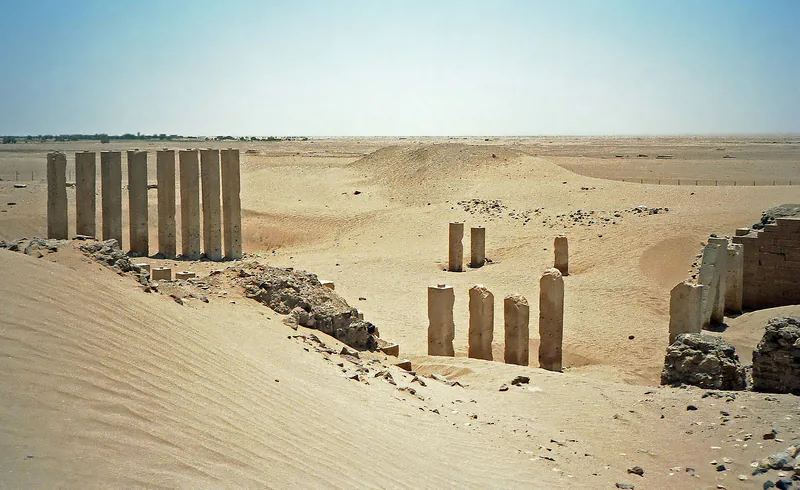
Assyrian records do show that Arabian queens existed: in the eighth century BCE, rulers called "queen of the Arabs", such as Zabibe and Samsi, paid tribute to Assyrian kings. Some scholars suggest that the biblical story reflects the incense trade and the prestige of Arabian queens at a later date than the reign of Solomon. Ethiopian tradition, by contrast, places Sheba in Africa, linking it to the region of Aksum, which had close cultural ties with south Arabia across the Red Sea. Josephus, writing in the first century CE, called her Nikaule and made her queen of Egypt and Ethiopia. The historical question remains open; the legendary one has many answers.
Riddles, the Glass Floor and Jewish Legend§
Jewish interpreters took the "hard questions" of 1 Kings as riddles and supplied them. Medieval collections, including the Midrash on Proverbs, record the queen's riddles and Solomon's answers — puzzles about a woman who says to her son "your father is my father", or about telling apart boys and girls dressed alike, or real flowers from artificial ones. They show Solomon's wisdom as quickness of mind as well as knowledge.
A fuller tale appears in the Targum Sheni to Esther, an Aramaic paraphrase of uncertain date, usually placed in the early medieval period. Here a bird brings Solomon news of the land of Sheba and its queen, who does not serve God; Solomon sends a letter summoning her. When she arrives, the king receives her seated in a house of glass. Thinking he sits in water, she lifts her garment, revealing hair on her legs, and Solomon remarks that her beauty is that of a woman but her hair that of a man. She then tests him with riddles.
The motif of the hairy legs fed darker interpretations. In some medieval Jewish sources, including passages associated with the Zohar and later kabbalistic folklore, the Queen of Sheba is identified with Lilith or described as a queen of demons, and her visit becomes a seduction of the wise king. Jacob Lassner's study Demonizing the Queen of Sheba traces how fears about female power and foreign wisdom shaped these stories. The connection with Lilith is explored in Lilith in Jewish Folklore, and the Talmudic legends of Solomon's dealings with demons in Solomon and Asmodeus.
Bilqis in the Qur'an and Islamic Lore§
The Qur'an tells the story in the sura of the Ant (Qur'an 27:20–44). Sulayman's hoopoe reports a land of Saba ruled by a woman with a mighty throne, whose people worship the sun. Sulayman sends a letter calling her to submit to God; she consults her nobles and sends gifts, which he refuses. Before her arrival, a powerful jinni offers to bring her throne, but "one who had knowledge of the Book" brings it in the blink of an eye. The queen recognises her disguised throne, enters a palace whose floor she takes for water, uncovers her shins, and on learning that it is smooth glass submits with Sulayman to God. Her story is told in more detail in Sulayman in Islam.
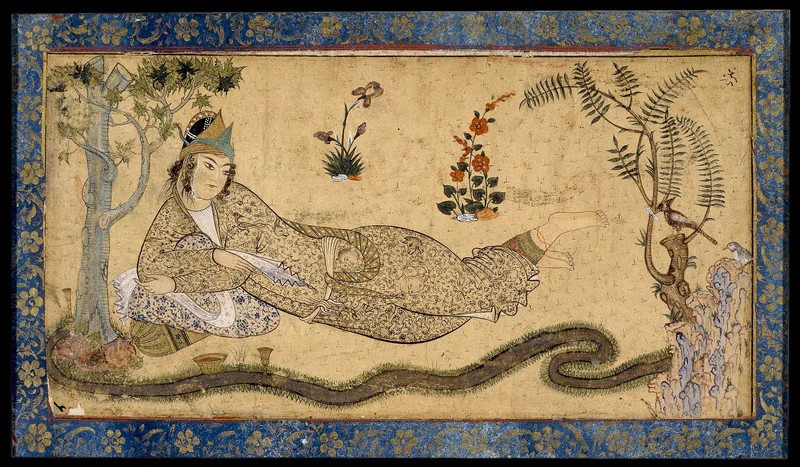
Later commentators named her Bilqis and expanded her biography. Some made her the daughter of a jinn mother; others said she married Sulayman or a Yemeni prince. The figure who carried her throne was commonly identified as Asaf ibn Barakhya, Sulayman's minister, who was said to know the Greatest Name of God — a detail that made him a patron of the occult sciences in later Islamic tradition, where the power of divine names was central.
Makeda and the Kebra Nagast§
In Ethiopia the queen is Makeda, and her story is told in the Kebra Nagast ("Glory of the Kings"), a Ge'ez work usually dated to the early fourteenth century. Makeda learns of Solomon from a merchant, travels to Jerusalem, and is converted to the God of Israel. Solomon, desiring her, tricks her: she promises not to take anything from his house, but after a spiced meal she drinks water in the night, and he claims her promise broken. She bears a son, Menelik, who later visits his father and returns to Ethiopia accompanied by sons of Israelite nobles, who secretly bring the Ark of the Covenant with them.
The Kebra Nagast served as the charter of the Solomonic dynasty, which claimed descent from Solomon and Makeda from 1270 until the deposition of Emperor Haile Selassie in 1974. Its influence on Ethiopian Christianity and on Rastafari is described in The Kebra Nagast in Rastafari.
Christian Typology, the Sibyl and the True Cross§
Christian interpreters read the queen allegorically. Her journey to Solomon prefigured the coming of the Gentile nations to Christ, and she was linked with the bride of the Song of Songs, who is "black, but comely". Statues of Solomon and the Queen of Sheba stand among the Old Testament figures on the north porch of Chartres Cathedral, and in medieval tradition she was sometimes identified with a sibyl, a pagan prophetess who foresaw Christ.
The most famous Christian legend makes her a prophet of the Cross. In the Golden Legend of Jacobus de Voragine (c. 1260) and related texts, the queen, on her way to Solomon, finds a beam made from the tree that grew from Adam's grave, recognises that the Saviour will one day hang upon it, and kneels in veneration. Piero della Francesca painted the scene in his cycle of the Legend of the True Cross at Arezzo in the mid-fifteenth century. In alchemy, the Aurora Consurgens identified divine Wisdom with "the queen of the south", making her a figure of the philosophical goal, as discussed in Aurora Consurgens.
The Queen in Esoteric and Romantic Imagination§
Modern writers continued to reinvent her. In his Voyage en Orient (1851), Gérard de Nerval told the story of Balkis, queen of the morning, who prefers to Solomon the master builder of the Temple, Adoniram, a descendant of Cain who is murdered by three jealous craftsmen. Nerval's tale fused the queen's legend with the Masonic story of Hiram, described in Freemasonry: A Complete Guide, and inspired Gounod's opera La Reine de Saba (1862). Handel's "Arrival of the Queen of Sheba", from his oratorio Solomon (1749), remains one of the best-known pieces of Baroque music.
In occult literature she came to stand for hidden feminine wisdom and the East as a source of secret knowledge — modern interpretations rather than ancient doctrine.
Frequently asked questions§
What is the Queen of Sheba's name?§
The Bible does not name her. Islamic tradition calls her Bilqis, Ethiopian tradition calls her Makeda, and Josephus called her Nikaule. Each name belongs to a different body of legend.
Did Solomon and the Queen of Sheba have a child?§
The Bible does not say so. The Ethiopian Kebra Nagast makes Menelik the son of Solomon and Makeda and the founder of Ethiopia's Solomonic dynasty; some Jewish and Islamic legends give other versions of their relationship.
Was the Queen of Sheba a real person?§
No contemporary source outside the Bible mentions her, and Sabaean inscriptions of the period name male rulers. Arabian queens are attested in Assyrian records of the eighth century BCE, so the story may reflect real contacts with Arabian kingdoms, but her historical existence cannot be confirmed.
What riddles did the Queen of Sheba ask Solomon?§
The Bible only says she asked "hard questions". Later Jewish sources, such as the Targum Sheni and the Midrash on Proverbs, supply riddles about family relationships, natural objects and telling real things from imitations, all of which Solomon solves.
Sources and further reading§
- Demonizing the Queen of Sheba: Boundaries of Gender and Culture in Postbiblical Judaism and Medieval Islam — Jacob Lassner, 1993
- Solomon and Sheba — James B. Pritchard (ed.), 1974
- The Kebra Nagast (The Queen of Sheba and Her Only Son Menyelek) — E. A. Wallis Budge, 1922
- The Legends of the Jews — Louis Ginzberg, 1909
- Sheba: Through the Desert in Search of the Legendary Queen — Nicholas Clapp, 2001
- The Golden Legend — Jacobus de Voragine, c. 1260
- Solomon the Esoteric King: From King to Magus, Development of a Tradition — Pablo A. Torijano, 2002