Scrying with a Black Mirror or a Bowl of Water
How to scry with a black mirror or a bowl of water, with simple steps, timing by the Moon, and the long history of hydromancy and mirror divination.
- TraditionAncient Mesopotamian, Greek and Roman water and mirror divination; medieval specularii; Victorian crystal-gazing revival
- ForDivination, Wisdom & study
- DifficultySimple
- Time20–30 minutes
- WhenNight, in a dim and quiet room; many prefer the full moon or a Monday, the Moon's day

Scrying with a dark mirror or a bowl of still water is one of the oldest and simplest forms of divination: the seer gazes into a reflective depth until images, impressions or words arise. Variants are recorded from Babylonian priests reading oil on water to Greek mirror oracles, medieval "specularii" and Victorian crystal-gazers. It needs only a bowl, water, a candle and patience, and it is practised today as a meditative way of listening to one's own intuition.
How to do it§
- Make or choose the surface. For a bowl, use a dark ceramic or glass bowl, or put a dark cloth beneath a clear one, and fill it almost to the brim with fresh water. For a black mirror, take the glass from a small picture frame, paint one side matt black, let it dry, and use the glossy unpainted side.
- Prepare the room. Work at night or with curtains drawn. Cover the table with a dark cloth. Place one candle to the side or behind you so its flame is not reflected in the surface. Turn off other lights and silence your phone.
- Settle. Sit comfortably and breathe slowly. Write your question in your notebook. Many people say a short prayer or intention in their own words, such as "May I see clearly what I need to understand."
- Gaze. Look into the water or glass, past the surface, with soft, unfocused eyes. Let the reflection blur. Allow ten to twenty minutes. Clouds, light, colour, shapes or fleeting images may appear, or simply thoughts and memories. Notice them without forcing.
- Record. Write down what you saw and felt, in order, before interpreting anything.
- Close. Give thanks. Pour the water out onto earth, a garden or a plant rather than down the sink, as many scryers do, and wrap the mirror in cloth. Extinguish the candle. Read your notes the next day with a calm and critical eye.
Origins and history§
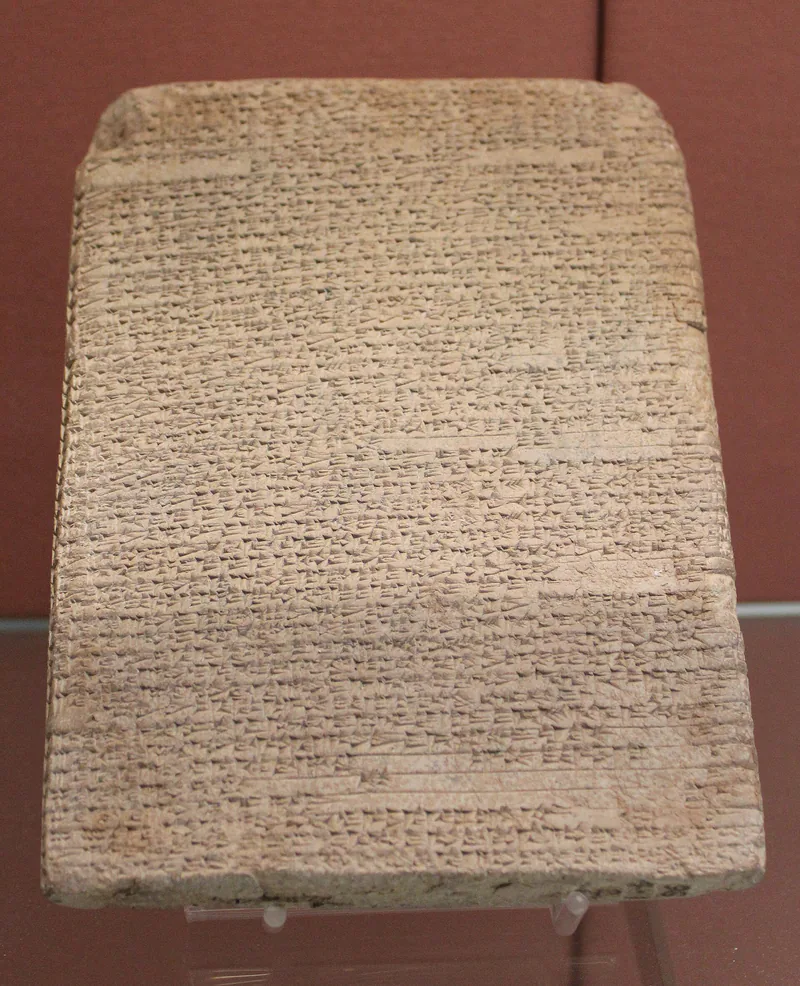
Some of the earliest divinatory texts in the world are Old Babylonian manuals of lecanomancy, reading the shapes made by oil dropped onto water in a bowl, from the early second millennium BC. In the Bible, Joseph's silver cup is described as the one "whereby indeed he divineth" (Genesis 44:5). The Greek Magical Papyri of Roman Egypt contain several "bowl divinations" in which a lamp, a bowl of water or oil and often a boy medium were used to obtain visions; the Roman scholar Varro, quoted by Augustine, claimed that King Numa had practised hydromancy.
Mirrors had their own oracles. Pausanias (second century AD) describes a spring before the sanctuary of Demeter at Patrae, in which a mirror was lowered on a cord to learn whether a sick person would live or die. In the Middle Ages, specularii, diviners by mirrors, polished swords, basins and fingernails, were condemned by churchmen; John of Salisbury, in his Policraticus (1159), recalls that as a boy he was used by a priest as a scryer, though he saw nothing. Nostradamus opens his Prophecies (1555) with quatrains describing a seer sitting alone at night beside a brass tripod, often read as an account of water scrying.
In the nineteenth century, crystal-gazing and mirror-gazing became fashionable and were studied by psychical researchers, who treated the visions as products of the subconscious mind; Theodore Besterman surveyed the subject in Crystal-Gazing (1924). Black mirrors became standard equipment in modern occultism and witchcraft.
Variations§
Some scryers add a few drops of dark ink to the water, or float a silver coin in it. Others gaze into a bowl lit by moonlight through a window, or into a candle flame. In some modern Pagan practice the mirror is dedicated to the Moon and kept wrapped between uses. Older practices involving children as mediums, oils of uncertain composition, or calls to spirits are not part of this working.
Safety and good sense§
Use one candle in a stable, heat-proof holder, away from cloths and paper, and never leave it unattended. Wear gloves and work outdoors or with ventilation when painting glass, and handle frame glass carefully. Keep water away from electrical items. If gazing makes you anxious or produces distressing images, stop; anyone who experiences visions or voices outside practice should talk to a doctor. Divination is a tool for reflection and no substitute for medical, legal or financial advice.
Sources and further reading§
- The Greek Magical Papyri in Translation — Hans Dieter Betz (ed.), 1986
- Divination and Theurgy in Neoplatonism: Oracles of the Gods — Crystal Addey, 2014
- Magic in the Middle Ages — Richard Kieckhefer, 1989
- John Dee's Conversations with Angels — Deborah E. Harkness, 1999
- The Holy Bible (King James Version) — Anonymous, 1611
- Thinking with Demons: The Idea of Witchcraft in Early Modern Europe — Stuart Clark, 1997