The Spellbook · Black & White Magic
Malocchio Oil and Water Test for the Evil Eye
The Italian malocchio test: dropping olive oil into water to see if the evil eye is present and lifting it with prayer, with its history and Christmas lore.
- TraditionSouthern Italian and Italian American folk Catholicism, 19th century to the present
- ForProtection, Divination, Cleansing
- DifficultySimple
- Time15 minutes
- WhenWhenever someone has a sudden headache, tiredness or run of bad luck after praise or envy; some families favour Tuesdays or Fridays

In southern Italy and among Italian American families, a headache, sudden fatigue or a run of misfortune after someone's admiring or envious glance may be blamed on the malocchio, the evil eye. To find out, a grandmother or other knowledgeable relative drops olive oil into a bowl of water: if the drops spread or form an "eye", the malocchio is present, and she lifts it with prayers and signs of the cross. This page describes the household test in its general form; the family prayers themselves are traditionally private.
How to do it§
- Prepare. The person affected sits comfortably. Set the bowl of water on a table near them, or on their head if they are seated and still, as some families do. Have the dish of olive oil ready.
- Make the sign of the cross. The one performing the test crosses herself, then makes the sign of the cross over the person and over the water.
- Drop the oil. Dip a fingertip in the oil and let three drops fall onto the surface of the water, one at a time, while praying. In many families the Our Father, Hail Mary and Glory Be are said, with a short invocation of the Trinity, the Virgin or a saint.
- Read the drops. If the drops stay round and separate, there is no malocchio. If they spread, merge, break into many tiny drops, or form a shape like an eye, the evil eye is said to be present. The size of the "eye" may be taken as a measure of the trouble.
- Lift it. Repeat the prayers and the signs of the cross over the bowl, adding oil again, until the drops remain round. Some families "cut" the eye by snipping the scissors over the water or piercing the oil with a needle.
- Dispose. Add a pinch of salt to the water and pour it away — down the toilet, out of the door, or onto the ground away from the house, according to family custom.
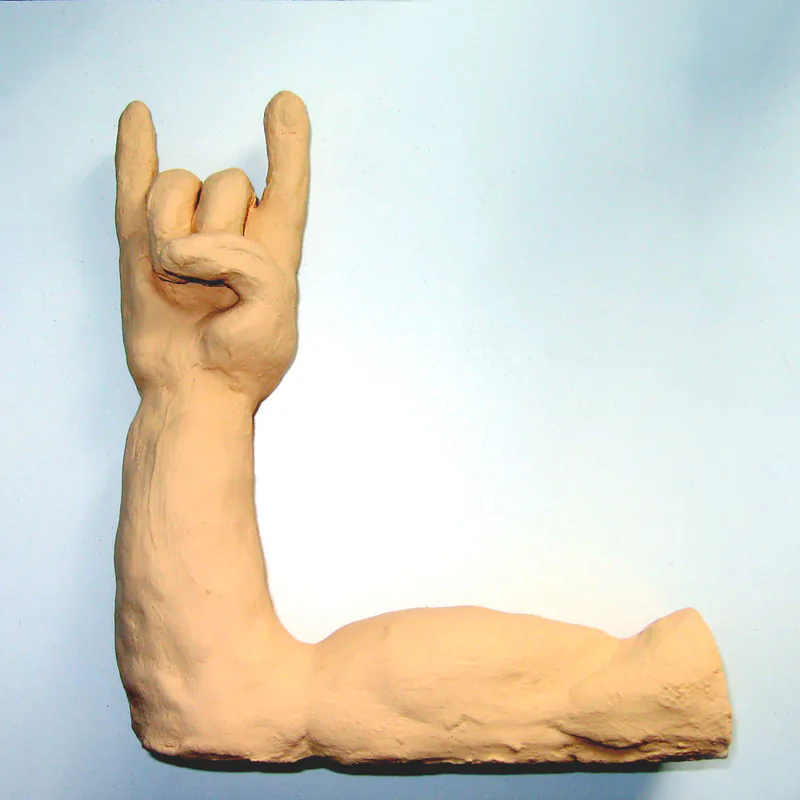
- Protect. The person may wear a cornicello (a small red horn), a mano cornuta charm or a medal of a saint for protection afterwards.
Origins and history§
Belief in the evil eye is ancient around the Mediterranean. Greek and Roman writers, including Plutarch, discussed how envy could harm through the gaze, and Romans hung phallic and hand-shaped amulets to deflect it. Christianity condemned envy as a sin and supplied its own remedies — prayers, saints' medals, holy water — which in southern Italy merged with older practice. The oil-and-water test is one of many forms of "lead-pouring" and wax-or-oil divination known in Europe and the Middle East; similar tests are found in Greece (xematiasma), the Balkans and among Arab and Jewish communities.
The Italian ethnologist Ernesto de Martino studied such rituals in Lucania (Basilicata) in the 1950s and published his findings as Sud e magia (1959; English translation Magic: A Theory from the South, 2015). He interpreted fascinazione and its cure as a way of restoring a person's sense of presence and security in a precarious peasant world. Italian emigrants took the practice to the Americas, where folklorists recorded it in the twentieth century, and where it remains a well-known family custom. Widely reported among Italian Americans is the rule that the healing prayer may be taught only on Christmas Eve, passed from one woman to another. Frederick Thomas Elworthy's The Evil Eye (1895) and Alan Dundes's casebook gather the broader Mediterranean evidence. See maleficium and protective magic and folk Christianity.
Variations§
Some families pour the oil from a spoon rather than a finger, or perform the test on the person's behalf when they are far away, holding their name or photograph in mind. Others drop oil into a glass of water held over the person's head. In Greece the xematiasma uses the same oil-and-water method with Orthodox prayers. Those who do not have a family prayer often use the Our Father and Hail Mary alone.
Safety and good sense§
Use only a little oil and keep the bowl steady to avoid spills on clothing. Do not place a bowl on the head of a small child. Recurrent headaches, exhaustion, dizziness or low mood should be checked by a doctor; a family ritual of comfort is no substitute for medical care. Approach the custom with respect: for many families it is an inheritance of faith and love.
Sources and further reading§
- Magic: A Theory from the South — Ernesto de Martino, 1959
- The Evil Eye: An Account of This Ancient and Widespread Superstition — Frederick Thomas Elworthy, 1895
- The Evil Eye: A Casebook — Alan Dundes (ed.), 1981
- Witching Culture: Folklore and Neo-Paganism in America — Sabina Magliocco, 2004
- Religion and the Decline of Magic — Keith Thomas, 1971