Omamori Charms and Hatsumōde: Japan's New Year Renewal
How omamori charms are chosen, carried and returned, and how to make hatsumōde, the first shrine visit of the Japanese New Year, with history and etiquette.
- TraditionJapanese Shinto and Buddhist shrine-temple custom; omamori from the medieval period, mass hatsumōde from the Meiji era
- ForProtection, Luck, Blessings
- DifficultySimple
- TimeHalf a day (a shrine visit)
- WhenThe first days of January (sanganichi, 1–3 January), or any time before about 15 January; old charms are returned at the same visit

Omamori are the small brocade charms sold at nearly every Shinto shrine and Buddhist temple in Japan, each blessed for a particular purpose such as safe travel, success in examinations or a healthy birth. They are not meant to last for ever. Each New Year, during the first shrine visit of the year, hatsumōde, people return last year's charms with thanks so that they can be ritually burned, and they receive fresh ones. Together the two customs form an annual cycle of protection, gratitude and renewal that tens of millions of people take part in.
How to do it§
- Gather last year's charms. Collect your old omamori, ofuda (paper or wooden talismans from the household shelf) and New Year decorations in a paper bag. Custom prefers returning shrine charms to a shrine and temple charms to a temple, ideally the one they came from, though most places accept others.
- Go in the first days of January. The first three days are the busiest; any visit up to about 15 January counts as hatsumōde. Dress neatly.
- Bow at the gate. Pause and bow lightly before passing through the torii (at a shrine) or the main gate (at a temple). Walk to the side of the central path, which is said to belong to the deity.
- Purify at the water basin. At the temizuya, take the ladle in your right hand and pour water over your left hand. Change hands and rinse the right. Pour a little water into your cupped left hand and rinse your mouth, then spit it discreetly beside the basin, not back into it. Rinse your left hand again, and tilt the ladle upright so the remaining water runs down the handle.
- Return the old charms. Place them in the box or area marked for returns (kosatsu osamejo or similar), with a small coin offering if there is a box. Silently thank them for the year's protection.
- Pray before the hall. At a shrine, drop a coin in the offering box, ring the bell if there is one, then bow twice, clap twice, offer your thanks and wishes silently, and bow once more. At a Buddhist temple, do not clap; put your palms together and bow.
- Receive new charms. At the counter, choose an omamori for your need: kōtsū anzen (traffic safety), gakugyō jōju (study), en-musubi (good relationships), anzan (safe childbirth) or kanai anzen (household safety). Many families also receive a new ofuda for the home shrine.
- Draw a fortune (optional). Many visitors draw an omikuji paper fortune. An unfavourable one is customarily tied to the frame provided so the bad luck stays at the shrine.
- Keep the charm properly. Carry the omamori in a bag, on a key ring or in the car. Do not open it: the slip inside bears the sacred name, and opening it is said to let the protection out.
Origins and history§
Protective talismans in Japan grew from several roots: Buddhist gofu (printed or handwritten sacred formulas), Chinese-influenced Onmyōdō talismans of the Heian court (794–1185), and Shinto ofuda bearing a shrine's name. From the medieval period travelling preachers of the Ise shrines and the mountain ascetics of Shugendō distributed paper talismans across the country. The Ise taima became a familiar sight in Edo-period homes (1603–1868). The small cloth pouch carried on the body developed alongside these. By the twentieth century it had become the familiar omamori, now made for every imaginable concern, from computer safety to sports.
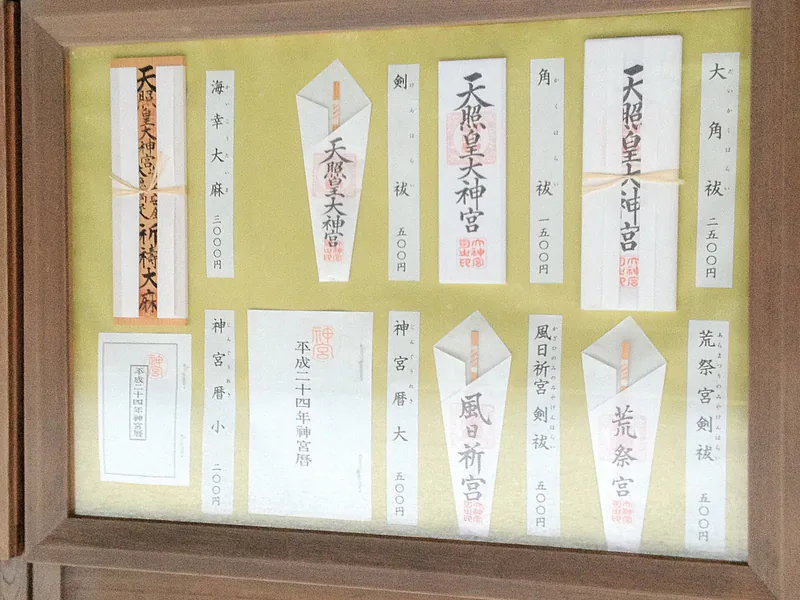
Visits to the local tutelary shrine at New Year are old, but the mass hatsumōde of today is younger than it looks. Historians link its spread to the Meiji period (1868–1912), when railway companies advertised New Year trips to famous shrines and temples, and to the modern calendar, which fixed the festival on 1 January. Ian Reader and George Tanabe describe such practices as the "common religion" of Japan. It is concerned with genze riyaku, practical blessings in this world. It is practised by people who may not call themselves religious at all.
Returning charms rests on the Shinto idea that sacred objects carry spiritual power that wanes over time and must be renewed, much as the great shrine of Ise is rebuilt every twenty years. Old charms are burned at the otakiage or at the dondo-yaki bonfires held around 15 January.
Variations§
Some people keep a cherished charm for longer, especially one received for a long journey or illness, and return it when the purpose is fulfilled. Charms for safe childbirth are returned after the birth along with thanks. If you cannot visit a shrine, many shrines accept returned charms by post with a small offering.
Safety and good sense§
New Year shrines can be extremely crowded; go at off-peak hours with children or older relatives, and keep to marked routes. Do not burn charms yourself at home unless you have a safe outdoor fire setting and local rules allow it. An omamori is a sign of a blessing, not a replacement for a seat belt or for medical care.
Sources and further reading§
- Practically Religious: Worldly Benefits and the Common Religion of Japan — Ian Reader and George J. Tanabe Jr., 1998
- A Year in the Life of a Shinto Shrine — John K. Nelson, 1996
- Shinto: A History — Helen Hardacre, 2017
- A New History of Shinto — John Breen and Mark Teeuwen, 2010
- Shinto: The Kami Way — Sokyo Ono, 1962