Morishio: Japanese Salt Mounds for Purifying an Entrance
How to make morishio, the small cones of salt set beside Japanese doorways to purify an entrance and welcome good fortune, and their Shinto and Chinese roots.
- TraditionJapanese folk and Shinto purification custom; widespread from the Edo period to the present
- ForCleansing, Protection, Home & hearth
- DifficultySimple
- Time15 minutes
- WhenCustomarily renewed on the 1st and 15th of each month, or whenever the salt becomes damp or discoloured
Morishio (盛り塩, "heaped salt") are small, neat cones or pyramids of salt placed in pairs on saucers at the entrance of a Japanese home, shop or restaurant. They are meant to keep the threshold pure, ward off misfortune and, in the merchant's version of the custom, draw in customers and good luck. The practice is simple, quiet and widespread, and it rests on the importance of purity in Shinto.
How to do it§
- Choose the salt. Use coarse natural sea salt, which is valued in Shinto purification because it comes from the sea where the god Izanagi first cleansed himself. Avoid table salt with additives if you can.
- Clean the entrance. Sweep and wipe the doorstep, the genkan (entrance hall) or the area by the door. Purity begins with cleanliness.
- Shape the mounds. Moisten the salt very slightly with a few drops of water so it holds together. Pack it firmly into a cone or pyramid mould, or into a small cup, and turn it out onto a white saucer. Make two of the same size. Triangular cones and eight-sided pyramids are both traditional.
- Place them. Set one saucer on each side of the entrance, just outside the door or just inside it, where they will not be kicked or rained on. Some households also place a single mound by the kitchen, by a window or in a corner felt to be heavy or neglected.
- Make a short wish (optional). Many people stand before the door for a moment and wish that the house be kept clean and peaceful. There is no fixed formula; a quiet "may this entrance stay pure" in your own words is enough.
- Renew regularly. Replace the mounds on the 1st and 15th of each month, or sooner if they absorb moisture, crumble or discolour. Salt that has gone grey or wet is thought to have "taken in" impurity.
- Dispose of the old salt. Do not eat it or reuse it in cooking. Dissolve it in water and pour it down the drain, ideally with running water, giving thanks. Do not scatter it in a garden, where salt damages soil and plants.
Origins and history§
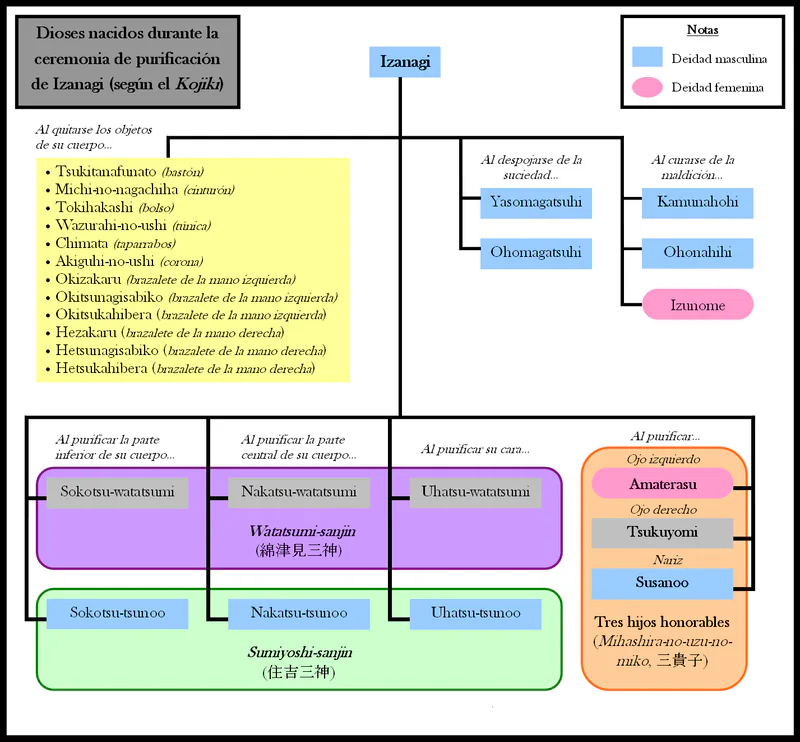
Purification (harae, misogi) is central to Shinto. According to the Kojiki (712), the god Izanagi bathed in the sea after returning from the land of the dead, and from that washing many deities were born. Seawater and salt have been purifying agents in Japanese ritual ever since. Salt is set out with rice and water as a daily offering on household shrines. Sumo wrestlers throw a handful into the ring before a bout. Mourners returning from a funeral are traditionally sprinkled with a little kiyome-jio ("purifying salt") before they enter the house, so that the pollution of death is not carried indoors.
The particular custom of shaped mounds at a doorway has a second, more worldly story attached to it. A Chinese anecdote tells of Emperor Wu of Jin (r. 266–290), who had thousands of consorts and let a goat-drawn cart choose where he would spend the night. One clever woman set salt and bamboo leaves outside her door. The goats stopped to lick it, and the emperor stayed. In Japan the tale became associated with welcoming customers. During the Edo period (1603–1868) restaurants and teahouses set salt by their doors, and the custom passed into households. Some writers also connect morishio to salt used to purify the ground in older rites. The exact history is uncertain, and scholars of Shinto describe it as a folk practice rather than shrine liturgy.
Variations§
Restaurants and bars often place morishio outside the door each evening before opening. Some people place a single mound at the four corners of a new home or room after moving in. A modern variant uses a small ceramic stand that shapes the salt into a perfect cone.
Safety and good sense§
Keep saucers out of reach of pets and small children, as large amounts of salt are harmful to animals. Wipe up spilled salt from wooden floors and metal thresholds, where it can cause damage and corrosion. Morishio is a gesture of care for a home and its visitors; a house that feels troubled may also need practical attention, and a person who feels troubled may need a friend or a doctor.
Sources and further reading§
- Shinto: The Kami Way — Sokyo Ono, 1962
- Shinto: A History — Helen Hardacre, 2017
- Essentials of Shinto: An Analytical Guide to Principal Teachings — Stuart D. B. Picken, 1994
- Kojiki — Donald L. Philippi (trans.), 1968
- Practically Religious: Worldly Benefits and the Common Religion of Japan — Ian Reader and George J. Tanabe Jr., 1998