The Spellbook · Black & White Magic
Pow-wow Blessing to Guard a House Against Thieves
A Pennsylvania German pow-wow blessing to guard a house against theft, after Hohman's Long Lost Friend, with the old 'stand-still' charm as history.
- TraditionPennsylvania German Braucherei, after John George Hohman's Long Lost Friend (1820)
- ForProtection, Home & hearth
- DifficultySimple
- Time20 minutes
- WhenOn a Sunday morning, at moving in, or at the New Year; no lunar rule in the sources

Hohman's Long Lost Friend (1820) contains several charms concerning thieves. Some are protective — blessings to keep a house, its stock and its goods safe — while the most famous claims to "fix" a thief so that he cannot move until released. This entry gives a protective house blessing in the Braucherei manner, built around the threefold crosses and the naming of God that run through Hohman's book, and describes the thief-fixing charm only as history.
How to do it§
- Secure the house first. Walk around the property and check every door, window and gate. Pennsylvania German farmers who used charms also locked their barns; the charm was meant to strengthen care, not replace it.
- Write the blessing. On a sheet of paper write a short protective blessing in your own words, in the style of the old Segen: "In the name of God the Father, the Son and the Holy Spirit, I bless this house and all that is in it. Let no one take what is not theirs, and let all that belongs here stay here. †††" The three crosses stand for the Trinity, as in Hohman's charms.
- Bless the doors. At the main door touch the lock or handle and make a small cross on the inside of the door frame with chalk, saying the blessing once. Repeat at the back door and any outbuilding.
- Bless the keys. Hold the house keys in your hand and say: "Keep the going out and the coming in." Psalm 121 is the scriptural source of that phrase (Psalm 121).
- Keep the paper. Fold it three times and keep it in a drawer near the main door or in the family Bible.
- Renew it at the New Year, or after any break-in or loss, with a fresh check of the locks.
Origins and history§
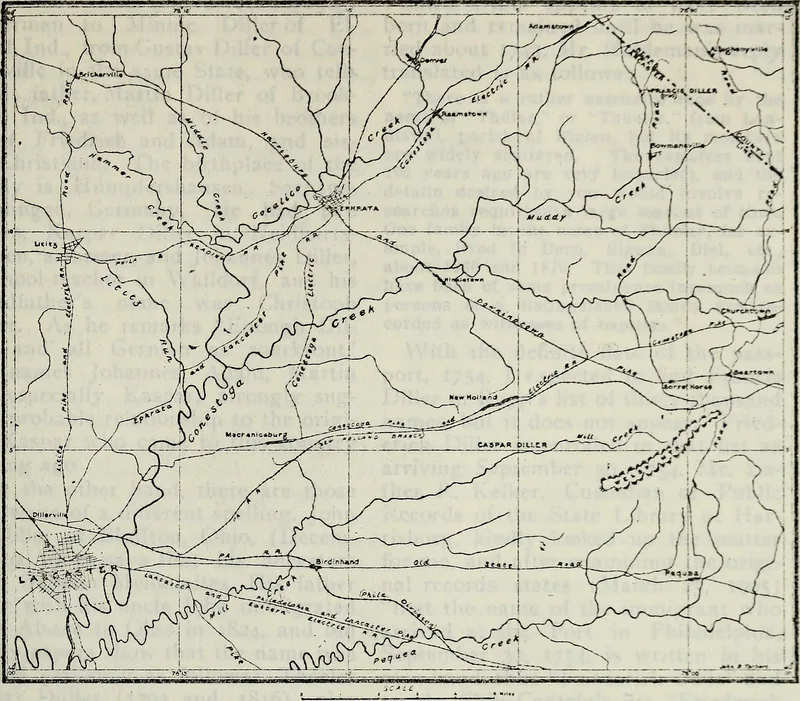
John George Hohman (Johann Georg Hohman), a German Catholic immigrant who settled near Reading in Berks County, Pennsylvania, printed Der lange verborgene Freund in 1820. It is the best known of the American charm books and became the standard text of Pennsylvania German Braucherei, or "pow-wow" as English-speakers called it. English translations followed in 1846 and 1856.
The thief-fixing charm, told as history§
Among Hohman's charms is one "to make a thief stand still" — a German formula, also found in the Romanus-Büchlein (/texts/romanus-buchlein) and in older European Diebessegen (thief-blessings), which was meant to hold an intruder rooted to the spot until the owner released him with a second formula. Charms of this type are attested in German manuscripts from the late Middle Ages. Because it aims to bind and control a person, even a wrongdoer, it is presented here only as a record of what the books contain; no usable form is given. Other charms in the same family promised to make a thief return stolen goods or to reveal who had taken them.
The protective blessings are older in spirit still. Medieval European Segen commonly placed houses, animals and goods under the protection of Christ, Mary and the saints, and the three crosses and Trinitarian formula are typical of them. In Pennsylvania such blessings were written out, sometimes in decorated Fraktur, and kept in houses and barns. Owen Davies' Grimoires traces how German chapbooks like Hohman's crossed the Atlantic and were later reprinted in English for a wide American readership, including African American hoodoo practitioners, who adopted Hohman's book as a source.
Scholars such as Don Yoder and David Kriebel stress that Braucherei was primarily a healing and protective practice within devout Christian communities, transmitted between men and women across the generations. The press sensation surrounding the York "hex murder" of 1928 cast it in a darker light than most of its practitioners would have recognised. See folk magic and folk Christianity.
Variations§
- Barn blessings: written blessings nailed inside barns or placed above stalls to protect livestock from theft and disease.
- Hex signs: the painted star-and-rosette barn signs of south-eastern Pennsylvania are often said to be protective; folklorists generally regard them as decorative, with protective meanings attached later, and the question remains debated.
- Epiphany chalking: the Catholic custom, still practised in Germany and elsewhere, of chalking the year and the initials C+M+B over the door at Epiphany as a blessing on the house.
Safety and good sense§
- Lock doors and windows, use lights and alarms where appropriate, and insure valuables.
- If you are burgled or threatened, contact the police; never confront an intruder.
- Chalk marks wipe off easily; do not draw on surfaces you do not own.
- If you light a candle while blessing the house, keep it in a secure holder and never leave it unattended.
Sources and further reading§
- The Long-Lost Friend: A 19th Century American Grimoire — John George Hohman, ed. Daniel Harms, 2012
- Grimoires: A History of Magic Books — Owen Davies, 2009
- America Bewitched: The Story of Witchcraft After Salem — Owen Davies, 2013
- Powwowing Among the Pennsylvania Dutch: A Traditional Medical Practice in the Modern World — David W. Kriebel, 2007
- Hoodoo—Conjuration—Witchcraft—Rootwork — Harry Middleton Hyatt, 1970