Psalm 91 for Protection in Jewish and Christian Practice
How Psalm 91 is prayed for protection, from the Talmud's 'song against afflictions' and Shimmush Tehillim to Christian Compline, with customs and history.
- TraditionRabbinic Judaism (Talmud, Shevuot 15b); Sefer Shimmush Tehillim; Christian monastic Compline
- ForProtection, Peace
- DifficultySimple
- Time10 minutes
- WhenEach night before sleep, before a journey or a difficult undertaking, or in any time of fear

Psalm 91 is the psalm of protection above all others in Jewish and Christian devotion. The Talmud calls it a "song against afflictions", Jews recite it in the bedtime prayers and at funerals, the medieval Sefer Shimmush Tehillim ("Book of the Use of the Psalms") belongs to a wider tradition of praying particular psalms for particular needs, and Christian monks have sung it every night at Compline for some fifteen centuries. Praying it is less a spell than an act of trust, and believers describe it in exactly those terms.
How to do it§
- Prepare. Wash your hands, as Jewish custom does before prayer and study. Sit or stand quietly. If you light a candle, place it in a secure holder away from anything flammable.
- Set your intention. Bring to mind what or whom you are asking protection for: yourself, your household, someone travelling or ill. In Jewish practice one may mention a person by their Hebrew name and their mother's name.
- Read the psalm. Read Psalm 91 slowly, aloud or in an undertone, in Hebrew or your own language. It opens (in the King James Version): "He that dwelleth in the secret place of the most High shall abide under the shadow of the Almighty." Let each image (shelter, shadow, wings, shield) settle before moving on.
- Repeat the closing verse. Many Jews repeat the final verse, "With long life will I satisfy him, and show him my salvation", a second time. On especially serious occasions some communities recite the whole psalm seven times.
- Add your own prayer. Ask, in your own words, for protection and peace, and give thanks for the protection you already have.
- Optionally, keep it written. Some carry the psalm written on paper or printed on a card, as soldiers did in the First World War. If you write it in Hebrew, treat the paper with respect because it bears the divine name: in Jewish practice such papers are not thrown away but placed in a genizah or buried.
- Close. Sit quietly for a moment and extinguish the candle before you leave the room or sleep.
Origins and history§
Psalm 91 belongs to the fourth book of the Psalter. It has no title in the Hebrew text, though the Septuagint and later Jewish tradition associated it with David or with Moses (as a continuation of Psalm 90). Already among the Dead Sea Scrolls, a manuscript from Qumran Cave 11 (11Q11) places a form of it at the end of a collection of songs against demons, showing its protective use before the Common Era.
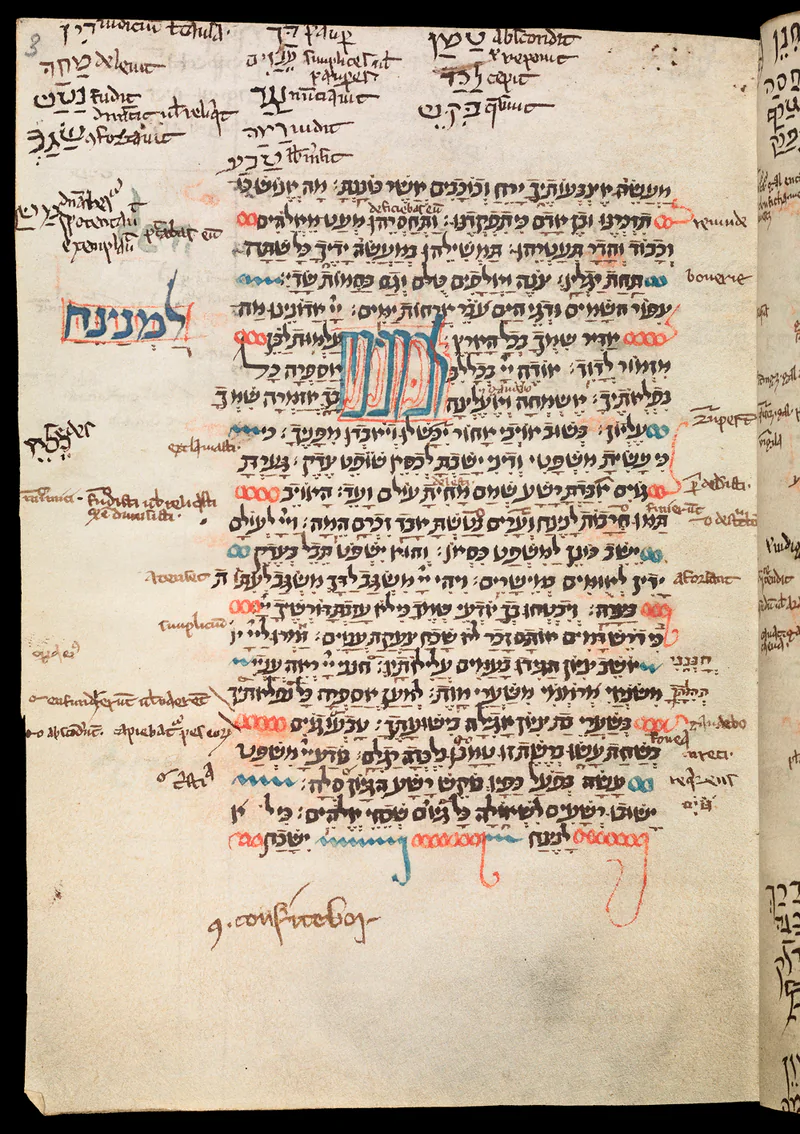
The Babylonian Talmud (Shevuot 15b) calls Psalms 3 and 91 the "song against afflictions" (shir shel pega'im) and reports that Rabbi Joshua ben Levi recited such verses before going to sleep. That is the origin of their place in the Kriat Shema al ha-mitah, the bedtime prayers, where Psalm 91 still stands. In many communities it is also recited during funeral processions and at the end of the Sabbath.
The Sefer Shimmush Tehillim is a Hebrew handbook, known from Cairo Genizah fragments and many later manuscripts, that assigns each psalm a practical use, often with a divine name to meditate on and sometimes instructions to write the verses as an amulet. Bill Rebiger's critical edition (2010) shows that it existed in several versions. It reached a wide Christian readership through Godfrey Selig's German translation of 1788, later rendered into English as Secrets of the Psalms.
In Christian tradition the psalm is numbered 90 in the Greek and Latin Bibles (Qui habitat). The Rule of St Benedict (sixth century) prescribes it for Compline every night, and the devil's quotation of verses 11–12 during the temptation of Jesus (Matthew 4:6) made it central to Christian reflection on protection and trust. During the First World War it was printed on cards as the "Soldier's Psalm".
Variations§
Some Jewish households recite Psalms 3 and 91 together, as the Talmud pairs them. Others add Psalm 121. Christians may pray it within Compline, with the Lord's Prayer, or as part of a blessing of a home.
Safety and good sense§
If you light a candle, keep it in a stable holder, away from curtains and paper, and never leave it burning unattended. Prayer may bring courage and peace, but it is no substitute for medical, legal or practical help: if you are in danger, contact the emergency services or people who can protect you.
Sources and further reading§
- Sefer Shimmush Tehillim: Buch vom magischen Gebrauch der Psalmen — Bill Rebiger, 2010
- Secrets of the Psalms — Godfrey Selig, 1788
- Jewish Magic and Superstition — Joshua Trachtenberg, 1939
- Ancient Jewish Magic: A History — Gideon Bohak, 2008
- Jewish Magic before the Rise of Kabbalah — Yuval Harari, 2017
- The Holy Bible (King James Version) — Anonymous, 1611