Liber XXV · Secret Societies · Chapter III: Initiatory Orders
Initiatory Orders: Martinists, Memphis-Misraïm and Magical Orders
A guide to esoteric initiatory orders: Élus Coëns, Martinism, Memphis-Misraïm, the Golden Dawn, the OTO and Rosicrucian fellowships, and how grades work.

An initiatory order is an esoteric organisation that admits members through ritual initiation and leads them through a graded sequence of degrees, each bringing new symbols, teachings and obligations. Most Western initiatory orders descend, directly or by imitation, from eighteenth-century Freemasonry and its higher degrees, and include Martinist and Egyptian Masonic rites, the Hermetic Order of the Golden Dawn, the Ordo Templi Orientis and the modern Rosicrucian fellowships. For their members initiation is a spiritual transformation; for historians it is also a social structure that transmits knowledge and authority.
What Initiation Means§
The folklorist Arnold van Gennep, in The Rites of Passage (1909), described initiation as a three-stage pattern of separation, transition and incorporation. The historian of religion Mircea Eliade emphasised its symbolism of death and rebirth: the candidate dies to an old state and is reborn into a new one. Esoteric orders adopt this pattern deliberately. A candidate is typically blindfolded or "hoodwinked", led in darkness, questioned, bound by an oath of secrecy, and finally brought to light and given new knowledge.
The historian Henrik Bogdan has shown that Western esoteric initiation rituals form a recognisable family, built on Masonic models but adding explicitly esoteric content such as alchemy, Kabbalah and ritual magic. Orders also maintain lineages, chains of initiation and charters, which give their leaders authority and frequently become the subject of dispute.
Eighteenth-Century Foundations: Élus Coëns and the Rectified Rite§
The Masonic world of eighteenth-century France was the cradle of esoteric initiatory orders. Around the 1760s the mysterious Martinez de Pasqually founded the Order of the Élus Coëns (Elect Priests), whose highest members performed elaborate theurgic ceremonies intended to bring about the "reintegration" of fallen humanity with God. His doctrine survives in his unfinished Treatise on the Reintegration of Beings.
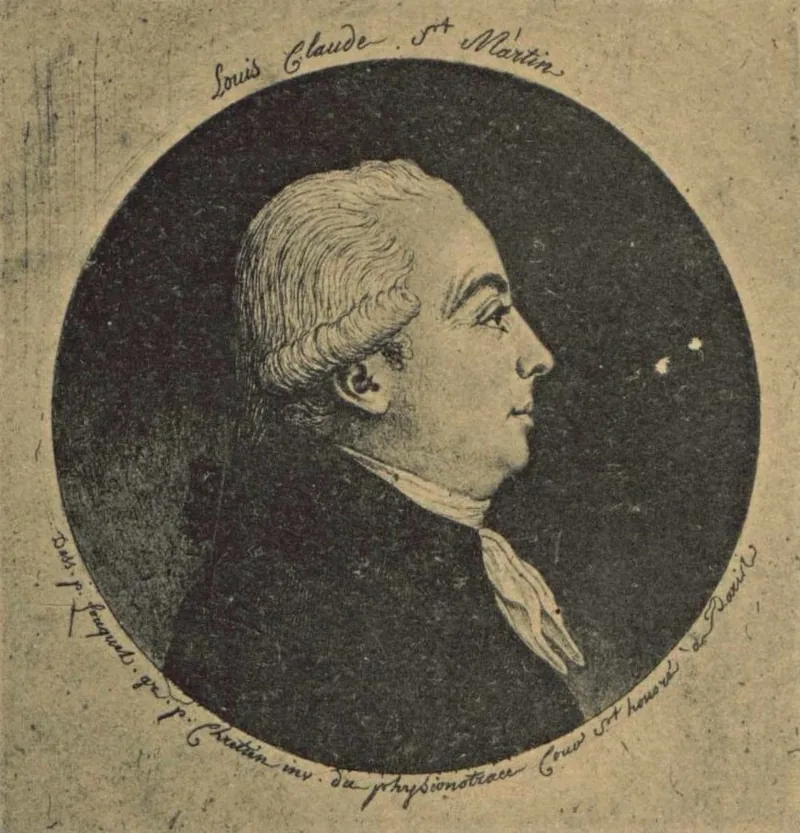
Two of his disciples shaped later traditions. Jean-Baptiste Willermoz of Lyon absorbed the Coën teaching into a Christian Masonic system, the Rectified Scottish Rite, adopted at the Convent of Wilhelmsbad in 1782. Louis-Claude de Saint-Martin, "the Unknown Philosopher", turned from ceremonial theurgy to an inward mystical path influenced by Jacob Boehme, and his books became the inspiration for Martinism.
The Martinist Order§
In 1884 and the years following, the French occultist Gérard Encausse, known as Papus, and Augustin Chaboseau established the Martinist Order, claiming a chain of initiation reaching back to Saint-Martin through individual transmission. The Supreme Council of the order was constituted in 1891. Martinism is organised in a small number of degrees, culminating in that of the "Unknown Superior" (Supérieur Inconnu), and emphasises Christian esotericism, the inner path of the heart and the study of Saint-Martin and Martinez de Pasqually. It spread widely before the First World War, including to Russia, and today exists in numerous independent branches.
Papus was also involved with Stanislas de Guaita in the Ordre Kabbalistique de la Rose-Croix, founded in 1888, which conferred degrees by examination in Kabbalah and esoteric doctrine (see Rosicrucianism).
Egyptian Masonry: Cagliostro and Memphis-Misraïm§
Ancient Egypt held a special fascination for eighteenth-century initiates, who imagined its priests as keepers of the original mysteries. The adventurer Count Cagliostro (Giuseppe Balsamo) promoted an "Egyptian Rite" of Masonry in the 1770s and 1780s that admitted women in separate lodges.
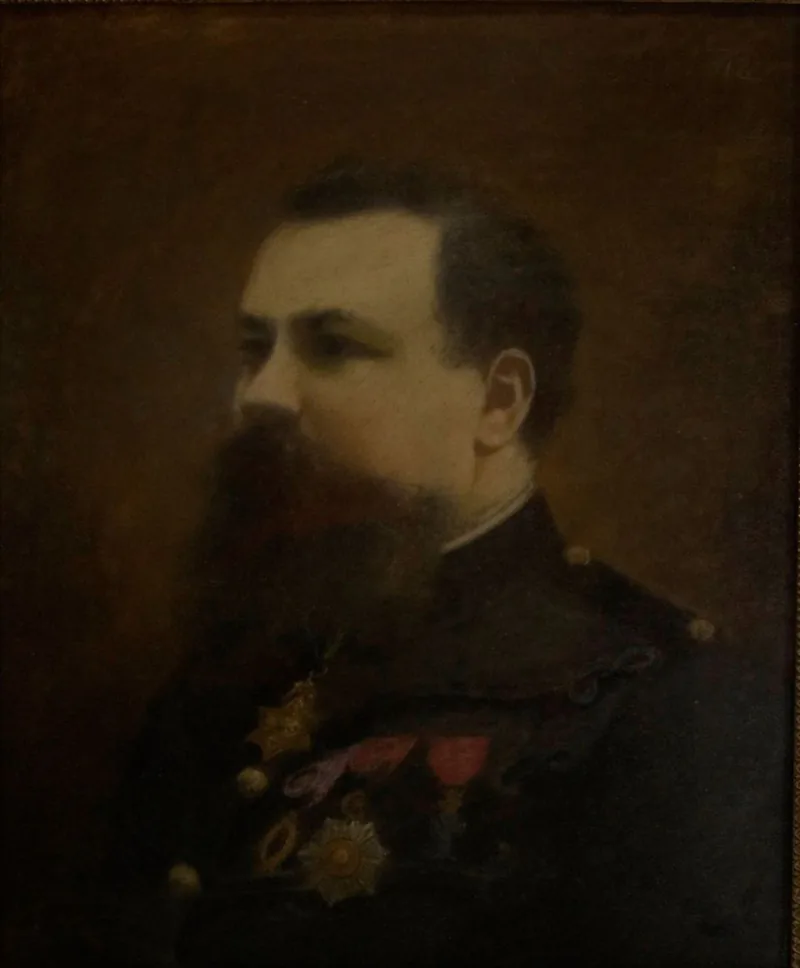
The Rite of Misraïm (from the Hebrew name for Egypt) appeared in Italy in the first years of the nineteenth century and was spread in France by the Bédarride brothers from around 1814, with ninety degrees. The Rite of Memphis was established by Jacques-Étienne Marconis de Nègre in 1838, with a similarly elaborate system. The two were combined in 1881 under the honorary leadership of the Italian patriot Giuseppe Garibaldi, and later figures such as John Yarker in England, Theodor Reuss in Germany and Papus in France used Memphis-Misraïm charters as vehicles for occult teaching. Today the Rite exists in several independent obediences, often with a reduced number of working degrees. See our guide to Freemasonry for the wider Masonic background.
The Hermetic Order of the Golden Dawn and Its Successors§
The most influential magical order of modern times, the Hermetic Order of the Golden Dawn, was founded in London in 1888 by William Wynn Westcott, Samuel Liddell MacGregor Mathers and William Robert Woodman, all members of the Masonic Societas Rosicruciana in Anglia. Its founding documents, the "Cipher Manuscripts", were said to come from German adepts, a claim historians reject. Its grades were mapped onto the sefirot of the Kabbalistic Tree of Life, from Neophyte (0=0) and Zelator (1=10) upward, and its inner order taught practical ritual magic, Enochian magic and the tarot. Members included W. B. Yeats, Arthur Edward Waite and Aleister Crowley.
After schisms around 1900, the order splintered into the Stella Matutina, the Alpha et Omega and Waite's Independent and Rectified Rite. Its teachings were published by Israel Regardie in the late 1930s and continued through Dion Fortune's Society of the Inner Light and Paul Foster Case's Builders of the Adytum.
The Ordo Templi Orientis and A∴A∴§
The Ordo Templi Orientis (OTO) took shape in Germany in the early 1900s around Carl Kellner and Theodor Reuss, combining Masonic degrees with a secret teaching about sexual magic. Aleister Crowley joined around 1910, rewrote its rituals in the light of his religion of Thelema, and became its head in the 1920s. His separate A∴A∴, founded in 1907, offered a programme of individual magical training rather than group initiation. In Germany the Fraternitas Saturni, founded in 1928, developed its own Thelemic-influenced system.
Rosicrucian Fellowships and Correspondence Orders§
The twentieth century also brought initiatory organisations that taught largely by correspondence and lectures. The Rosicrucian Fellowship, founded by Max Heindel in 1909 in California, AMORC, founded by H. Spencer Lewis in 1915, and the Lectorium Rosicrucianum in the Netherlands each offer graded courses and temple rites. Their scale made initiation available to tens of thousands of people who would never have entered a Masonic lodge, and their advertising helped popularise esoteric ideas. Modern Wiccan covens, which use a system of three degrees inspired by the Masonic model, show how far the initiatory pattern has travelled (see Wicca and Gerald Gardner).
Frequently asked questions§
What is the difference between an initiatory order and a religion?§
Initiatory orders usually do not demand exclusive allegiance and often admit members of different faiths. They focus on graded instruction and personal transformation rather than public worship. Some, however, have developed religious features, and the boundary is sometimes blurred.
Are initiatory orders as old as they claim?§
Many orders claim descent from ancient Egypt, the Templars or medieval Rosicrucians. Historians can usually trace them only to the eighteenth, nineteenth or twentieth century, and treat their ancient lineages as symbolic or legendary.
What is a Martinist?§
A Martinist is a member of one of the orders descended from the Martinist Order of Papus and Chaboseau, founded in the 1880s and 1890s. Martinists study the Christian esoteric teachings of Louis-Claude de Saint-Martin and Martinez de Pasqually and pursue an inward, contemplative spiritual path.
Sources and further reading§
- Treatise on the Reintegration of Beings — Martinez de Pasqually, c. 1770
- The Rites of Passage — Arnold van Gennep, 1909
- Rites and Symbols of Initiation — Mircea Eliade, 1958
- The Golden Dawn — Israel Regardie, 1937
- The Magicians of the Golden Dawn — Ellic Howe, 1972
- The Hermetic Brotherhood of Luxor — Joscelyn Godwin, Christian Chanel and John P. Deveney, 1995
- Western Esotericism and Rituals of Initiation — Henrik Bogdan, 2007
- Perdurabo: The Life of Aleister Crowley — Richard Kaczynski, 2002
- The Rose Cross and the Age of Reason — Christopher McIntosh, 1992