Liber XIII · High Magick · Chapter VII: Ritual & Symbolism
The Lesser Ritual of the Hexagram: Golden Dawn Planetary Rite
The Golden Dawn's Lesser Ritual of the Hexagram: the hexagram as planetary symbol, the INRI analysis, its four forms, ARARITA and Crowley's Liber O.

The Lesser Ritual of the Hexagram is a ceremonial rite of the Hermetic Order of the Golden Dawn used to invoke or banish planetary forces in a general way. It opens with the "Analysis of the Keyword", a meditation on the letters INRI and on the myth of Osiris, and continues with four forms of the six-pointed hexagram traced in the four quarters while the divine name ARARITA is intoned. Taught to adepts of the Second Order alongside the better-known pentagram ritual, it was first printed by Aleister Crowley in 1909 and became a standard practice of modern ceremonial magic.
The Hexagram as a Symbol of the Macrocosm§
The hexagram, two interlaced triangles, is an ancient ornament found in many cultures. In Jewish and Islamic tradition it became associated with the seal of Solomon and later with the shield of David, and in medieval and Renaissance magic it appeared on talismans and in grimoire circles; see our article on Solomon's ring and seal. The Key of Solomon and related texts use hexagrams among their figures, and Agrippa's Three Books of Occult Philosophy discusses the symbolism of numbers and geometric figures that later writers applied to it.
Nineteenth-century occultism gave the hexagram a more precise meaning. Éliphas Lévi presented the five-pointed star as the sign of the microcosm, the human being, and the six-pointed star as the sign of the macrocosm, the universe; the interlaced triangles represented the union of opposites, fire and water, spirit and matter, the divine descending and the human ascending. The Golden Dawn adopted this scheme and turned it into a ritual system: the pentagram, explained in our article on the pentagram, governs the four elements and spirit, and the hexagram the seven planets.
The planets on the hexagram§
The Golden Dawn assigned the seven classical planets to the hexagram following their places on the Tree of Life. Saturn, attributed to Binah, stands at the upper point; the Moon, attributed to Yesod, at the lower point; Jupiter, Mars, Venus and Mercury occupy the four side points; and the Sun, attributed to Tiphareth, sits in the centre. The figure thus maps the planetary sefirot of the Tree onto a single symbol, with the Sun as the harmonising heart.
Origins in the Golden Dawn Second Order§
The hexagram rituals belong to the Second Order of the Golden Dawn, the Rosae Rubeae et Aureae Crucis, organised by S. L. MacGregor Mathers around 1891–1892. The instructional paper describing them was issued to new adepts after their initiation into the grade of Adeptus Minor, together with papers on the pentagram, the consecration of talismans and the making of the ritual implements. As with much of the order's material, the paper was almost certainly written by Mathers, drawing on Lévi, Agrippa and the Christian Kabbalah of the Renaissance.
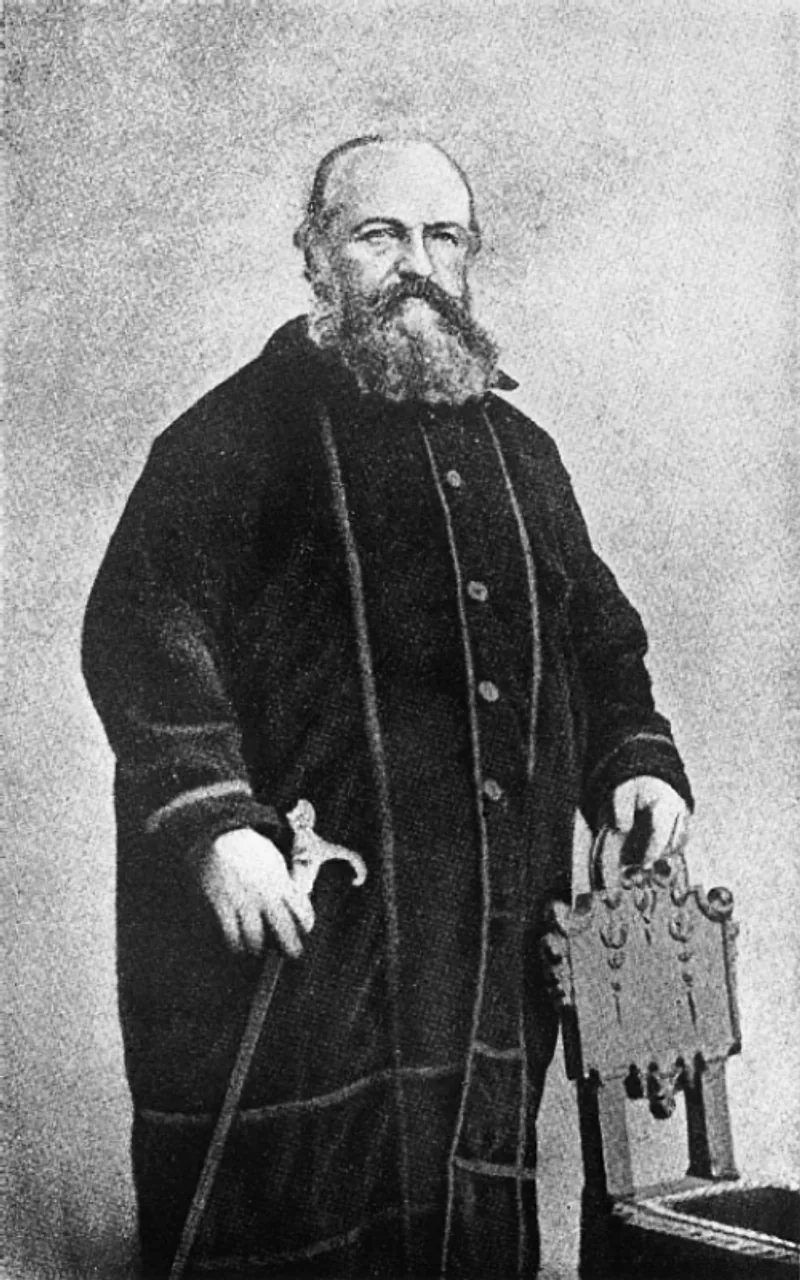
Two forms were taught. The Lesser Ritual of the Hexagram uses four general forms of the figure to invoke or banish planetary influence as a whole, and was often performed after the Lesser Banishing Ritual of the Pentagram to clear the working space on both the elemental and the planetary level. The Greater Ritual of the Hexagram traces the figure from the point of a particular planet, so that a specific planetary force, or a sign of the zodiac through its ruling planet, could be invoked or banished, for example in the consecration of a planetary talisman.
The Analysis of the Keyword INRI§
The ritual opens with a short ceremony called the Analysis of the Keyword, which also appears in other Second Order rites. Its starting point is INRI, the initials of the Latin inscription on the cross, Iesus Nazarenus Rex Iudaeorum, "Jesus of Nazareth, King of the Jews". The Rosicrucian tradition had long reinterpreted these letters, for instance as an alchemical motto, and the Golden Dawn gave them a new reading.
- The Latin letters are converted to Hebrew: Yod, Nun, Resh, Yod.
- Each Hebrew letter is given its astrological attribution: Yod to Virgo, Nun to Scorpio, Resh to the Sun.
- Each sign is linked to an Egyptian deity: Virgo to Isis, the mighty mother; Scorpio to Apophis, the serpent of destruction; the Sun to Osiris, slain and risen.
- The initials of Isis, Apophis and Osiris form IAO, an ancient Greek divine name found in the magical papyri and Gnostic texts.
The officiant then makes four bodily postures, the "signs of L.V.X.". The first, with the arms extended in the form of a cross, is the sign of Osiris slain; the second, one arm raised and the other lowered, forms the letter L and is the sign of the mourning of Isis; the third, the arms raised in a V, is the sign of Apophis and Typhon; the fourth, the arms crossed on the breast in an X, is the sign of Osiris risen. Together L, V and X spell lux, Latin for "light". The sequence enacts a drama of life, destruction and resurrection, the same pattern that underlies the Adeptus Minor initiation in the Vault of the Adepti.
The Four Forms of the Hexagram and ARARITA§
After the Analysis, the officiant traces a hexagram in each of the four quarters. Unlike the pentagram ritual, which uses the same figure in every direction, the lesser hexagram ritual uses four different arrangements of the two triangles, each associated with one element. The attribution follows the zodiac rather than the winds: Fire in the east, after the fire sign Aries; Earth in the south, after Capricorn; Air in the west, after Libra; and Water in the north, after Cancer. These are the cardinal signs that begin each season, so the four forms present the planetary forces as they work through the circle of the year.
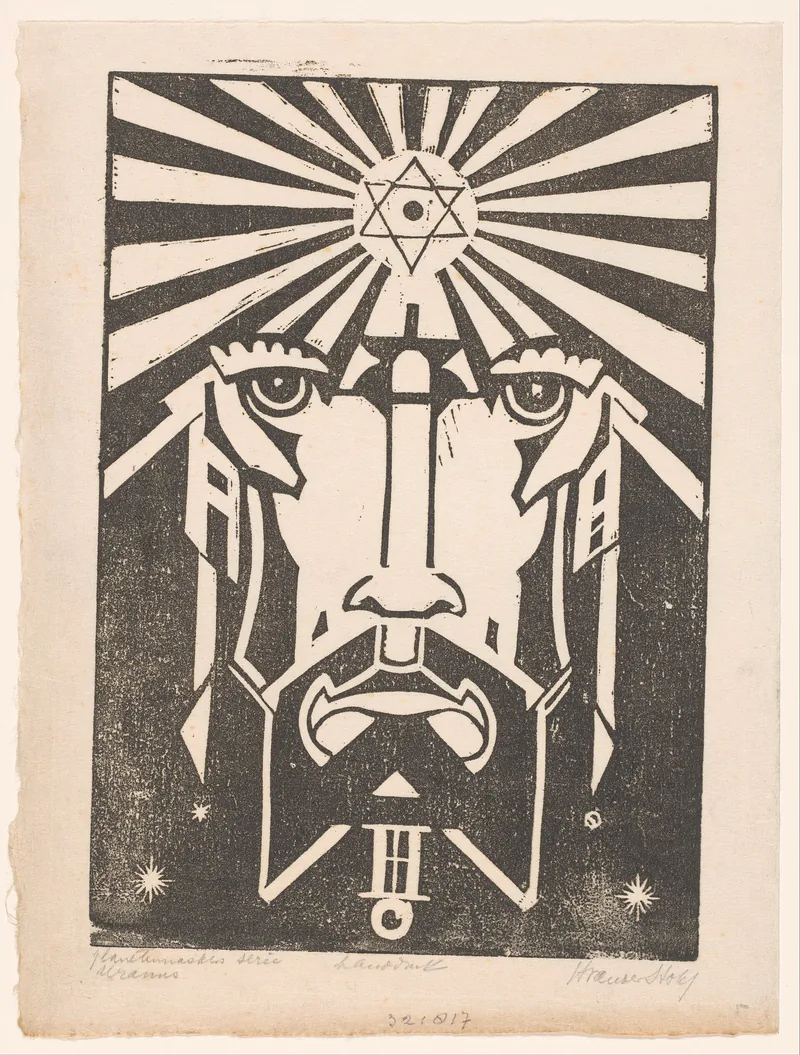
With each figure the officiant intones ARARITA. This is a notariqon, a word formed from the initial letters of a Hebrew sentence that may be rendered "One is his beginning, one is his individuality, his permutation is one". The name, which appears in Renaissance Christian Kabbalah and in Agrippa's discussion of divine names, proclaims that the multiplicity of the planetary powers rests on a single divine unity. The ritual ends with a repetition of the Analysis of the Keyword.
Crowley, Regardie and Modern Variations§
The hexagram rituals first reached the public in Aleister Crowley's Liber O vel Manus et Sagittae, published in The Equinox in 1909 and later included in his Magick: Liber ABA, Book Four. Crowley gave a concise version and diagrams of the hexagrams; he also popularised the unicursal hexagram, a six-pointed figure drawn in one continuous line, which became a symbol of Thelema and which some Thelemites use in place of the traditional figure. The full Golden Dawn text appeared in Israel Regardie's The Golden Dawn (1937–1940).
Later writers made the ritual widely known. Donald Michael Kraig's Modern Magick (1988) and Chic and Sandra Tabatha Cicero's Self-Initiation into the Golden Dawn Tradition (1995) teach it as part of a daily practice, and many variants exist, including versions that change the god-names or Egyptian imagery. Interpretations range from the traditional view that the ritual affects real planetary forces to psychological readings in which it organises the practitioner's attention and imagination. For a wider survey of magical gestures, figures and tools see our guide to ritual and symbolism.
Frequently asked questions§
What is the difference between the pentagram and hexagram rituals?§
In the Golden Dawn system the pentagram rituals work with the four elements and spirit, while the hexagram rituals work with the seven planets. The lesser pentagram ritual is often performed first, followed by the lesser hexagram ritual.
What does ARARITA mean?§
ARARITA is a notariqon, a word made from the first letters of a Hebrew sentence that may be rendered "One is his beginning, one is his individuality, his permutation is one". It expresses the unity of God behind the plurality of forces.
What is the Analysis of the Keyword?§
It is a short ceremony that interprets the letters INRI through their Hebrew equivalents, astrological signs and the Egyptian deities Isis, Apophis and Osiris, and enacts the signs of L.V.X. It opens and closes the hexagram ritual and appears in other Golden Dawn rites.
Who first published the hexagram ritual?§
Aleister Crowley published it in Liber O vel Manus et Sagittae in The Equinox in 1909. Israel Regardie published the full Golden Dawn version in The Golden Dawn between 1937 and 1940.
Sources and further reading§
- The Golden Dawn — Israel Regardie, 1937
- Magick: Liber ABA, Book Four — Aleister Crowley, 1997
- Transcendental Magic: Its Doctrine and Ritual — Eliphas Lévi, 1856
- Three Books of Occult Philosophy — Henry Cornelius Agrippa, 1533
- Modern Magick — Donald Michael Kraig, 1988
- Self-Initiation into the Golden Dawn Tradition — Chic Cicero & Sandra Tabatha Cicero, 1995