Liber VII · Divination · Chapter IX: Numerology
Chaldean Numerology and Cheiro: Letter Values vs Pythagorean
Chaldean numerology explained: Cheiro's Book of Numbers, the Chaldean letter chart, compound numbers, and how it differs from the Pythagorean system.

Chaldean numerology is a system of name numerology that assigns the values 1 to 8 to the letters of the alphabet according to their supposed sound or vibration, leaves 9 unassigned as sacred, and reads the name a person actually uses. It was popularised by the Irish palmist Cheiro in Cheiro's Book of Numbers (1926); despite its name, it has no demonstrable connection with the Chaldeans of ancient Babylon.
Who Was Cheiro?§
Cheiro was the professional name of William John Warner, born on 1 November 1866 in or near Dublin. He took his pseudonym from the Greek cheir, "hand", and from the 1890s practised palmistry in London, where he built a fashionable clientele. He later styled himself "Count Louis Hamon", and his memoirs describe readings for famous figures, including Oscar Wilde, Mark Twain and Lord Kitchener; these accounts are his own and were written with an eye to publicity, so historians treat them with caution.
His first great success was Cheiro's Language of the Hand (1894), which went through many editions. He went on to write on astrology, on world predictions and, in the 1920s, on numbers. He spent his last years in Hollywood and died there in October 1936. Cheiro was not a scholar, but he was a gifted popular writer, and his books remained in print through the twentieth century, which is why his version of numerology survives alongside the American one created by L. Dow Balliett.
Cheiro's Book of Numbers and the Chaldean Letter Chart§
In Cheiro's Book of Numbers Cheiro presented what he called the Chaldean or Hindu method of reading numbers, which he said he had learned in India in his youth. There is no independent evidence for that story. The book combines two elements: a birth number, taken from the day of the month on which a person was born, and a name number, worked out from a table of letter values.
The table, as it is usually reproduced today, is:
| Value | Letters |
|---|---|
| 1 | A, I, J, Q, Y |
| 2 | B, K, R |
| 3 | C, G, L, S |
| 4 | D, M, T |
| 5 | E, H, N, X |
| 6 | U, V, W |
| 7 | O, Z |
| 8 | F, P |
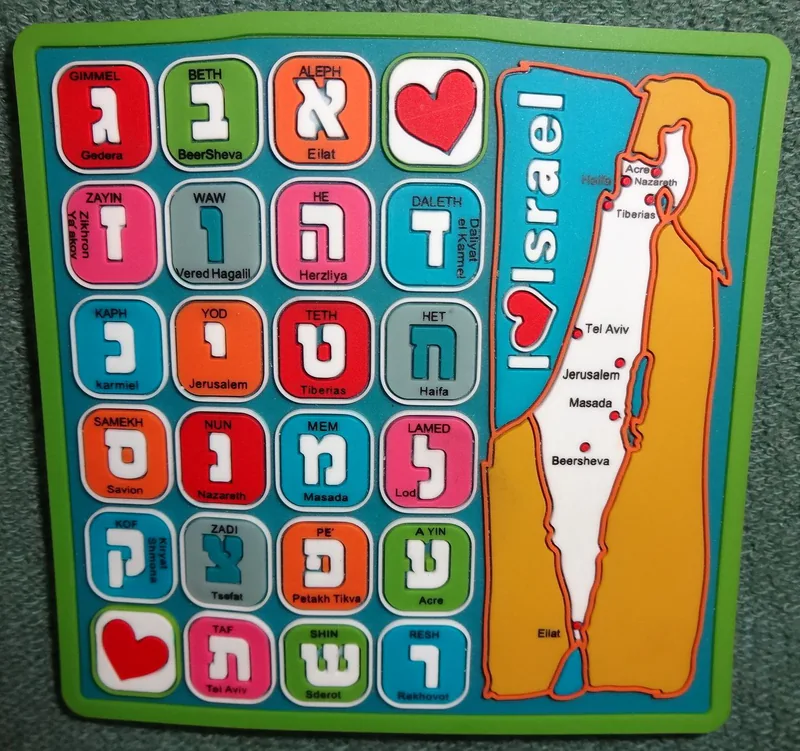
No letter has the value 9. Cheiro and his followers explained that nine is a holy or complete number, standing apart from the others, though it can still appear as the total of a name. The values are not in alphabetical order; they are said to reflect the sound or vibration of each letter, and some correspond to the numeral values of letters in Hebrew or Greek (for example, the Hebrew letters dalet and mem stand behind D = 4 and M = 4, he behind E = 5, and peh behind P = 8). The arrangement looks more like a modern adaptation of the Hebrew alphabet than anything Babylonian.
Pythagorean and Chaldean Systems Compared§
The other main chart, called Pythagorean, simply numbers the alphabet from 1 to 9 and starts again:
| Value | 1 | 2 | 3 | 4 | 5 | 6 | 7 | 8 | 9 |
|---|---|---|---|---|---|---|---|---|---|
| Letters | A J S | B K T | C L U | D M V | E N W | F O X | G P Y | H Q Z | I R |
The two systems differ in more than the chart:
- Which name is read. Pythagorean numerologists use the full name on the birth certificate; Chaldean practice uses the name a person is currently known by, so a nickname or married name changes the reading.
- Compound numbers. Pythagorean practice reduces quickly to a single digit (or a master number). Chaldean practice treats the two-digit total as meaningful in itself.
- Emphasis. Cheiro's method leans on the day of birth and on planetary rulers; the Pythagorean system built by Balliett and her successors centres on the life path, expression, soul urge and personality numbers.
A worked example§
Take the name Thomas Reid.
- Pythagorean: T2 + H8 + O6 + M4 + A1 + S1 = 22; R9 + E5 + I9 + D4 = 27. Total 49, then 4 + 9 = 13, then 1 + 3 = 4.
- Chaldean: T4 + H5 + O7 + M4 + A1 + S3 = 24; R2 + E5 + I1 + D4 = 12. Compound total 36, reduced to 3 + 6 = 9.
The same name yields a 4 in one system and a 9 in the other. Numerologists who use both usually say that each reveals a different layer; critics see the discrepancy as evidence that the numbers are artefacts of arbitrary tables. For the full Pythagorean method of names see expression, soul urge and personality numbers.
Compound Numbers and Planetary Rulers§
The most distinctive part of Cheiro's book is a list of meanings for compound numbers, roughly from 10 to 52, each with a symbolic name and a verdict of fortunate or unfortunate. Several names borrow tarot imagery: 10 is associated with the Wheel of Fortune, 13 with change and the skeleton of death, 16 with a tower struck by lightning, 19 with the sun. Readers of the modern Pythagorean system will recognise 13, 14, 16 and 19 as today's "karmic debt" numbers; Cheiro's warnings are likely one source of that idea, which is discussed in the life path number.
Cheiro also linked each single digit to a heavenly body:
| Number | Cheiro's ruler | Indian (navagraha) ruler |
|---|---|---|
| 1 | Sun | Sun (Surya) |
| 2 | Moon | Moon (Chandra) |
| 3 | Jupiter | Jupiter (Guru) |
| 4 | Uranus | Rahu |
| 5 | Mercury | Mercury (Budha) |
| 6 | Venus | Venus (Shukra) |
| 7 | Neptune | Ketu |
| 8 | Saturn | Saturn (Shani) |
| 9 | Mars | Mars (Mangala) |
He paired 1 with 4 and 2 with 7, saying that people of these numbers are attracted to each other, and he gave lucky days, colours and gems for each number. Uranus and Neptune, discovered in 1781 and 1846, are themselves a sign of the system's modern date. Indian numerologists replaced them with the lunar nodes Rahu and Ketu of Vedic astrology.
Why "Chaldean"? Sepharial and the Myth of Babylonian Origins§
In Greek and Roman usage "Chaldean" (Chaldaios) came to mean simply an astrologer or diviner, because Babylon was regarded as the home of astrology. Later occult writers used the word to lend antiquity to their systems; the Chaldean Oracles, for example, are a Greek work of the second century AD. Babylonian scribes did use numbers in learned ways, including writing the names of gods with numbers (Anu as 60, Enlil as 50, Ea as 40), but there is no ancient source for the letter table Cheiro published. Cuneiform was not an alphabet, so a letter-by-letter chart of the Latin alphabet could not have come from Babylon.
Cheiro was not alone. The astrologer Sepharial (Walter Gorn Old, 1864–1929), a member of the Theosophical circle in London, published The Kabala of Numbers in 1911 with a closely related letter scheme drawn from Hebrew values. The British occult revival of the period habitually combined Hebrew gematria, astrology and Indian ideas, and the "Chaldean" system is best understood as one of its products.
Chaldean Numerology in India and Today§
Cheiro's ideas found a lasting home in India, where they merged with an existing interest in auspicious numbers and with Vedic astrology. Indian numerology (sometimes called ank shastra or ank jyotish) usually uses the Chaldean chart, the birth number from the day of the month, and the navagraha rulers. It is widely consulted for the naming of children, the spelling of business and film titles, and the choice of dates, and public figures are often reported to have changed the spelling of their names on a numerologist's advice.
In the English-speaking world, the Pythagorean system dominates popular books and online calculators, while the Chaldean is promoted as the "older" or "more accurate" alternative. Neither claim to antiquity holds up: both systems were formulated in the late nineteenth and early twentieth centuries. For the longer history of number symbolism see Pythagoras and Pythagorean number mysticism and Numerology: A Complete Guide; the site's numerology section gives the modern meanings of 1 to 9.
Frequently asked questions§
What is the difference between Chaldean and Pythagorean numerology?§
Pythagorean numerology numbers the letters 1 to 9 in alphabetical order and reads the full birth name. Chaldean numerology uses values 1 to 8 assigned by sound, reserves 9, reads the name currently in use and gives weight to compound numbers before they are reduced.
Why is 9 not used in Chaldean numerology?§
Followers of Cheiro regard nine as a sacred or complete number and therefore assign it to no letter. A name can still total nine, and nine still has meanings as a birth number.
Is Chaldean numerology really from ancient Babylon?§
No. "Chaldean" was a traditional byword for astrologers, and the letter chart was published by Cheiro in the 1920s, with close parallels in Sepharial's work of 1911. Babylonian cuneiform was not alphabetic and could not have produced such a table.
Which numerology system is more accurate?§
Neither has been shown to describe character or predict events better than chance. They are different symbolic conventions, and the choice between them is a matter of tradition and personal preference.
Sources and further reading§
- Cheiro's Book of Numbers — Cheiro, 1926
- Cheiro's Language of the Hand — Cheiro, 1894
- The Kabala of Numbers — Sepharial, 1911
- Numerology: Or What Pythagoras Wrought — Underwood Dudley, 1997
- The Mystery of Numbers — Annemarie Schimmel, 1993