Liber VII · Divination · Chapter IX: Numerology
Numerology: A Complete Guide to Its History and Systems
Numerology explained: Pythagorean number mysticism, gematria and isopsephy, the modern life path and expression numbers, and Pythagorean vs Chaldean systems.

Numerology is the belief that numbers carry qualitative meaning and that the numbers derived from a person's name and date of birth reveal character and destiny. Its modern form, with "life path" and "expression" numbers, was developed in the United States and Britain in the early twentieth century, but it draws on far older traditions: Pythagorean number philosophy, Greek and Hebrew letter-number systems, and Renaissance occult philosophy.
Pythagorean Number Philosophy§
The roots of Western number symbolism lie with the followers of Pythagoras of Samos (sixth century BC), who, according to Aristotle, held that the principles of mathematics are the principles of all things. Little is securely known about Pythagoras himself, but later Pythagoreans such as Philolaus (fifth century BC) and the Neopythagoreans of the Roman period developed a rich philosophy of number. The tetractys, a triangle of ten points arranged in rows of one, two, three and four, symbolised the perfection of the decad; the ratios 1:2, 2:3 and 3:4 underlay the musical consonances, suggesting that number governs harmony in the cosmos.
Neopythagorean authors gave each number a character. In the Theology of Arithmetic, traditionally attributed to Iamblichus and drawing on Nicomachus of Gerasa (second century AD), the monad is linked to unity and the divine intellect, the dyad to matter and division, the triad to completion, and so on through the decad. Plato's Timaeus used numerical proportions to describe the construction of the world soul, and through Plato and Boethius these ideas passed into the Latin Middle Ages.
Letters as Numbers: Gematria, Isopsephy and Abjad§
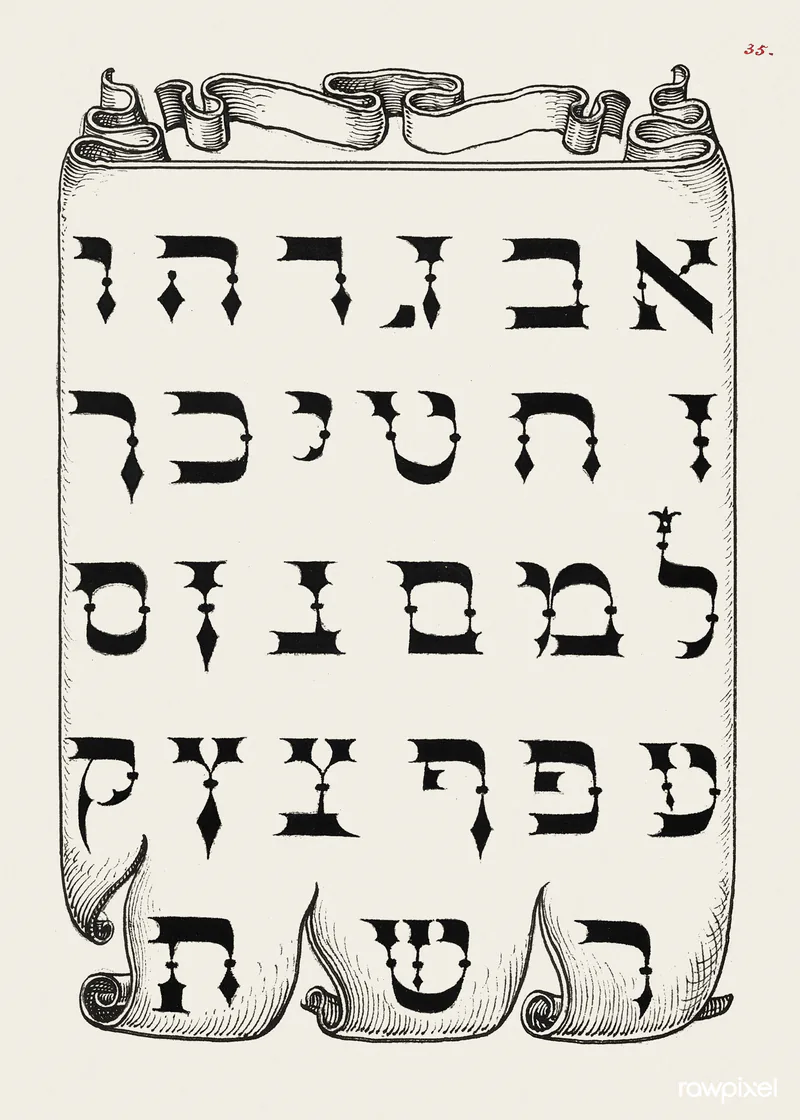
Ancient alphabets doubled as numerals. In Greek, alpha was 1, beta 2 and so on; adding the values of a word's letters, called isopsephy, could reveal hidden equivalences, as in graffiti at Pompeii or the famous number of the beast, 666, in the Book of Revelation. In Hebrew the same method is called gematria and became a major tool of rabbinic and Kabbalistic interpretation, while the Sefer Yetzirah presented the ten numbers and twenty-two letters as the instruments of creation. Arabic abjad values served similar purposes in Islamic esotericism, poetry and chronograms.
Medieval Europe also had a divinatory number art called onomancy. Tables known as the "Sphere of Pythagoras" or "Sphere of Apuleius" let a reader calculate the numerical value of a person's name, sometimes combined with the day of the week, to predict the outcome of an illness or which of two combatants would win. Such methods appear in manuscripts and in the widely read Secretum secretorum.
Number in Christian and Renaissance Thought§
Christian writers inherited Pythagorean ideas through Augustine, who wrote that numbers in Scripture carry meaning and are not to be overlooked. Medieval exegetes read the six days of creation, the twelve apostles and the forty days of fasting as numerical symbols, and cathedral builders sometimes designed proportions with symbolic intent, though modern historians caution against reading too much into them.
In the Renaissance, number became a key to occult philosophy. Cornelius Agrippa devoted much of the second book of his De occulta philosophia (1533) to the virtues of numbers from one to twelve and beyond, giving tables of correspondences and the "magic squares" of the planets; see Agrippa's Three Books. Christian Cabalists used gematria to find Christian doctrines in Hebrew names, and the Rosicrucian and Hermetic literature of the seventeenth century made number a sign of hidden cosmic order.
The Birth of Modern Numerology§
The system most people now call numerology emerged around 1900. The American writer Mrs L. Dow Balliett published works on the vibrations of numbers, beginning with The Philosophy of Numbers (1908), presenting them as a Pythagorean science of personal harmony; her student Juno Jordan continued and systematised the work. In Britain, the palmist Cheiro (William John Warner, 1866–1936) published Cheiro's Book of Numbers (1926), using a different alphabetical scheme he called Chaldean. The word "numerology" itself became common in the 1910s and 1920s.

The modern system typically calculates several numbers:
- Life path number: the digits of the full birth date added and reduced to a single digit. For 14 March 1990: 1+4+3+1+9+9+0 = 27, and 2+7 = 9.
- Expression or destiny number: the sum of the letter values of the full birth name.
- Soul urge (heart's desire): the vowels of the name.
- Personality number: the consonants of the name.
Many numerologists do not reduce master numbers 11 and 22, and sometimes 33, treating them as heightened forms of 2, 4 and 6. Each number from 1 to 9 has a character: 1 leadership and independence, 2 cooperation, 3 expression, 4 order and work, 5 freedom and change, 6 responsibility and care, 7 reflection and spirituality, 8 power and material success, 9 compassion and completion. Personal year numbers, derived from the birth day and month plus the current year, are used for forecasting.
Pythagorean and Chaldean Systems Compared§
Two letter-value schemes dominate.
| Pythagorean (Western) | Chaldean | |
|---|---|---|
| Values | 1–9 in alphabetical order (A=1 … I=9, J=1 …) | 1–8 by sound, 9 reserved as sacred |
| Name used | full birth name | name in current use |
| Associated with | L. Dow Balliett, Juno Jordan | Cheiro |
| Popularity | most common in English-language books | popular in India and among some astrologers |
Despite their names, neither system descends from Pythagoras or from the Chaldeans of ancient Babylon. The "Pythagorean" label reflects the modern authors' admiration for Pythagorean philosophy; the "Chaldean" label reflects the old use of "Chaldean" to mean astrologer. Numerology is popular in India, where it is often combined with astrology and influences the spelling of names and business titles.
Assessing Numerology§
Numerology has not been shown to predict personality or events, and critics such as the mathematician Underwood Dudley have pointed out how easily numerical coincidences can be produced by choosing among many possible calculations. Its defenders often present it as a symbolic language for reflection rather than a science. For historians, numerology is a modern popular descendant of one of the oldest ideas in Western thought, that number expresses the order of the cosmos. For related methods see What Is Divination?
Frequently asked questions§
How do you calculate a life path number?§
Add all the digits of your full date of birth and reduce the total by adding its digits until you reach a single number. Many numerologists stop at 11, 22 or 33, treating these as master numbers.
What is the difference between Pythagorean and Chaldean numerology?§
Pythagorean numerology assigns the values 1 to 9 to the letters in alphabetical order. Chaldean numerology, popularised by Cheiro, assigns values 1 to 8 according to the sound of each letter and uses the name a person is currently known by.
Did Pythagoras invent numerology?§
No. Pythagoras and his followers developed a philosophy of number that influenced later number symbolism, but the system of personal numbers called numerology was created in the early twentieth century.
Is numerology the same as gematria?§
They are related but different. Gematria is a Jewish interpretive method that compares the numerical values of Hebrew words; numerology is a modern divinatory system that derives personal numbers from names and birth dates.
Sources and further reading§
- The Theology of Arithmetic — attributed to Iamblichus, trans. Robin Waterfield, 1988
- De occulta philosophia libri tres — Heinrich Cornelius Agrippa, 1533
- Medieval Number Symbolism — Vincent Foster Hopper, 1938
- Number Symbolism — Christopher Butler, 1970
- The Mystery of Numbers — Annemarie Schimmel, 1993
- Cheiro's Book of Numbers — Cheiro, 1926
- Numerology: Or What Pythagoras Wrought — Underwood Dudley, 1997