Liber VII · Divination · Chapter IX: Numerology
Angel Numbers: 111, 1111 and the History of Repeating Numbers
Angel numbers explained: where 111, 444 and 11:11 come from, Solara and Doreen Virtue, common meanings, links to numerology and the psychology of seeing them.

Angel numbers are repeating or patterned number sequences, such as 111, 444 or 11:11 on a clock, which some people believe are messages from angels or spiritual guides. The idea is a modern one: it grew out of the "11:11" movement of the early 1990s and was named and popularised by the New Age author Doreen Virtue in books published from 2005, before spreading widely on social media in the 2010s and 2020s.
What Angel Numbers Are§
In the popular understanding, angel numbers are sequences that a person notices again and again in ordinary life: on clocks, receipts, number plates, page numbers or phone screens. The repetition is taken as a sign that the moment is significant and that a guardian angel or the universe is trying to communicate. The message is usually read from the repeated digit: ones about new beginnings and thoughts becoming reality, fours about the presence of angels and support, sevens about spiritual alignment.
Unlike most forms of divination, angel numbers involve no deliberate procedure. There is no casting, no calculation from a birth date and no consultation of a reader. The sign comes unbidden; the interpreter's task is to notice and decode it. This makes the practice easy to adopt and well suited to the age of smartphones and short videos, where lists of meanings circulate widely.
Origins: Solara and the 11:11 Movement§
The most important forerunner was the phenomenon of seeing 11:11 on digital clocks. From the late 1980s the American author known as Solara taught that 11:11 was a "doorway" or wake-up call encoded in human memory, and she organised a worldwide meditation event, the "Opening of the 11:11 Doorway", on 11 January 1992. Her book 11:11: Inside the Doorway (1992) describes the experience of repeatedly noticing the number as a sign of spiritual awakening. The idea spread through New Age networks and was taken up by many later writers.
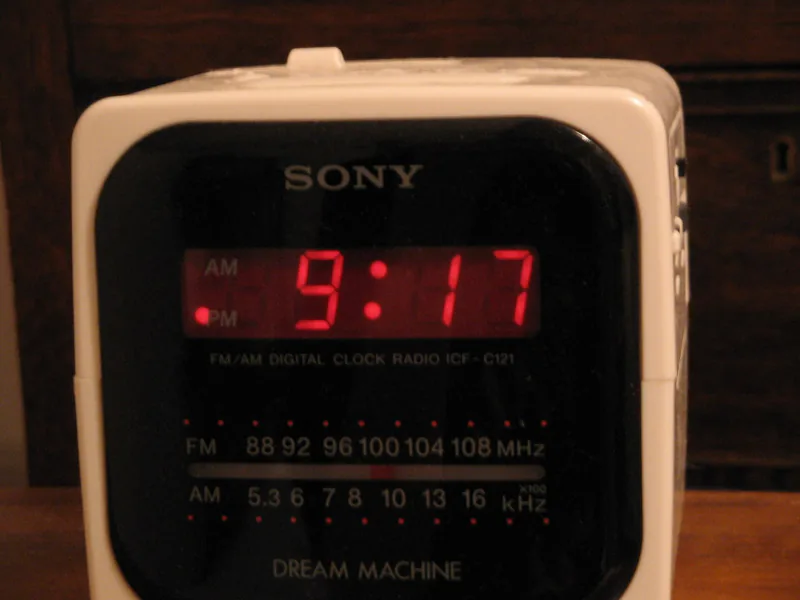
The digital clock was itself essential. Repeating times like 11:11, 12:12 or 22:22 are conspicuous only on digital displays, which became common in homes from the 1970s and on mobile phones from the 1990s. In France the same interest took the form of heures miroirs ("mirror hours"), times such as 21:21 or 12:21, each assigned a guardian angel or a message in popular books.
Eleven had long been treated as a special number in American numerology, where it is the first master number, and New Age writers connected the clock experience to this tradition and to the wider language of awakening and higher frequencies; see the New Age.
Doreen Virtue and the Angel Numbers Books§
The term "angel numbers" and its classic list of meanings were established by Doreen Virtue (born 1958), a prolific Hay House author whose books, oracle cards and workshops made angel communication a large part of the New Age market. In Angel Numbers: The Angels Explain the Meaning of 111, 444, and Other Numbers in Your Life (2005), written with Lynnette Brown, and Angel Numbers 101 (2008), she gave short interpretations of each digit and of many combinations, presenting them as messages received from the angels.
Virtue's framework drew on modern numerology and the law of attraction: repeated ones, for example, warned readers to watch their thoughts because thoughts were rapidly manifesting. In 2017 Virtue announced that she had become a born-again Christian, and she subsequently disowned much of her earlier work, including her teaching on angel communication. By then angel numbers had taken on a life of their own, and online lists of meanings continue to multiply.
Common Angel Numbers and Their Popular Meanings§
Interpretations vary between authors and websites, but a broad consensus has formed, built mostly on the digit meanings of modern numerology (see the site's numerology pages):
- 111 and 1111: new beginnings; thoughts manifesting quickly; a "wake-up call". Linked with number 1 and, for 11:11, with the master number 11.
- 222: balance, partnership, trust that things are working out (number 2).
- 333: support from spiritual guides or "ascended masters"; creativity and growth (number 3).
- 444: the presence and protection of angels; stability (number 4).
- 555: major change approaching (number 5).
- 666: in angel-number books, a call to rebalance material and spiritual concerns, not the "number of the beast" (number 6).
- 777: being on the right spiritual path; good fortune (number 7).
- 888: abundance and financial flow (number 8).
- 999: completion; the end of a phase (number 9).
Some meanings deliberately reverse older associations. In Chinese, Japanese and Korean culture, four is avoided because it sounds like the word for death, as described in lucky and unlucky numbers; in angel-number literature 444 is among the most comforting signs. The Christian tradition reads 666 as the number of the beast of Revelation; angel-number writers redefine it as a gentle warning. Such reinterpretations show that angel numbers are a new symbolic system rather than a survival of an old one.
Roots in Older Traditions§
Angel numbers draw on several earlier strands, while being distinct from all of them.
- Angelology. Belief in guardian angels is old in Judaism, Christianity and Islam, but the classical traditions described in angels and spirits do not teach that angels communicate through repeated digits. The angels of angel-number books are the personal, approachable helpers of late twentieth-century New Age spirituality.
- Number symbolism and numerology. The meanings of the digits come largely from modern numerology, created in America in the early twentieth century, which in turn drew on Pythagorean and Christian number symbolism; see Numerology: A Complete Guide.
- Synchronicity. The psychiatrist C. G. Jung's essay on synchronicity (1952) described "meaningful coincidences" connected not by cause but by meaning. Angel-number writers rarely cite Jung directly, but the idea that coincidence can be a message owes much to the popularisation of his concept.
- Omens. In a broader sense, angel numbers continue the very old practice of reading unsought signs, such as birds, chance words or dreams, as messages. What is new is the medium: the numbers that fill a digitised daily life.
The Psychology of Seeing Repeating Numbers§
Psychologists offer several overlapping explanations for why people keep seeing particular numbers.
- Selective attention and the frequency illusion. Once a pattern has been given meaning, the mind notices it more often, while non-matching times (11:12, 4:43) pass unremarked. The linguist Arnold Zwicky named this the "frequency illusion"; it is also popularly called the Baader-Meinhof phenomenon.
- Confirmation bias. Hits are remembered and misses forgotten, so the impression of frequency grows over time.
- Apophenia. Humans are strongly inclined to see patterns and agency in random data, a tendency the psychiatrist Klaus Conrad called apophenia in 1958.
- Habits and clocks. People check the time at regular moments, and repeated digits such as 11:11 occur twice a day on a twelve-hour clock; a habitual glance at the same point in a routine can make one time feel uncannily frequent.
None of this proves or disproves anyone's spiritual interpretation, which lies beyond what psychology can test. It does explain why the experience is so common. Many people who follow angel numbers say that they value them less as evidence than as reminders to pause, reflect and attend to their own intentions, a use that, like other forms of contemplative divination, does not depend on any claim about the future.
Frequently asked questions§
What does it mean when I keep seeing 1111?§
In New Age interpretation, 11:11 is a sign of spiritual awakening, new beginnings or a "doorway", an idea promoted by the author Solara in the early 1990s. Psychologists explain repeated sightings as the result of selective attention and the habit of glancing at clocks.
Who invented angel numbers?§
The term and its standard meanings were popularised by Doreen Virtue in Angel Numbers (2005, with Lynnette Brown) and Angel Numbers 101 (2008). Earlier, Solara's 11:11 teaching had already made repeated clock times a spiritual sign.
Are angel numbers in the Bible?§
No. The Bible uses numbers symbolically, but it does not teach that angels communicate through repeated numbers. Angel numbers are a modern New Age idea, and many Christian writers reject them as a form of divination.
Are angel numbers the same as numerology?§
They are related but distinct. Angel numbers borrow the digit meanings of modern numerology, but they are read from chance sightings rather than calculated from a name or birth date.
Sources and further reading§
- 11:11: Inside the Doorway — Solara, 1992
- Angel Numbers: The Angels Explain the Meaning of 111, 444, and Other Numbers in Your Life — Doreen Virtue and Lynnette Brown, 2005
- Angel Numbers 101 — Doreen Virtue, 2008
- Synchronicity: An Acausal Connecting Principle — C. G. Jung, 1952
- New Age Religion and Western Culture — Wouter J. Hanegraaff, 1996
- How We Know What Isn't So: The Fallibility of Human Reason in Everyday Life — Thomas Gilovich, 1991
- The Believing Brain — Michael Shermer, 2011