Liber VII · Divination · Chapter IX: Numerology
L. Dow Balliett and the Birth of Modern Numerology (1900–1930)
How modern numerology was born: L. Dow Balliett's number vibrations, New Thought, Julia Seton, Juno Jordan and Florence Campbell, and the system they created.

Modern numerology, the system of life path, expression and soul urge numbers found in today's books and calculators, was created in the United States in the first decades of the twentieth century. Its founding figure was Mrs L. Dow Balliett of Atlantic City, who from about 1905 taught that names and birth dates carry "vibrations" that can be read through numbers; her ideas were spread and systematised by Julia Seton, Juno Jordan and Florence Campbell.
Numerology Before "Numerology"§
Number divination was not new in 1900. Medieval manuscripts contain tables for onomancy, the calculation of a name's value to predict the outcome of a sickness or a contest, and Renaissance occult philosophy attributed powers to numbers and magic squares, as described in Numerology: A Complete Guide. In the nineteenth century, occultists such as Eliphas Levi and the members of the Golden Dawn used Hebrew letter values and tarot numbers in their teaching, and almanacs and fortune-telling books offered "lucky numbers".
What did not yet exist was a simple, self-contained method that anyone could use to calculate a personal profile from their own name and birth date in the Latin alphabet. That method, with its distinctive vocabulary of "vibrations" and "life lessons", was the achievement of a small group of American women writing between about 1905 and 1935.
L. Dow Balliett: Vibration, Music and the Pythagorean Claim§
L. Dow Balliett (usually identified as Sarah Joanna Dow Balliett, 1847–1929) lived in Atlantic City, New Jersey, and wrote under the name Mrs L. Dow Balliett. She had a background in music, and music is central to her system. Her early book How to Attain Success Through the Strength of Vibration (1905) set out a "system of numbers as taught by Pythagoras", and The Philosophy of Numbers: Their Tone and Colors (1908) developed it further. Other books and lessons followed in the next decade.

Balliett's leading idea was that everything vibrates, and that numbers are the measure of vibration. Each number from 1 to 9 had a musical note, a colour, a gem, a flower and a spiritual quality. The letters of a name, converted to numbers by running through the alphabet from 1 to 9 (the method now called Pythagorean), gave the name's vibration; the birth date gave another. When the two were in harmony, life went well; discord between them explained difficulties, and could be corrected by changing the name in use or by living in tune with one's number.
She drew freely on the Bible, on Plato and on the Pythagorean tradition as it was then understood, and she presented her system as a recovery of ancient wisdom. As explained in Pythagoras and Pythagorean number mysticism, nothing in the ancient sources supports that claim: the Pythagoreans gave numbers cosmic meanings but did not compute personal numbers from names in a modern alphabet. Balliett's real sources lay closer to home.
The New Thought Setting of Early Numerology§
Balliett wrote in the heyday of New Thought, the American movement that taught that mind and spirit shape health and circumstance and that right thinking brings success. New Thought writers spoke constantly of vibration, harmony and attraction, and they addressed a largely middle-class, often female readership seeking self-improvement outside the churches. Theosophy, with its talk of rays, colours and planes, supplied further vocabulary.
Numerology fitted this world perfectly. It promised self-knowledge without the need for an astrologer's tables, and it framed character as a set of potentials and lessons rather than a fixed fate. The titles of early books, with their emphasis on "success" and "attainment", show the New Thought accent, and much of the language of later numerology, including "soul urge", "life lesson" and "vibration", comes from this setting. The link between number, vibration and success would reappear in the law of attraction literature of later decades.
Julia Seton and the Name "Numerology"§
The word "numerology" is recorded in English from the first decade of the twentieth century and became common in the 1910s and 1920s. Its spread is usually associated with Julia Seton (Julia Seton Sears, 1862–1950), a New Thought lecturer known to her audiences as Dr Julia Seton, who studied Balliett's system and taught it, as "the new numerology", in lectures across the United States and in Britain. The precise credit for coining the word is disputed and probably cannot be settled, but Seton's lecturing did much to make numerology a recognised practice with a name of its own.
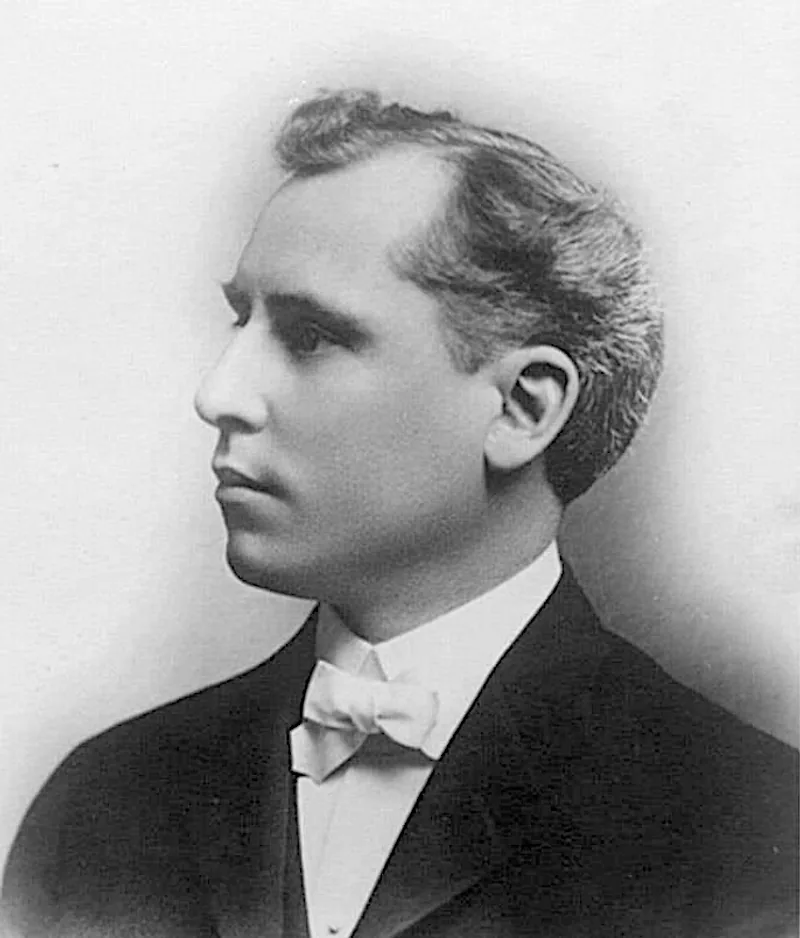
Other early teachers, among them Clifford W. Cheasley, wrote courses and handbooks in the 1910s and 1920s, and numerology began to appear in popular magazines. In Britain, the palmist Cheiro published a rival system with different letter values in 1926; the two traditions are compared in Cheiro and Chaldean numerology.
Juno Jordan, Florence Campbell and the Standard System§
The figure who did most to turn Balliett's teaching into a fixed method was Juno Jordan (1884–1984), who studied with Balliett and led the California Institute of Numerical Research in Los Angeles for many decades. The institute tested and compiled readings, and Jordan's book Numerology: The Romance in Your Name (1965) became a standard reference. Her long life linked the founding generation to the paperback boom of the 1970s.
Florence Campbell's Your Days Are Numbered: A Manual of Numerology for Everybody (1931) did similar work for a wider readership. It laid out, in the form most later books follow:
- the birth path or life path number from the full birth date;
- the expression or destiny number from the full birth name;
- the soul urge from the vowels and the personality (or "quiescent self") from the consonants;
- the personal year cycle of nine years;
- and the special status of the master numbers 11 and 22.
The standard system that emerged can be followed step by step in the life path number, expression, soul urge and personality numbers, master numbers 11, 22 and 33 and personal year, month and day numbers.
Numerology After 1960: Paperbacks, Calculators and Critics§
From the 1960s numerology became part of the wider occult and New Age revival. Mass-market paperbacks presented it alongside astrology and tarot; Faith Javane and Dusty Bunker's Numerology and the Divine Triangle (1979) combined it with tarot, and Matthew Oliver Goodwin's two-volume Numerology: The Complete Guide (1981) gave it an encyclopedic form. In later decades, books by Hans Decoz and others, and then websites and apps, made calculation instant. The number 33 was increasingly treated as a third master number, and newer ideas such as karmic debt numbers and, from the 1990s, angel numbers were grafted onto the system.
Critics have been consistent. The mathematician Underwood Dudley, in Numerology: Or What Pythagoras Wrought (1997), argued that the arbitrary letter tables and the flexibility of interpretation allow any desired result, and no controlled study has found that numerological profiles describe people better than chance. Historians, for their part, have shown how firmly the system is rooted in its own time and place: a product of Progressive-era America, New Thought optimism and the occult revival, wearing the borrowed robes of Pythagoras. For a modern statement of each number's meaning, see the site's numerology pages or work out your own numbers with the birthday calculator.
Frequently asked questions§
Who invented modern numerology?§
Modern numerology was developed in the United States in the early twentieth century, above all by Mrs L. Dow Balliett, whose books on number vibration appeared from about 1905. Her students and successors, including Julia Seton, Juno Jordan and Florence Campbell, popularised and standardised the system.
When was the word "numerology" first used?§
The word is recorded from the first decade of the twentieth century and became common in the 1910s and 1920s. The New Thought lecturer Julia Seton is often credited with popularising it, though the exact origin is uncertain.
Is modern numerology really Pythagorean?§
Only in name. Balliett called her method Pythagorean out of admiration for the ancient philosopher, but there is no ancient evidence for calculating personal numbers from names and birth dates in this way.
What was New Thought's influence on numerology?§
New Thought supplied numerology's vocabulary of vibration, harmony and success and its readership of seekers interested in self-improvement. Early numerology books read in many ways as New Thought manuals expressed through numbers.
Sources and further reading§
- The Philosophy of Numbers: Their Tone and Colors — L. Dow Balliett, 1908
- How to Attain Success Through the Strength of Vibration — L. Dow Balliett, 1905
- Your Days Are Numbered: A Manual of Numerology for Everybody — Florence Campbell, 1931
- Numerology: The Romance in Your Name — Juno Jordan, 1965
- Numerology: The Complete Guide — Matthew Oliver Goodwin, 1981
- Numerology and the Divine Triangle — Faith Javane and Dusty Bunker, 1979
- Numerology: Or What Pythagoras Wrought — Underwood Dudley, 1997