Liber VII · Divination · Chapter IX: Numerology
Master Numbers 11, 22 and 33 in Numerology: Meaning and Origins
Master numbers 11, 22 and 33 in numerology: what they mean, how they arise in a calculation, where the idea came from, and why 33 is still debated.
Master numbers are the two-digit totals 11, 22 and, in many modern books, 33, which numerologists leave unreduced when they appear in a calculation instead of collapsing them to 2, 4 and 6. They are read as intensified forms of those digits, carrying unusual potential, idealism and pressure; the convention arose in American numerology in the early twentieth century, with 33 added later and still disputed.
What Master Numbers Are§
In modern numerology almost every total is reduced to a single digit by adding its digits: 47 becomes 4 + 7 = 11, and 11 would normally become 2. The master-number convention says: stop at 11. The same applies to 22 and, for most present-day authors, 33. The result is written either as the master number alone or in the form 11/2, 22/4, 33/6, to show both the "higher" and the base vibration.
Master numbers matter most in the life path number, but they are also kept in the expression, soul urge and personality numbers described in expression, soul urge and personality numbers, and sometimes in personal years. A birth date such as 5 September 1950, whose digits total 29 and then 11, gives a master life path; the same date reduced part by part gives 20 and then 2. Whether a person "has" a master number can therefore depend on the method chosen, a point taken up below.
The underlying idea is that a master number contains the qualities of its base digit raised to a higher octave. People with master numbers are said to have exceptional possibilities but also to find them hard to live up to, so that they may "live as" the base number for long periods. Numerology books typically describe master numbers as both a gift and a burden.
Where the Idea Came From§
Modern numerology was created in the United States from about 1905 by L. Dow Balliett and developed by her successors; see the birth of modern numerology. The special treatment of 11 and 22 is part of that early American tradition and is set out in the influential manuals of the 1930s, such as Florence Campbell's Your Days Are Numbered (1931), and later by Juno Jordan. The term "master number" became standard in that literature.

Why these two numbers? Numerologists have offered several reasons, mostly drawn from older symbolic systems:
- Repetition. 11 and 22 are the first two-digit numbers made of a single repeated digit, as if the base number were doubled.
- The Hebrew alphabet and the tarot. The Hebrew alphabet has 22 letters, which the Sefer Yetzirah treats, with the ten sefirot, as the instruments of creation. In the nineteenth century French and British occultists matched the 22 letters to the 22 trumps of the tarot, as told in the history of tarot. Twenty-two thus came to stand for the complete set of cosmic principles.
- The decad and beyond. In Pythagorean and Christian number symbolism ten was the number of completeness. Eleven, one step beyond it, could be read either as transgression or as a new beginning on a higher level.
That last point shows how modern the positive reading of 11 is. Augustine, in the City of God, interpreted eleven as the number of sin, because it oversteps the ten of the commandments; medieval exegetes generally followed him. The eleven-as-illumination of modern numerology is a reversal of the older Christian view, as described in biblical numerology.
Master Number 11: The Illuminator§
Eleven is the most frequently encountered master number. In numerology books it is associated with intuition, inspiration, spiritual insight, idealism and sensitivity, and with roles such as visionary, artist, healer or counsellor. Its base digit, 2, is the number of partnership and receptivity; 11 is said to carry that receptivity into the psychic and spiritual realm. The shadow side commonly described is nervous tension, self-doubt, impracticality and a gap between vision and achievement.
Eleven has also acquired a separate life in popular culture through the 11:11 phenomenon, the experience of repeatedly seeing that time on a clock, which since the 1990s has been read as a spiritual signal; see angel numbers. The site's page on number 11 gives the modern meaning in full.
Master Number 22: The Master Builder§
Twenty-two is called the Master Builder. It is said to combine the vision of 11 with the order and practicality of its base digit 4, so that ideals can be turned into lasting institutions, buildings, organisations or works. Numerology books associate it with large-scale achievement, discipline and service to the wider world, and warn of the pressure of high expectations, a tendency to control, and the danger of falling back into the narrower caution of the 4.
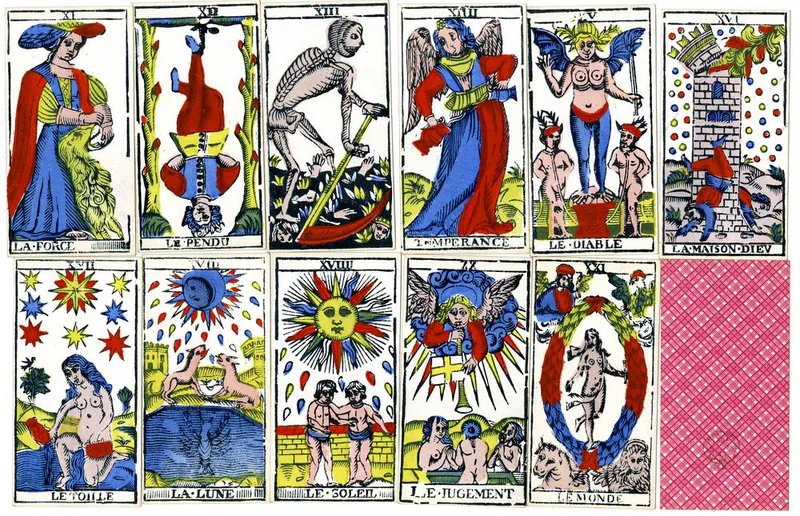
The prestige of 22 owes much to its esoteric associations: the 22 Hebrew letters, the 22 tarot trumps and, in the Hermetic Qabalah of the Golden Dawn, the 22 paths connecting the sefirot on the Tree of Life. See number 22.
Master Number 33 and the Debate over Higher Masters§
Thirty-three, the Master Teacher, is associated with compassion, self-sacrificing service, healing and teaching, the 6 of responsibility and care raised to a universal scale. It was not part of the earliest systems and became widely accepted only in the later twentieth century, through popular books and then online calculators. Several respected numerologists either did not recognise it or held that it can only appear in certain positions, and some say it counts only when it arises from a combination of 11 and 22.
Thirty-three carries strong symbolic associations of its own: it is the traditional age of Christ at the crucifixion; Dante built each of the three parts of the Divine Comedy from 33 cantos; and the Ancient and Accepted Scottish Rite of Freemasonry has 33 degrees. A minority of authors go further and treat 44, 55 and other repeated digits as master numbers, but this is not mainstream. See number 33.
How Common Are Master Numbers, and Are They Real?§
Because the same birth date can be reduced in different ways, a person may have a master life path by one method and not by another. Some numerologists respond by saying that a master number present at any stage of any accepted calculation should be noted; others accept only the result of their preferred method. Online calculators differ for the same reason.
Master numbers are less frequent than ordinary numbers, simply because a total has to land exactly on 11, 22 or 33, and their rarity adds to their appeal. Critics point out that the convention allows a flattering, special category to be assigned or withheld by the choice of method, and that there is no evidence that people with master numbers differ from anyone else. Within numerology, master numbers are best understood as a twentieth-century refinement that drew on older symbolism of 11, 22 and 33 to give the system a hierarchy of spiritual significance. For the broader background see Numerology: A Complete Guide and number symbolism.
Frequently asked questions§
Why are 11, 22 and 33 called master numbers?§
They are repeated-digit numbers that numerologists believe carry the qualities of 2, 4 and 6 at a higher spiritual level. Twenty-two also echoes the 22 Hebrew letters and tarot trumps, and 33 the traditional age of Christ, which added to their prestige.
Should I reduce a master number?§
Most numerologists keep 11, 22 and 33 unreduced in the core numbers and write them as 11/2, 22/4 and 33/6. Some reduce them in secondary calculations such as personal years.
Is 33 really a master number?§
It is widely treated as one in modern numerology, but it was added later than 11 and 22, and some authors do not recognise it or accept it only under specific conditions.
Is 44 a master number?§
A few modern writers treat 44 and other repeated digits as master numbers, but the mainstream tradition recognises only 11, 22 and 33.
Sources and further reading§
- Your Days Are Numbered: A Manual of Numerology for Everybody — Florence Campbell, 1931
- Numerology: The Romance in Your Name — Juno Jordan, 1965
- Numerology: The Complete Guide — Matthew Oliver Goodwin, 1981
- Numerology: Key to Your Inner Self — Hans Decoz, 1994
- The City of God — Augustine of Hippo, 426
- The Mystery of Numbers — Annemarie Schimmel, 1993