Liber Samekh and the Bornless Ritual: A History
A history of Crowley's Liber Samekh: the Bornless Ritual from the Greek Magical Papyri, Golden Dawn use, Cefalù in 1921, and the Holy Guardian Angel.
- TraditionAleister Crowley, Abbey of Thelema, Cefalù, 1921; after a Graeco-Egyptian invocation in the Greek Magical Papyri (PGM V.96–172)
- ForWisdom & study
- Presented asHistory only
- WhenCrowley gave no astrological election; the ritual was to be repeated over a long period of preparation

Liber Samekh, subtitled Theurgia Goetia Summa, is a ritual that Aleister Crowley wrote in 1921 at his Abbey of Thelema in Cefalù, Sicily, as a means of attaining what he called the Knowledge and Conversation of the Holy Guardian Angel. It is an elaborate reworking of the "Bornless Ritual", which itself derives from an invocation of a "Headless One" in a Graeco-Egyptian magical papyrus of late antiquity. Because it is an invocation of a spiritual being and part of an initiatory discipline, the Spellbook presents it as history only.
How it was done§
Crowley wrote the ritual for his disciple Frank Bennett and printed it, with an extensive commentary, as an appendix to Magick in Theory and Practice (1929). It is arranged in sections. The practitioner first proclaimed the Bornless One as creator of heaven and earth, of night and day, of darkness and light, identifying it with the ultimate self. There followed invocations to the elements in turn, Spirit, Air, Fire, Water and Earth, each made facing the appropriate quarter, with sequences of the so-called "barbarous names" preserved from the Greek original, which Crowley re-spelled and interpreted by Greek and Hebrew numerology in his commentary. The closing sections identified the practitioner with the Bornless One and declared all spirits subject to the practitioner's will.
Crowley's commentary insists that the ritual was not a matter of repeating words but of a long period of preparation, intense aspiration and inward "inflaming" in prayer; he describes the physical and imaginative techniques he thought appropriate, including visualisations and the use of the voice. He related it to the six-month operation of the Book of the Sacred Magic of Abramelin the Mage, which had shaped his understanding of the Holy Guardian Angel.
Origins and history§
The original is a passage of the Greek Magical Papyri, catalogued as PGM V.96–172, in a fourth-century papyrus in the British Museum (Papyrus 46). Headed as a "stele of Jeu the hieroglyphist", it is an exorcism: the speaker invokes the "Headless One" (Akephalos), creator of earth and heaven, with strings of divine names, and identifies himself with that god in order to drive out a demon. Charles Wycliffe Goodwin published the text with an English translation in 1852 as Fragment of a Graeco-Egyptian Work upon Magic, and it is now available in Hans Dieter Betz's The Greek Magical Papyri in Translation (1986).
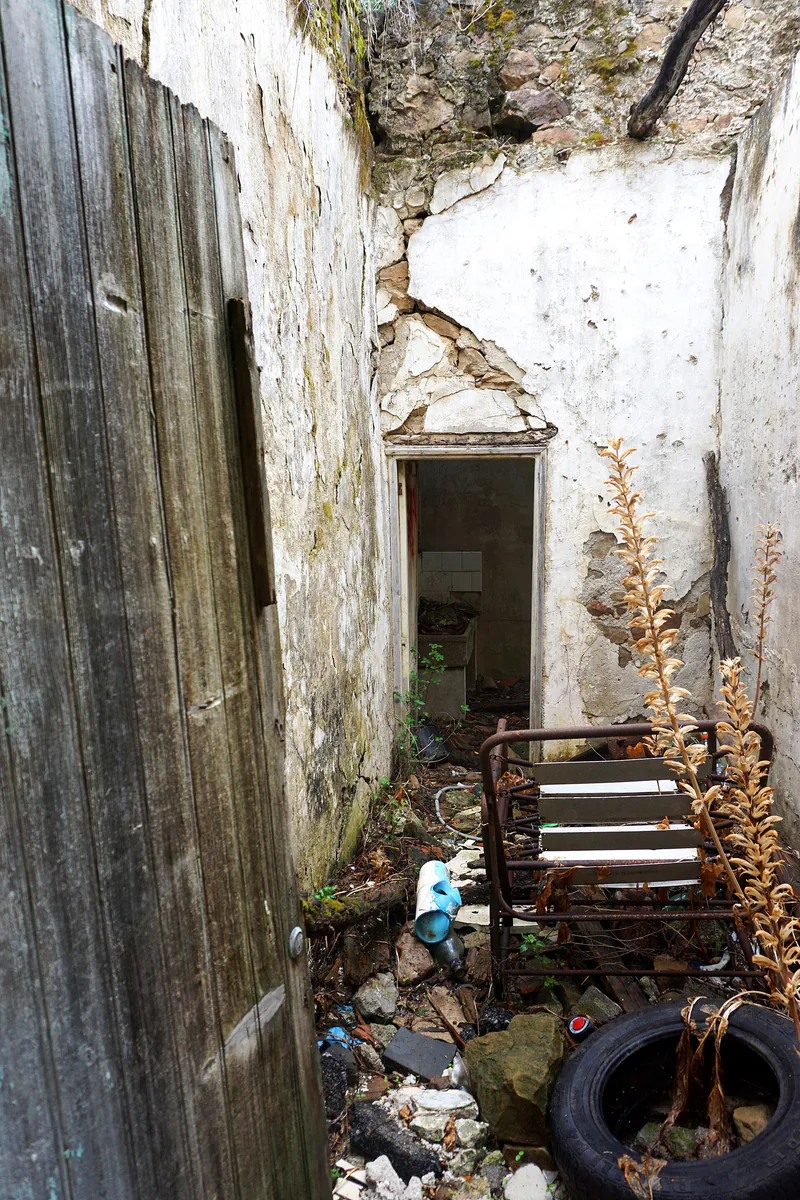
In the 1890s members of the Hermetic Order of the Golden Dawn adapted Goodwin's version into the "Bornless Ritual", translating Akephalos as "Bornless" (a rendering scholars consider mistaken). Crowley included a version as the "Preliminary Invocation" in his 1904 edition of The Goetia, and later, in Cefalù, rewrote it thoroughly in the light of Thelema, the religious philosophy he had founded on The Book of the Law (1904). The Abbey of Thelema was a small community that Crowley led from 1920 until Mussolini's government expelled him in 1923.
Liber Samekh became a classic of twentieth-century ceremonial magic. Thelemic orders such as the A∴A∴ and Ordo Templi Orientis treat it within structured, mentored programmes, and many non-Thelemite magicians use versions of the Bornless Ritual. Scholars of Western esotericism, including Henrik Bogdan and Marco Pasi, discuss it as an example of how modern occultists reinterpreted ancient magical texts as techniques of self-transformation. Historians of the papyri stress the gap between its original purpose, an exorcism, and its modern reading as an invocation of the higher self.
Why this is presented as history§
The ritual invokes a spiritual being, calls spirits into subjection and was designed for advanced initiates under supervision. The Spellbook does not give instructions for such work. Readers interested in practical Thelemic devotion may look instead at Liber Resh, Crowley's simple adorations of the sun.
Safety and good sense§
Intensive invocation, sleep deprivation and prolonged isolation, all features of the retreats associated with this ritual, can be psychologically destabilising. Anyone experiencing voices, sensed presences or disturbing shifts in perception should talk to a doctor or mental-health professional. Esoteric study is no substitute for medical, legal or financial help.
Sources and further reading§
- Magick: Liber ABA, Book Four — Aleister Crowley, 1997
- The Greek Magical Papyri in Translation — Hans Dieter Betz (ed.), 1986
- The Goetia: The Lesser Key of Solomon the King — S. L. MacGregor Mathers & Aleister Crowley, 1904
- Perdurabo: The Life of Aleister Crowley — Richard Kaczynski, 2002
- Aleister Crowley and Western Esotericism — Henrik Bogdan & Martin P. Starr, 2012
- The Book of the Sacred Magic of Abramelin the Mage — S. L. MacGregor Mathers, 1898