Bay Leaf Wish Spell: Writing and Burning a Wish
How to make a bay leaf wish: writing on a dried bay leaf and burning or keeping it, with the laurel's history from Apollo's Delphi to Culpeper's herbal lore.

The bay leaf wish is one of the simplest spells in contemporary witchcraft: a wish or intention is written on a dried bay leaf, which is then burned in a fireproof dish so that the smoke "carries" the wish, or kept in a purse or under a pillow as a charm. It draws on the bay laurel's long association with Apollo, victory and prophecy, and with the protection of the household in English herbal lore. It is used for luck, success in an undertaking, and the start of new ventures.
How to do it§
- Choose your wish. Decide on a single, clear wish concerning your own life, and reduce it to a few words or a single word: "new job", "pass exam", "courage".
- Choose the time. A waxing moon is the usual choice for wishes that should grow; Sunday, the Sun's day, suits the bay. See the planetary hours for the hour of the Sun where you live.
- Prepare the dish. Set a fireproof bowl containing sand or soil on a heat-proof surface, near an open window or outdoors, with a glass of water at hand. Clear away paper and fabrics.
- Write on the leaf. Hold the leaf for a moment and think about the wish. Write it on the leaf in small letters; some also draw a simple symbol, such as a star or the sign of the Sun (☉).
- Speak it. Say the wish aloud, followed by a short phrase of your own, for example: "Leaf of the laurel, leaf of the victor, carry this wish and let it be."
- Burn it or keep it. To burn: light the leaf's tip with the candle or match, hold it over the dish only briefly, then lay it in the sand and let it burn out. Watch the smoke rise and picture the wish fulfilled. To keep: fold the leaf into a paper with your name and place it in your wallet, under your pillow or on your altar until the wish comes about.
- Finish. When the ash is cold, pour a little water over it, and scatter the ash outdoors on soil or in the wind. Thank the bay. Take a practical step towards the wish soon afterwards.
Origins and history§
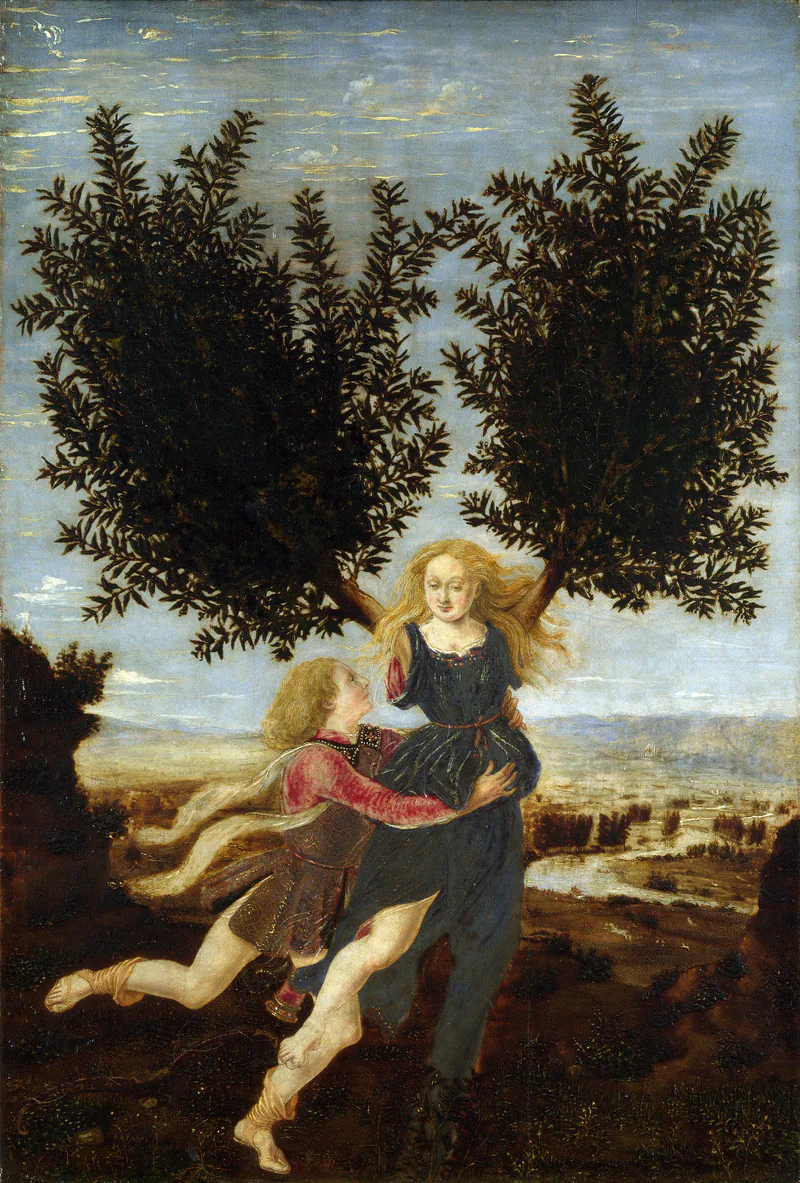
In Greek myth the nymph Daphne, fleeing Apollo, was turned into a laurel, which became the god's sacred tree. Laurel crowned victors at the Pythian Games at Delphi and Roman generals in their triumphs, and ancient writers associated it with prophecy at Delphi; later authors claimed that the Pythia chewed or burned laurel before prophesying, though scholars treat such details with caution. A form of divination called daphnomancy read the crackling of burning laurel: a loud, bright crackle was a good omen, a dull smoulder a poor one.
English herbals kept the bay's reputation as a guardian. Nicholas Culpeper, in The English Physitian (1652), calls it a tree of the Sun under Leo, which "resists witchcraft very potently", and repeats an older saying that "neither witch nor devil, thunder nor lightning, will hurt a man in the place where a bay-tree is." Bay leaves were strewn and hung in houses, and an old belief held that a withering bay tree foretold misfortune.
Writing a wish on a bay leaf and burning or keeping it appears to be a recent practice. It is not attested in early herbals or grimoires, and seems to have spread through popular witchcraft books and, especially, social media in the twenty-first century. It belongs to the broader family of written petitions found in many traditions, from Greek and Roman inscribed tablets to the paper petitions of hoodoo. See herbal magic and planetary herbs.
Variations§
Some write three wishes on three leaves and burn one on each of three nights. Others place a written bay leaf in a jar or under a candle for a week. A bay leaf with the word "protect" may be tucked above a door. Daphnomancy-minded practitioners listen to the crackle as an omen; others simply watch the smoke.
Safety and good sense§
Dried bay leaves flare suddenly and throw sparks. Burn them only in a fireproof container on a heat-proof surface, away from curtains, paper, hair and loose sleeves, with ventilation and water at hand; never burn them while holding the dish over your lap or a bed, and never leave them unattended. Smoke can trigger asthma: if in doubt, keep the leaf rather than burning it. Use true culinary bay (Laurus nobilis); some ornamental shrubs called "laurel", such as cherry laurel, are poisonous. Wishes are no substitute for medical, legal or financial help.
Sources and further reading§
- The English Physitian — Nicholas Culpeper, 1652
- Cunningham's Encyclopedia of Magical Herbs — Scott Cunningham, 1985
- A Modern Herbal — Maud Grieve, 1931
- Magic in the Ancient World — Fritz Graf, 1997
- The Golden Bough — James George Frazer, 1890