Liber XI · Herbal Magick · Chapter IV: Herbal Magic History
History of Herbal Magic: Root-Cutters, Herbals and Cunning Folk
The history of herbal magic from Egyptian papyri and Greek root-cutters to Anglo-Saxon charms, Renaissance signatures, Culpeper's planetary herbal and modern witchcraft.

The history of herbal magic runs from the medical papyri of ancient Egypt and the ritual precautions of Greek root-cutters, through the charms and herbals of the Middle Ages, to the astrological botany of the Renaissance and the folk practice of cunning folk and modern witches. Throughout this history, the healing, religious and magical powers of plants were understood as aspects of a single hidden virtue placed in nature.
Ancient Egypt and Mesopotamia: Medicine and Spell Together§
The oldest substantial records of plant use in healing come from Mesopotamia and Egypt. The Egyptian Ebers Papyrus, usually dated to around 1550 BCE, lists hundreds of prescriptions containing plant ingredients such as juniper, coriander, garlic and poppy, alongside spells to be spoken while preparing or applying them. For Egyptian physicians, the words and the substance worked together: the remedy acted on the body, the incantation on the hostile spirit or poison causing the illness.
Mesopotamian healing texts likewise paired the asu, who prepared remedies, with the ashipu, the exorcist-priest who diagnosed supernatural causes and recited incantations. Temple cults in both cultures burned aromatic woods and resins, and Egyptian priests compounded the elaborate temple incense known as kyphi, discussed in the guide to incense and resins.
Greek Root-Cutters and Roman Natural History§
In Greece, herb-gatherers called rhizotomoi, "root-cutters," supplied physicians and the public. Theophrastus (c. 371–287 BCE), Aristotle's successor, devoted the ninth book of his Enquiry into Plants to medicinal plants and reported, with some scepticism, the rules root-cutters followed: drawing circles around certain plants with a sword before cutting, facing a particular direction, gathering at night or praying while digging. His account of the mandrake is the earliest source for its gathering rituals.
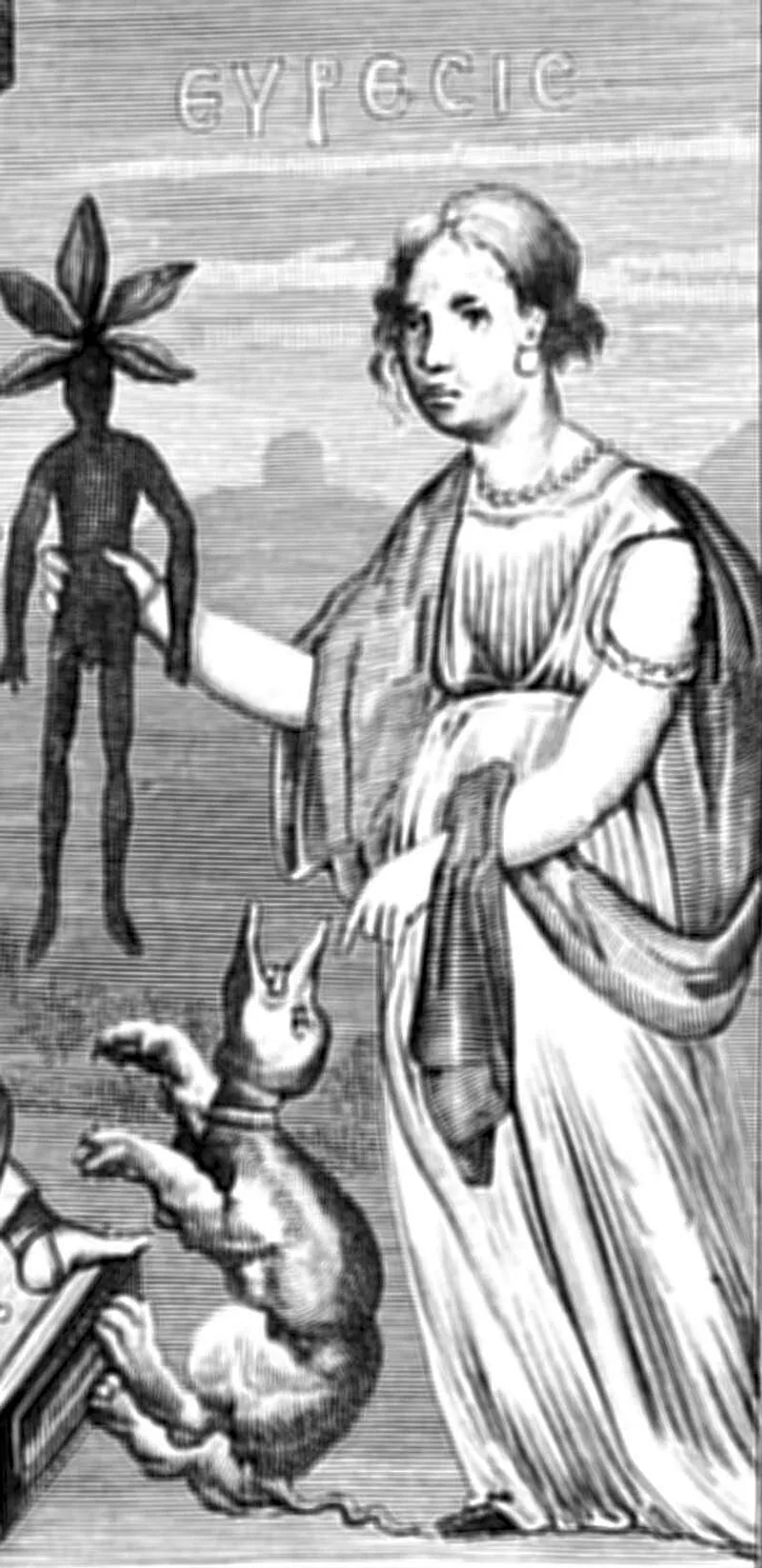
Myth gave herbal magic its archetypes. In Homer's Odyssey, Hermes gives Odysseus the herb moly to protect him from the potions of Circe, and Medea of Colchis became the type of the herb-wise sorceress. In the first century CE, Dioscorides' De materia medica described some six hundred plants in a practical, largely non-magical way and remained the foundation of Western pharmacy for fifteen centuries. Pliny the Elder's Natural History (77 CE), by contrast, preserved a mass of magical lore, often with disapproving comments on the "vanities of the Magi." The Greek magical papyri of Roman Egypt include prayers to be said when picking a plant, addressing it as a living, sacred being; see Greco-Roman magic.
Medieval Herbals, Monastery Gardens and Charms§
Late antique compilations such as the Herbarius attributed to Pseudo-Apuleius (fourth century) passed classical plant lore to the Middle Ages, often with instructions to gather herbs with prayers or at specific times. Monasteries preserved and copied these texts and grew medicinal plants; the ninth-century plan of the abbey of St Gall shows a dedicated physic garden. The twelfth-century abbess Hildegard of Bingen described the properties of hundreds of plants in her Physica, mixing medical observation with spiritual and occasionally magical uses.
Anglo-Saxon England left especially vivid evidence. Bald's Leechbook (tenth century) and the collection known as the Lacnunga contain remedies against "elf-shot," night-walkers and poison. The Lacnunga's "Nine Herbs Charm" names plants including mugwort, plantain, chamomile, chervil and fennel, and mentions the god Woden alongside Christ, showing how pre-Christian and Christian ideas mingled. Across Europe, plants such as vervain and St John's wort were gathered at Midsummer with Christian prayers, and the Church tolerated many such charms while condemning others as superstition.
The Islamic world played a decisive role in transmitting and enlarging this inheritance. Arabic physicians translated Dioscorides and Galen and added many plants unknown to the Greeks, among them spices and aromatics from India and East Africa. Ibn Sina's Canon of Medicine (completed around 1025) and the great pharmacological compendium of Ibn al-Baytar (d. 1248) became standard references, and Arabic works on the occult properties of things, together with the astral magic of the Picatrix, passed into Latin through translators in Spain and Italy. The medical school of Salerno produced the influential herbal known as Circa instans in the twelfth century. For the broader theory of hidden virtues these texts assumed, see natural magic.
Renaissance Magic: Sympathies, Signatures and the Stars§
The Renaissance gave herbal magic a philosophical system. Marsilio Ficino's Three Books on Life (1489) recommended aromatic plants, foods and scents to draw down the beneficent influences of the Sun, Jupiter and Venus. Heinrich Cornelius Agrippa's Three Books of Occult Philosophy (1533) listed plants under each planet and explained their "occult virtues" as gifts of the World Soul; see Agrippa's Three Books of Occult Philosophy. Giambattista della Porta's Natural Magic (1558, enlarged 1589) treated many plant marvels as natural rather than demonic.
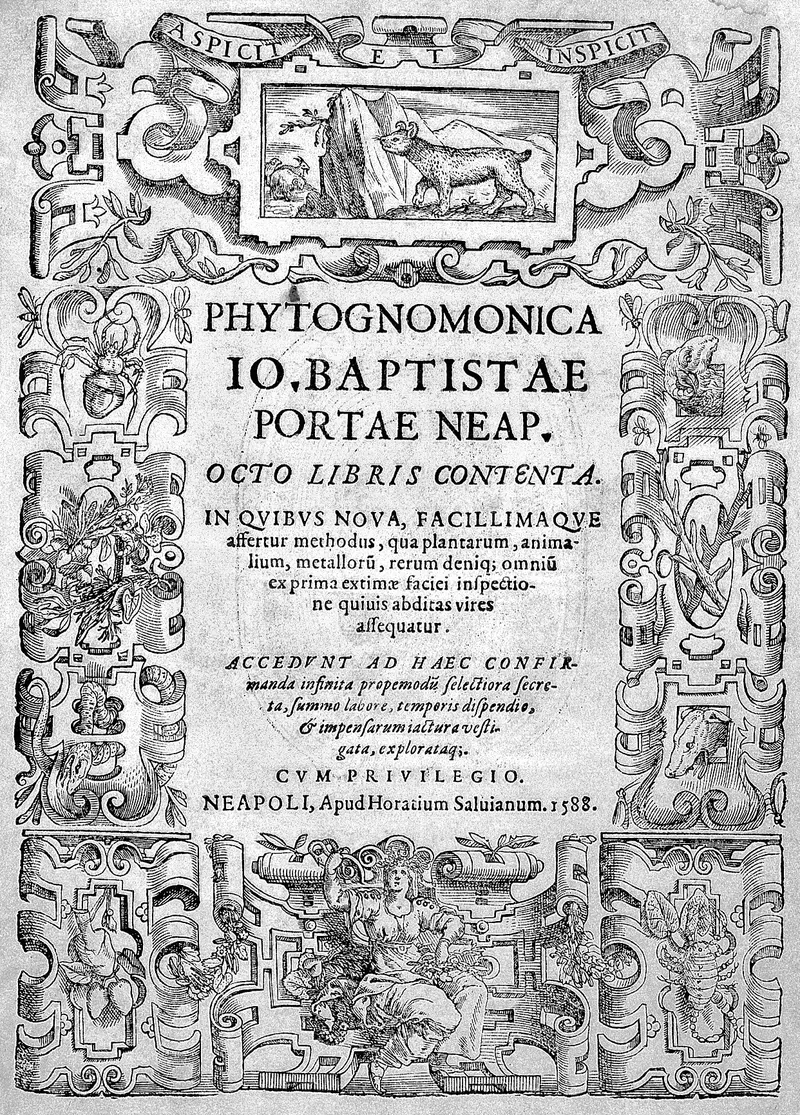
The doctrine of signatures, associated with Paracelsus and developed by Porta's Phytognomonica (1588), Oswald Croll and William Coles, taught that plants bear visible signs of their uses. At the same time, printed herbals by Leonhart Fuchs (1542) and John Gerard (1597) were moving botany toward careful description, and Gerard himself dismissed the legends of the shrieking mandrake as old wives' tales.
Culpeper and the Popular Astrological Herbal§
Nicholas Culpeper (1616–1654), a London apothecary-astrologer, made astrological herbalism available to ordinary English readers. In 1649 he translated the College of Physicians' Latin pharmacopoeia into English, angering the physicians, and in 1652 he published The English Physitian, later known as Culpeper's Complete Herbal. For each plant it gave a description, a ruling planet and its medical virtues, arguing that anyone who understood the stars could treat themselves cheaply. Reprinted for more than three centuries, it shaped popular ideas of planetary herbs to this day.
Cunning Folk, Witch Trials and Modern Revival§
In early modern Europe, cunning folk and wise women continued to offer herbal remedies, charms and protection. During the witch trials, demonologists accused witches of making poisons and flying ointments, though most of those accused were not herbalists. With the rise of experimental science in the late seventeenth century and Linnaean botany in the eighteenth, learned magic gradually lost its intellectual standing, but herbal charms survived in rural practice and were recorded by folklorists in the nineteenth century.
In the Americas, African, European and Native American traditions combined in practices such as hoodoo and rootwork. In the twentieth century, Wicca and other forms of modern witchcraft revived herbal magic as a central craft, drawing on Culpeper, Agrippa and folklore collections. The plants most often associated with witches are surveyed in the witch's garden, and the overall field is introduced in what is herbal magic?.
Frequently asked questions§
What is the oldest record of herbal magic?§
Some of the earliest substantial records are Mesopotamian healing texts and Egyptian medical papyri, notably the Ebers Papyrus of around 1550 BCE, which combine plant remedies with spells. Archaeological evidence of plant use in burials is much older but harder to interpret.
Who were the rhizotomoi?§
They were professional "root-cutters" of ancient Greece who gathered medicinal plants. Theophrastus recorded their ritual precautions, such as drawing circles around plants and gathering at specific times, which shows how magic and medicine overlapped.
What is the doctrine of signatures?§
It is the early modern idea that God marked plants with visible signs of their healing uses, such as a plant resembling an organ being good for that organ. It was popular in the sixteenth and seventeenth centuries and has no scientific basis.
Why was Culpeper's herbal so influential?§
It was written in English, cheaply printed and organised by planetary rulership, allowing ordinary readers to treat themselves without expensive physicians. It has remained in print almost continuously since 1652.
Sources and further reading§
- Enquiry into Plants — Theophrastus, c. 300 BCE
- De materia medica — Pedanius Dioscorides, c. 70
- Natural History — Pliny the Elder, 77
- Three Books on Life — Marsilio Ficino, 1489
- Three Books of Occult Philosophy — Heinrich Cornelius Agrippa, 1533
- The English Physitian — Nicholas Culpeper, 1652
- Anglo-Saxon Magic — Godfrid Storms, 1948
- Popular Magic: Cunning-folk in English History — Owen Davies, 2003