Liber III · Black & White Magic · Chapter III: Money & Prosperity Magick
Ethics and Critiques of Prosperity Magic: Greed, Fraud and Belief
The ethics and critiques of prosperity magic: Mammon and simony, treasure-hunting fraud, Wiccan ethics, positive thinking and occult economies.

The ethics and critiques of prosperity magic concern whether it is right, wise or effective to use ritual to obtain money. Religious critics have condemned it as avarice, idolatry or dealing with demons; magistrates and journalists have exposed it as a field for fraud; magical traditions have set their own limits on it; and modern scholars have analysed it as a response to economic uncertainty and as a psychological illusion of control. Taken together, these critiques form a long debate about money, hope and power that is as old as money magic itself.
Mammon and Simony: Religious Objections to Money Magic§
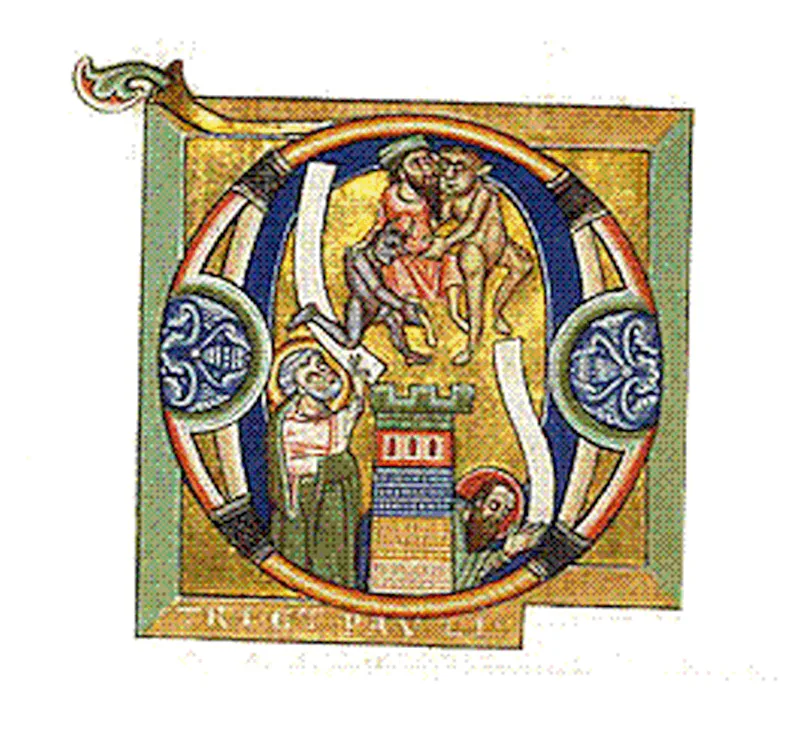
The Gospel saying "Ye cannot serve God and mammon" (Matthew 6:24, KJV) shaped Christian attitudes to wealth for centuries. In the Acts of the Apostles, Simon Magus offers the apostles money for the power to confer the Holy Spirit and is rebuked by Peter; his name gave the word simony, the buying and selling of sacred things. For the Church Fathers, especially Augustine, magic of any kind implied a tacit pact with demons, and magic for gain added the sin of avarice. Augustine's arguments, discussed in our article on Augustine, magic and theurgy, framed later condemnations.
Medieval theologians such as Thomas Aquinas classified practices that sought effects through signs and observances lacking natural causes as superstition. Treasure-hunting with conjured spirits was condemned in confessors' manuals and sermons, and theologians of the University of Paris issued a broad condemnation of magical errors in 1398. Other religions have their own objections: Islamic law condemns siḥr, Jewish law prohibits many forms of divination and enchantment, and Buddhist ethics warns against "wrong livelihood", including the sale of charms and fortune-telling by monks. At the same time, every one of these traditions permitted prayer for daily bread, which kept the boundary between devotion and magic perpetually contested, as shown in saints and deities of wealth.
Treasure-Seekers, Swindlers and the Law§
The record of money magic is also a record of fraud. Johannes Dillinger's study of treasure-hunting shows that many cases ended in court because a "treasure-finder" had taken money from clients for rituals, offerings or materials, and then found nothing. Early modern pamphlets and plays satirised credulous treasure-seekers, and Ben Jonson's The Alchemist (1610) made comedy of con men selling magical riches. In the United States, the young Joseph Smith was brought before a hearing in 1826 in Bainbridge, New York, in connection with his work as a "glass-looker" hired to locate buried treasure, an episode discussed by historians including Richard Bushman and D. Michael Quinn (see Latter-day Saints).

Law gradually shifted from punishing magic as a crime against God to punishing it as deception. In Britain, the Witchcraft Act of 1736 treated pretended conjuration and fortune-telling as fraud; the Fraudulent Mediums Act of 1951 replaced it, and since 2008 such cases have generally fallen under consumer protection law. Modern police and consumer agencies regularly warn about scams in which paid "spell-casters" or psychics claim that a client's money is cursed and must be cleansed. Our article on maleficium and curses gives the background to such fears. Responsible practitioners and scholars alike stress that no ritual is a substitute for financial, legal or psychological help.
Harm None? Ethics Inside Magical Traditions§
Magical traditions have rarely been as amoral as their critics suppose. The Arbatel (1575) insists that the magician should ask God for what is needed, use gifts for the good of others and avoid greed. Agrippa, the great systematiser of Renaissance magic, published On the Vanity of Arts and Sciences (1530), a sweeping declamation that included magic among the vain pursuits of human learning. Hoodoo practitioners distinguish between drawing luck and "crossing" a rival, and many root doctors refused the latter.
Modern witchcraft adopted the Wiccan Rede, "An it harm none, do what ye will", in a form popularised by Doreen Valiente in the 1960s, and many witches add a belief in the "threefold return" of any harm done. Applied to money, these ethics discourage spells that target a particular person's wealth, such as an employer or a competitor, and encourage asking for "what is needed" rather than a fixed sum. Chaos magicians, by contrast, tend to treat ethics as a personal responsibility rather than a cosmic law. These positions are described in money magick in witchcraft and New Thought and money sigils and chaos magick.
Positive Thinking and Blaming the Poor§
The most sustained modern critique targets the mental-science version of money magic: New Thought, the law of attraction and the prosperity gospel. Donald Meyer's The Positive Thinkers (1965) traced how American mind-cure turned social problems into problems of individual attitude. Barbara Ehrenreich's Bright-Sided (2009) argued that the culture of positive thinking discouraged realistic risk assessment before the 2008 financial crisis and taught people who lost their jobs to blame their own "negative" thoughts. Kate Bowler's Blessed (2013) shows how the prosperity gospel offered hope and dignity to many believers while leaving others feeling that their poverty or illness was a sign of insufficient faith.
The ethical objection here is not that ritual fails to produce money, but that a theory in which thought creates wealth implies that the poor have thought themselves into poverty. Defenders reply that the teachings are meant to empower, not to judge, and that many New Thought writers also emphasised generosity and work.
Occult Economies: What Anthropologists See§
Anthropologists have tended to ask why money magic flourishes rather than whether it works. Bronisław Malinowski observed that Trobriand Islanders used magic for dangerous open-sea fishing but not for safe lagoon fishing, and concluded that magic fills the gap where practical knowledge cannot guarantee results. Keith Thomas, in Religion and the Decline of Magic (1971), suggested that insurance, banking and better information gradually reduced the demand for some kinds of magic in England, though not for the hope of luck.
Michael Taussig's The Devil and Commodity Fetishism in South America (1980) studied rumours of plantation workers and tin miners who made pacts with the devil for higher wages, money that was said to be barren and ruinous. Jean and John Comaroff coined the term "occult economies" for the surge of magical practices and accusations surrounding wealth in neoliberal economies, where riches seem to appear from nowhere. Peter Geschiere showed how witchcraft accusations in Cameroon track new inequalities. Seen this way, money magic is a commentary on economies that ordinary people experience as mysterious and unjust. For theoretical background see theories of magic.
Psychology: Luck Rituals and the Illusion of Control§
Psychologists have studied why people believe luck rituals help. In 1975 Ellen Langer described the "illusion of control", the tendency to believe one can influence chance outcomes, which is especially strong in gambling. Stuart Vyse's Believing in Magic surveys this research, showing that superstitious behaviour rises under uncertainty and stress. A widely reported 2010 study suggested that good-luck charms improved performance by boosting confidence, but later replication attempts failed to confirm it. Our article on the psychology of superstition discusses these findings in more depth. The research suggests that money rituals can offer comfort and a sense of agency, while also making people vulnerable to anyone who sells false certainty.
Frequently asked questions§
Is money magic considered unethical?§
It depends on the tradition. Many religious authorities have condemned it as avarice or superstition, while magical traditions usually permit it with limits, such as not harming others or not taking what belongs to someone else.
What is an occult economy?§
The term, coined by the anthropologists Jean and John Comaroff, describes the use of magic, ritual and witchcraft accusations to explain or obtain wealth in economies where riches seem to appear without visible work. It has been applied especially to post-colonial Africa.
Why do people believe luck rituals work?§
Psychologists point to the illusion of control, selective memory for successes and the comfort rituals offer under uncertainty. Such beliefs are strongest in situations of chance, risk and stress, such as gambling or unstable employment.
Sources and further reading§
- Religion and the Decline of Magic — Keith Thomas, 1971
- Magical Treasure Hunting in Europe and North America: A History — Johannes Dillinger, 2012
- The Positive Thinkers — Donald Meyer, 1965
- The American Myth of Success: From Horatio Alger to Norman Vincent Peale — Richard Weiss, 1969
- Bright-Sided: How Positive Thinking Is Undermining America — Barbara Ehrenreich, 2009
- Blessed: A History of the American Prosperity Gospel — Kate Bowler, 2013
- Magic, Science and Religion and Other Essays — Bronisław Malinowski, 1948
- The Devil and Commodity Fetishism in South America — Michael Taussig, 1980
- Millennial Capitalism and the Culture of Neoliberalism — Jean Comaroff and John L. Comaroff (eds), 2001
- The Modernity of Witchcraft: Politics and the Occult in Postcolonial Africa — Peter Geschiere, 1997
- Believing in Magic: The Psychology of Superstition — Stuart A. Vyse, 1997
- Early Mormonism and the Magic World View — D. Michael Quinn, 1987