Liber III · Black & White Magic · Chapter III: Money & Prosperity Magick
European Folk Money Charms: Lucky Coins, Treasure and Luck Lore
European folk money charms: luck pennies, turning coins at the new moon, New Year lentils, carp scales, treasure magic and the money-doubling mandrake.

European folk money charms are the customs, objects and small rituals by which ordinary people in Europe sought to keep or increase their luck in money: carrying a lucky coin, turning silver at the new moon, eating lentils at New Year, keeping a carp scale in the purse, spitting on the first coin of the day, or, more ambitiously, hunting for buried treasure with the help of spirits. Recorded by clergy, magistrates and folklorists from the Middle Ages to the twentieth century, they reveal a world in which wealth seemed limited, luck could be stolen and the household economy needed constant protection.
Luck, Limited Good and the Household Economy§
In the 1960s the anthropologist George M. Foster described an "image of limited good" in many peasant communities: the belief that land, wealth, health and luck exist in fixed quantities, so that one family's gain must be another's loss. European folklore offers many examples. In Ireland and Scotland it was widely believed that a witch could steal the "profit" of a neighbour's milk and butter on May Day by skimming the dew from their fields or taking fire or water from their house. Swedish and Finnish lore told of the milk-hare, a creature made by a witch that sucked neighbours' cows dry and brought the milk home.
Such beliefs meant that money magic was often defensive. Households refused to lend salt, fire or money on certain days, guarded the threshold at New Year and kept charms in dairies and barns. Our article on maleficium and protective magic and the guide to European superstitions and folk beliefs set this wider context.
Lucky Coins, Luck Pennies and the Moon§
Coins themselves were treated as carriers of luck. In Britain and Ireland a seller often returned a small sum, the luck penny or "luck money", to the buyer of livestock to ensure the bargain prospered, a custom well documented in the nineteenth century and probably older. Market traders called the first money of the day the handsel and spat on it for luck, so that more would follow. A coin with a hole in it, a crooked sixpence or a coin from one's birth year might be kept as a lifelong charm and never spent, and a new purse or wallet was given with a coin inside so that it would never be empty.
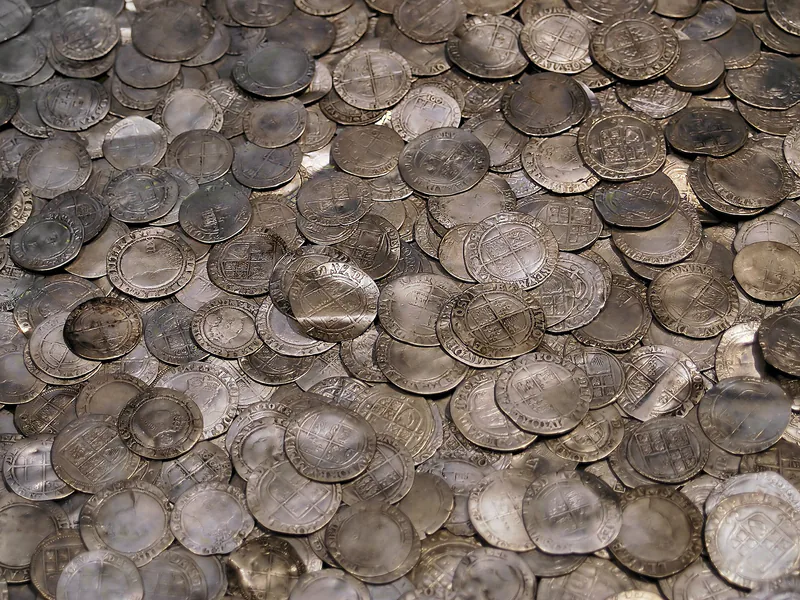
The moon governed much money lore. Folklorists in England recorded the custom of turning the silver in one's pocket on first seeing the new moon, sometimes with a bow or a wish, so that money would increase as the moon waxed; seeing it first through glass was unlucky. Many collectors also reported the belief that an itching palm foretold money. Iona Opie and Moira Tatem's Dictionary of Superstitions and Steve Roud's Penguin Guide to the Superstitions of Britain and Ireland date these beliefs carefully, and show that many are first recorded only in the eighteenth or nineteenth centuries. For the wider logic of luck see luck, omens and portents and lucky and unlucky numbers and days.
New Year and Seasonal Customs for Prosperity§
The turn of the year concentrated money magic. In Italy, lentils eaten at New Year, often with pork sausage, are said to resemble coins and promise money; in the American South black-eyed peas play a similar role. In Czech, Slovak and Polish homes, a scale from the Christmas Eve carp is kept in the wallet through the following year. Greeks bake a coin into the vasilopita cake on New Year's Day, and whoever finds it is thought to be lucky for the year. In Scotland and northern England, the first-foot, the first visitor after midnight at Hogmanay, traditionally brought gifts such as coal, bread, salt or whisky to ensure that the house would lack nothing in the year ahead.
Southern Europe and Latin America share a large repertoire of New Year simpatías or small rites for luck and money, some described in our spellbook entry on Brazilian New Year simpatias. Other customs are recent: blowing cinnamon through the front door on the first of the month (see cinnamon on the first of the month) appears to have spread mainly through social media in the 2020s, though it draws on older associations of cinnamon with money. Ronald Hutton's The Stations of the Sun is the best guide to the British ritual year in which many of these customs were embedded.
Treasure Magic: Spirits, Hoards and the Hand of Glory§
For most of European history, the dream of sudden wealth meant buried treasure. Hoards of coins really were hidden in times of war, and folklore held that they were guarded by spirits, ghosts or the Devil, that they "bloomed" with a blue flame on certain nights, and that they sank deeper into the earth if the seekers spoke during the dig. In Slavic lore the fern was said to flower on St John's Eve, revealing hidden treasure to anyone bold enough to find the blossom. Johannes Dillinger's Magical Treasure Hunting in Europe and North America (2012) uses hundreds of trial records from Germany, Switzerland and elsewhere to show how treasure-seeking companies formed around a cunning man, a priest or a "treasure book", and how often they ended in fraud.
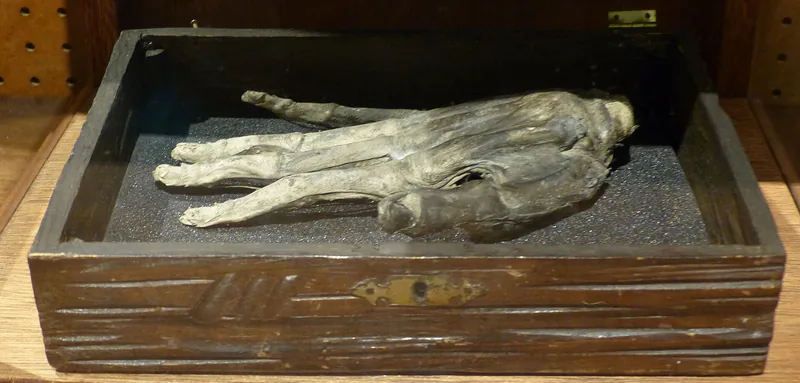
The most notorious object of treasure lore was the hand of glory, a dried hand of an executed criminal used as a candle-holder; the early eighteenth-century French Petit Albert (see /texts/le-petit-albert) gives an account of it, and a surviving example is kept at Whitby Museum. In Portugal and Galicia, editions of the Book of St Cyprian contained long lists of supposed treasure sites. The mandrake or German Alraune was believed to double money placed beside it overnight, provided it was kept in a box, bathed and fed; such roots were sold at high prices and often faked from bryony. Our guide to mandrake plant lore traces this history.
Household Spirits and Money-Bringing Familiars§
Another strand of lore told of spirits who brought wealth into the house. In northern Germany the Drak or Drache, and in Lithuania the aitvaras, was a fiery flying creature that carried grain, milk or money to its master, usually by stealing them from neighbours; a household that prospered suspiciously fast might be accused of keeping one. In German-speaking lands tales were told of the Heckethaler, a "hatching coin" obtained from the Devil that always returned to its owner's purse, and of a familiar spirit sold in a bottle that brought fortune but damned the last owner, a legend later retold by Robert Louis Stevenson in "The Bottle Imp" (1891).
These stories carried a moral warning: wealth from spirits came at the expense of others and often at the cost of the soul. They overlap with learned ideas about pacts discussed in our article on black magic, and they show how communities explained sudden and unequal prosperity.
Cunning Folk, Charm Books and the Church§
Village specialists, the cunning folk of England and their equivalents elsewhere, were consulted for finding stolen goods, protecting livestock and, occasionally, locating treasure. Owen Davies's Cunning-Folk documents their trade in charms against theft and for luck. Printed charm books such as the German Romanusbüchlein (see /texts/romanus-buchlein) and the Egyptian Secrets attributed to Albertus Magnus contained charms for success in trade, protection of goods and luck at law, and were carried to America, where they influenced Pennsylvania German powwow and hoodoo.
Churches of both confessions condemned treasure magic as superstition or demonic dealing, and secular courts prosecuted fraudulent treasure-finders. In Britain the Witchcraft Act of 1736 treated pretended conjuration, fortune-telling and claims to find lost goods by occult skill as fraud rather than real witchcraft. The broader history is surveyed in our guide to folk magic and in Keith Thomas's Religion and the Decline of Magic.
Folk Money Charms Today§
Many of these customs survive as light-hearted traditions: lentils on New Year's Day, coins in a new wallet, a lucky penny picked up from the street. Others have been revived in modern witchcraft and folk-magic circles, which collect them as part of a European heritage of practical magic. Folklorists caution against assuming great antiquity for any of them without evidence, and practitioners themselves generally treat them as small acts of hope rather than substitutes for prudent management of money.
Frequently asked questions§
What is a luck penny?§
A luck penny is a small sum returned by a seller to a buyer, traditionally after the sale of livestock in Britain and Ireland, so that the bargain would bring good fortune. The custom is well documented in the nineteenth century and survived in some markets into the twentieth.
Why do people keep a carp scale in their wallet?§
In Czech, Slovak and Polish Christmas tradition, a scale from the Christmas Eve carp is kept in the wallet for the year ahead. Its resemblance to a coin made it a charm for money and plenty.
What was the hand of glory?§
The hand of glory was the dried hand of an executed criminal, used as a candle or candle-holder in folklore and grimoires such as the Petit Albert. It was associated with thieves and treasure-seekers and believed to keep sleepers from waking.
Was treasure-hunting with magic common?§
Yes. Court records from the fifteenth to the nineteenth centuries show that groups of treasure-seekers across Europe and North America used conjurations, divining rods and charm books. Many cases involved fraud by those who claimed special knowledge.
Sources and further reading§
- Magical Treasure Hunting in Europe and North America: A History — Johannes Dillinger, 2012
- A Dictionary of Superstitions — Iona Opie and Moira Tatem, 1989
- The Penguin Guide to the Superstitions of Britain and Ireland — Steve Roud, 2003
- The Stations of the Sun: A History of the Ritual Year in Britain — Ronald Hutton, 1996
- Cunning-Folk: Popular Magic in English History — Owen Davies, 2003
- Religion and the Decline of Magic — Keith Thomas, 1971
- The Book of St. Cyprian: The Sorcerer's Treasure — José Leitão, 2014
- Handwörterbuch des deutschen Aberglaubens — Hanns Bächtold-Stäubli (ed.), 1927