Liber III · Black & White Magic · Chapter III: Money & Prosperity Magick
Saints and Gods of Wealth: St Expedite, Lakshmi, Caishen, Ebisu
Saints and gods of wealth across religions: St Expedite, St Joseph, Lakshmi and Kubera, Caishen, Ebisu and Daikokuten, and the Tibetan deity Jambhala.

Across the world's religions, people have asked saints and deities for a livelihood: bread, work, customers, a good harvest or relief from debt. Catholic devotion turns to St Joseph, St Cajetan, St Pancras and the popular St Expedite; Hindus worship Lakshmi, Kubera and Ganesha; Chinese popular religion honours Caishen, the God of Wealth; Japanese merchants pray to Ebisu, Daikokuten and Inari; and Tibetan Buddhists invoke Jambhala and Vasudhara. In most of these traditions such requests are ordinary religious practice rather than "magic", although devotees and outsiders have often blurred the line.
Asking Heaven for Bread: Prosperity in Religious Devotion§
The Lord's Prayer asks for daily bread; Vedic hymns ask the gods for cattle, sons and wealth; Chinese New Year greetings wish the hearer prosperity. Scholars of religion have long noted that the pursuit of material blessings is not marginal to religion but central to how most people practise it. Ian Reader and George Tanabe's study of Japan calls this the "common religion" of worldly benefits (genze riyaku), and the term applies well beyond Japan.
What separates devotion from magic, in the eyes of theologians, is usually attitude: a prayer asks, while a spell is thought to compel. In practice, popular devotion often includes vows, offerings promised on condition of success, and objects such as medals, statues and charms treated as powerful in themselves. That is why saints and gods of wealth appear so frequently in folk magic, hoodoo and modern money magick.
Catholic Saints of Work, Bread and Urgent Causes§
Catholic tradition has no single patron of money, but several saints became associated with livelihood. St Joseph, the carpenter and provider of the Holy Family, is invoked for work, housing and a happy death. Sicilian and New Orleans St Joseph's Day altars on 19 March distribute fava beans, and a "lucky bean" from the altar is often kept in a purse so that it will never be empty. In the United States, the custom of burying a small statue of St Joseph to help sell a house became widespread in the late twentieth century.
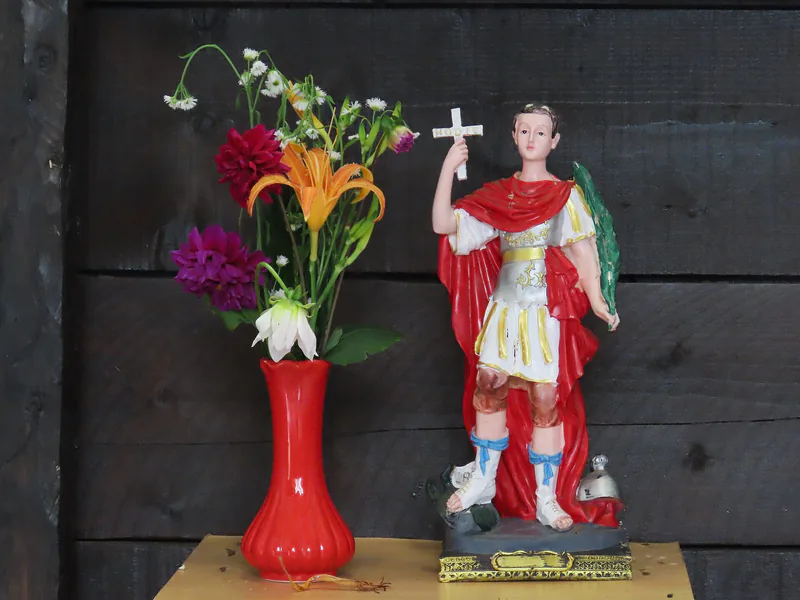
St Cajetan (San Cayetano, 1480–1547), founder of the Theatine order, is the patron of bread and work in Argentina, where his shrine in the Buenos Aires district of Liniers draws huge crowds every 7 August. In Spain, St Pancras (San Pancracio), a young Roman martyr, is invoked for "health and work"; his image, often with a sprig of parsley, is commonly kept in shops and bars. St Jude is the patron of desperate causes, including financial ones.
St Expedite (Expeditus) is the most debated. His name appears in early martyrologies among martyrs of Melitene in Armenia, commemorated on 19 April, but almost nothing is known of him, and some historians suspect the name arose from a scribal error. His cult flourished from the nineteenth century, helped by the pun on "expedite". He is shown as a Roman soldier trampling a crow that cries cras ("tomorrow") while he holds up a cross marked hodie ("today"). Popular legends about a crate of relics labelled "expedite" are later inventions. St Expedite is honoured with red roadside shrines on Réunion, with devotion in Brazil and the Philippines, and in New Orleans, where his statue stands in the Our Lady of Guadalupe chapel and hoodoo practitioners promise him pound cake when a petition is answered. The Church has at times discouraged the cult, while tolerating private devotion. For the wider background see saints, relics and the Virgin Mary.
Lakshmi, Kubera and Ganesha in Hindu Worship§
Lakshmi, also called Shri, is the goddess of fortune, beauty and prosperity and the consort of Vishnu. In the Puranic myth of the churning of the ocean she rises from the waters seated on a lotus, and her best-known image, Gaja-Lakshmi, shows her flanked by elephants pouring water over her, often with gold coins falling from her hand. The Shri Sukta, an ancient hymn appended to the Rigveda, is still recited in her worship. The great festival is Diwali, when homes are cleaned and lit with lamps to welcome her, and merchants in many regions, notably in Gujarat and Rajasthan, perform a puja over their new account books for the coming year. Constantina Rhodes's Invoking Lakshmi (2010) studies the hymns and rituals of her cult. See our guides to Hindu gods and goddesses and Shaktism.
Kubera, king of the yakshas and treasurer of the gods, presides over hidden wealth from his city of Alaka. A well-known legend of the Tirumala temple tells that Lord Venkateswara borrowed from Kubera to pay for his wedding, and that the offerings of pilgrims help repay the loan. Ganesha, the elephant-headed remover of obstacles, is honoured at the start of any undertaking, and his name, with the words shubh (auspicious) and labh (profit), appears in shops and account books. On Dhanteras, two days before Diwali, many Hindus buy gold, silver or new utensils as a sign of prosperity. For a domestic lamp ritual see the diya lamp puja.
Caishen and the Chinese Gods of Wealth§
In Chinese popular religion, Caishen, the God of Wealth, is not one figure but a title held by several. Popular prints distinguish "civil" gods of wealth, such as the loyal minister Bi Gan, from "martial" ones, such as the general Zhao Gongming, often shown riding a black tiger; merchants also honour the deified general Guan Yu for his loyalty and honesty in dealings. Caishen's image is pasted up at the New Year, and on the fifth day of the first month businesses set off firecrackers to welcome him. Shops keep small altars with oranges, incense and, in recent decades, the beckoning cat borrowed from Japan. See Chinese gods and the Eight Immortals and the Chinese New Year luck rites.
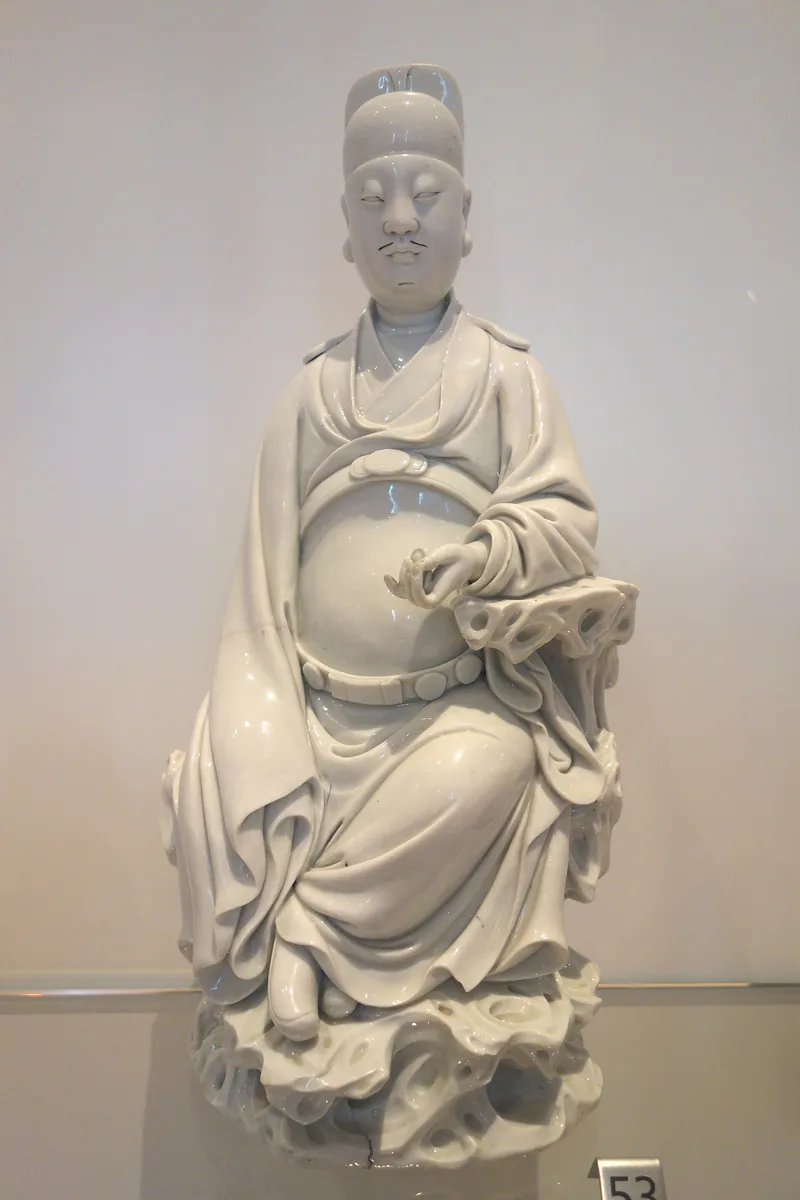
The history of wealth gods also had a darker side. Richard von Glahn's The Sinister Way (2004) traces the cult of the Wutong, demonic wealth gods of the Jiangnan region who were believed to bestow sudden riches but also to seduce women and ruin families. Officials repeatedly tried to suppress their shrines, most famously the Jiangsu governor Tang Bin in the 1680s. Chinese religion also uses money as an offering: joss paper or "spirit money" is burned for ancestors, ghosts and gods, a practice studied by C. Fred Blake in Burning Money (2011). The broader system is described in Chinese ancestor veneration and popular religion.
Ebisu, Daikokuten and the Seven Gods of Good Fortune§
In Japan, the Seven Gods of Good Fortune (Shichifukujin), a grouping popular from the Edo period, combine Shinto, Buddhist, Hindu and Chinese figures. Ebisu, the only one of native origin, is a smiling fisherman holding a rod and a sea bream; he is the patron of fishermen and merchants, and his main shrine is at Nishinomiya. During the Toka Ebisu festival around 10 January, worshippers at Ebisu shrines in the Osaka region buy bamboo branches hung with lucky charms for the year's business. Daikokuten, derived from the Indian deity Mahakala, became a jolly god of the kitchen and harvest, standing on rice bales with a mallet and a sack of treasure; he is often identified with the kami Okuninushi through a pun on his name. Benzaiten, from the Indian Sarasvati, adds wealth to her patronage of music and eloquence.
Inari, the kami of rice and later of commerce, receives thousands of torii gates donated by businesses at the Fushimi Inari shrine in Kyoto. At the Tori no Ichi fairs of November, decorated bamboo rakes (kumade) are sold to "rake in" fortune. Our articles on the kami and Shinto and Buddhism give the background, and the omamori and hatsumode entry describes the shrine charms themselves.
Jambhala and the Wealth Deities of Tibetan Buddhism§
Indian and Tibetan Buddhism developed a family of wealth deities whose worship was justified as a means to free practitioners from poverty so that they could practise generosity and the Dharma. Jambhala, closely related to Kubera and to the guardian king of the north Vaishravana, is shown as a stout figure holding a citron and a mongoose that spits jewels. Tibetan tradition knows five Jambhalas of different colours, of which the yellow is the most widely worshipped. Vasudhara, the goddess of abundance, is especially popular among the Newar Buddhists of Nepal, where her dharani is recited for prosperity. Treasure vases filled with precious substances are consecrated and buried or kept in homes to stabilise wealth. Robert Beer's Encyclopedia of Tibetan Symbols and Motifs describes the iconography; see also our guide to Tibetan Buddhism.
Devotion, Magic and the Question of Bargaining§
Religious authorities in every tradition have warned against treating wealth gods as vending machines. Catholic teaching distinguishes the intercession of saints from superstition; Buddhist teachers stress that wealth practice must serve generosity; Hindu texts link Lakshmi's favour with righteous conduct and warn that she is fickle. Yet popular devotion often includes vows, bargains and "payment" when a request is granted. Historians see these forms as part of the everyday religion of the poor and the self-employed, not merely as distortions. They are also reminders that prayer and ritual were usually combined with work, thrift and mutual aid, and never meant as a substitute for practical help.
Frequently asked questions§
Who is St Expedite?§
St Expedite is a martyr whose name appears in early lists of martyrs of Melitene in Armenia, with a feast on 19 April. His historical existence is uncertain, but since the nineteenth century he has been widely invoked for urgent causes, including money and work.
Which Hindu goddess is worshipped for wealth?§
Lakshmi, the consort of Vishnu, is the Hindu goddess of fortune and prosperity. She is worshipped above all at Diwali, while Kubera, the treasurer of the gods, and Ganesha, the remover of obstacles, are also honoured for success.
Who is the Chinese God of Wealth?§
Caishen is a title given to several deified figures, including the minister Bi Gan and the general Zhao Gongming. His image is displayed at the New Year, and businesses welcome him on the fifth day of the first lunar month.
What are Ebisu and Daikokuten?§
They are two of Japan's Seven Gods of Good Fortune. Ebisu is a fisherman god of merchants and fishermen, while Daikokuten, derived from the Indian Mahakala, is a god of harvest and wealth shown with a mallet and rice bales.
Sources and further reading§
- Practically Religious: Worldly Benefits and the Common Religion of Japan — Ian Reader and George J. Tanabe Jr., 1998
- Invoking Lakshmi: The Goddess of Wealth in Song and Ceremony — Constantina Rhodes, 2010
- Hindu Goddesses: Visions of the Divine Feminine in the Hindu Religious Tradition — David Kinsley, 1986
- The Sinister Way: The Divine and the Demonic in Chinese Religious Culture — Richard von Glahn, 2004
- Burning Money: The Material Spirit of the Chinese Lifeworld — C. Fred Blake, 2011
- The Encyclopedia of Tibetan Symbols and Motifs — Robert Beer, 1999
- Saints and Their Cults: Studies in Religious Sociology, Folklore and History — Stephen Wilson, 1983
- Encyclopedia of Spirits: The Ultimate Guide to the Magic of Fairies, Genies, Demons, Ghosts, Gods & Goddesses — Judika Illes, 2009