Liber III · Black & White Magic · Chapter III: Money & Prosperity Magick
Jupiter Talismans for Wealth in the Picatrix and the Grimoires
Jupiter talismans for wealth: the greater benefic in astrology, Picatrix images, Agrippa's magic square, the Pentacles of Jupiter and the spirit Bethor.

A Jupiter talisman is an object, usually a metal disc, stone or parchment, engraved with images, numbers or names associated with the planet Jupiter and made at an astrologically chosen moment so that, in the theory of astral magic, it captures the planet's influence. Because Jupiter was the "greater benefic" of ancient and medieval astrology, the planet of abundance, honour and favour, such talismans became the classic instrument of learned prosperity magic. Their history runs from Arabic manuals such as the Picatrix through Marsilio Ficino and Agrippa to the Pentacles of Jupiter in the Key of Solomon and the Olympic spirit Bethor of the Arbatel.
Jupiter, the Greater Benefic, in Astrological Tradition§
Hellenistic astrology, summarised in Ptolemy's Tetrabiblos in the second century, described Jupiter as temperate, warming and moistening, and therefore productive and beneficent. With Venus, the "lesser benefic", it was contrasted with the malefics Saturn and Mars. Arabic astrologers such as Abu Ma'shar added a long list of significations: Jupiter rules wealth gained honourably, judges, religious leaders, good reputation, generosity and the gathering of riches. In the medieval scheme it rules the signs Sagittarius and Pisces, is exalted in Cancer, governs Thursday (Latin dies Iovis, French jeudi) and corresponds to the metal tin.
This symbolism made Jupiter the natural ruler of lawful prosperity: wealth that comes through favour, office, trade and growth rather than through theft or chance. The Sun, associated with gold and kingship, was the other planet commonly invoked for riches, and Mercury for commerce. The general theory behind these associations is set out in our guide to astral magic and the zodiac and planets.
Talismanic Images of Jupiter in the Picatrix§
Arabic talismanic science developed the practical side. Works such as the De imaginibus attributed to Thabit ibn Qurra (ninth century) and the great Andalusian compilation Ghāyat al-Ḥakīm, known in Latin as the Picatrix, explained that a talisman is a spirit bound into a body: a figure engraved on a fitting material at the moment when a planet is strong, well aspected and rising, so that its rays are received into the matter. The Picatrix (see /texts/picatrix-ghayat-al-hakim) lists images of the planets attributed to various ancient sages, images for the decans and for the twenty-eight mansions of the moon, several of them for gain, trade and favour with rulers.
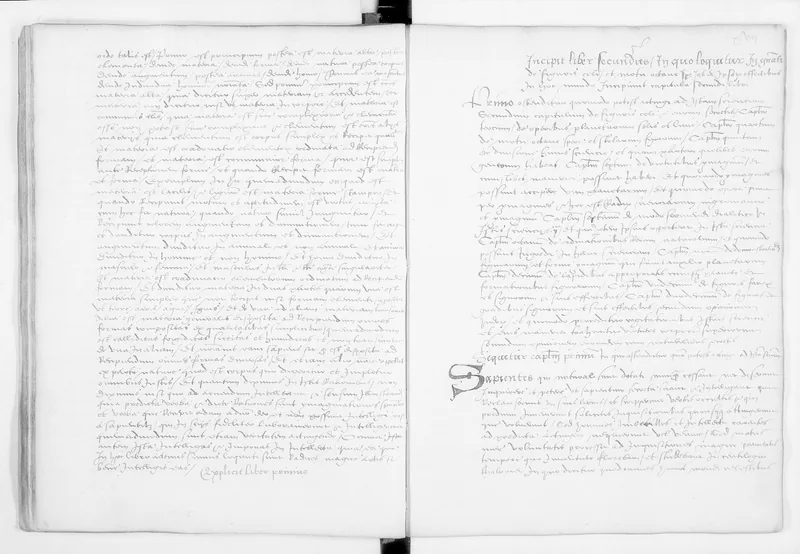
The Picatrix also gives long prayers to each planet, specifying the clothing, incense and offerings appropriate to it and the gifts each can bestow; to Jupiter belong wealth, honour, good repute and the favour of the powerful. These prayers, which the book attributes to the Sabians of Harran and other ancient peoples, were translated into Latin at the court of Alfonso X in the thirteenth century. Church authorities treated such invocations with deep suspicion, and the book circulated largely in manuscript.
Ficino, Agrippa and the Magic Square of Jupiter§
The Florentine philosopher Marsilio Ficino gave Jovial magic its most respectable form. The third book of his De vita (Three Books on Life, 1489) treats Jupiter as the remedy for the melancholy of scholars, who suffer under Saturn. Ficino recommends Jovial things: temperate foods, pleasant odours, music and the colours of Jupiter. Drawing on Arabic sources, he reports images that astrologers had recommended, including a crowned figure of Jupiter seated on an eagle, while carefully presenting his account as a report rather than an endorsement.
Heinrich Cornelius Agrippa went further. In Book II, chapter 22 of the Three Books of Occult Philosophy (1533) he printed the magic squares of the seven planets. Jupiter's is a four-by-four square of the numbers 1 to 16, each row, column and diagonal adding to 34 and the whole to 136. Agrippa gives the divine names and the "intelligence" (Iophiel or Johphiel) and "spirit" (Hismael) whose Hebrew letters add to these numbers, with seals derived from the square. In the English translation of 1651 (readable at /read/three-books-of-occult-philosophy-1651) he says that the table engraved on silver at a fortunate time "conduceth to gain and riches, favour and love, peace and concord". The square and its seals can be seen at Seals and Kamea of Jupiter.
The same order-four square appears in Albrecht Dürer's engraving Melencolia I (1514). Since the studies of Raymond Klibansky, Erwin Panofsky and Fritz Saxl, many historians have read it as a Jovial charm set against Saturn's melancholy, in the spirit of Ficino.
The Pentacles of Jupiter in the Key of Solomon§
The Key of Solomon, the most influential of the Solomonic grimoires, contains a series of pentacles, circular figures inscribed with Hebrew divine names, angelic names, magical characters and verses from Scripture, assigned to the seven planets. In the version edited by S. L. MacGregor Mathers in 1889 from several manuscripts, there are seven Pentacles of Jupiter:

- The First Pentacle of Jupiter serves to invoke the spirits of Jupiter, among whom Parasiel is called lord and master of treasures.
- The Second Pentacle of Jupiter is described as proper for acquiring glory, honours, dignities and riches and for discovering treasures.
- The Fourth Pentacle of Jupiter serves to acquire riches and honour; it carries Psalm 112:3, "Wealth and riches are in his house".
- The Seventh Pentacle of Jupiter is said to have great power against poverty and to drive away the spirits that guard treasures.
The pentacles show the characteristic fusion of Solomonic magic: astrological timing, Hebrew names of God and the Psalms. In the logic of the text their power comes from God and the holy names, not from the planet alone, and they were to be made by a magician who had purified himself, under the day and hour of Jupiter. The manuscripts vary considerably, and the forms in Mathers' edition are not always those of the earliest Latin and Italian copies.
Bethor, Och and the Spirits of Treasure§
The Arbatel of Magic, printed in Basel in 1575 (see /texts/arbatel-de-magia-veterum), offers a gentler, Christian Hermetic system of seven "Olympic spirits", one for each planet. Bethor, the spirit of Jupiter, is said to bring precious stones, to confer great dignities and to reveal treasures, while Och, the spirit of the Sun, is credited with turning things into gold and giving a purse that springs with gold. The Arbatel insists that such gifts come by the will of God and warns against greed.
Treasure-hunting manuals of the same period, such as the English texts edited by David Rankine as The Book of Treasure Spirits, borrowed Jupiter's spirits and days for the search for hidden hoards. Here planetary magic shaded into the conjuration of spirits that theologians condemned, a boundary discussed in our article on white magic.
Timing and Materials in the Sources§
The sources agree on certain principles, though not on every detail. A Jupiter talisman should be made when the planet is strong: in its own signs or exaltation, direct rather than retrograde, free from the rays of Saturn and Mars, and ideally rising or culminating. Practical manuals simplified this to Thursday and the planetary hours of Jupiter, a method found in the Heptameron and later handbooks. Tin and silver are the usual metals; Agrippa lists stones of Jupiter such as the hyacinth, beryl, sapphire, emerald and green jasper. Incense, a consecration prayer and a period of fasting or abstinence often accompanied the work.
The site's spellbook gives a modern reconstruction of the method as a Jupiter talisman for prosperity. As with all prosperity magic, the historical sources describe it as a support to an honest life, and it should never be treated as a replacement for financial advice.
Jupiter Talismans in Modern Occultism§
The Golden Dawn and its successors absorbed Agrippa's squares and the Mathers pentacles into a system in which Jupiter corresponds to the Sephirah Chesed (Mercy) and the colour blue. Twentieth-century authors and suppliers popularised ready-made Jupiter pentacles, and the Fourth Pentacle of Jupiter became one of the most widely reproduced charms for money. Some contemporary practitioners return to the older electional astrology of the Picatrix and seek rare "elections" when Jupiter is exceptionally strong, publishing calendars of suitable moments. Historians such as Owen Davies have traced how printed grimoires and mail-order suppliers turned a complex learned tradition into a mass-market amulet.
Frequently asked questions§
What is the magic square of Jupiter?§
It is a four-by-four arrangement of the numbers 1 to 16 in which every row, column and diagonal adds to 34. Agrippa printed it in 1533 with the names and seals derived from it and said it favoured gain, riches, favour and peace.
What does the Fourth Pentacle of Jupiter do?§
In Mathers' edition of the Key of Solomon, the Fourth Pentacle of Jupiter is described as serving to acquire riches and honour. It bears the angelic name Bariel and the verse of Psalm 112:3.
Why is Jupiter associated with wealth?§
Ancient astrologers regarded Jupiter as the most benevolent planet, warm, moist and productive, and linked it with growth, justice, honour and abundance. Arabic and Latin astrology then made it the ruler of lawful riches.
When were Jupiter talismans traditionally made?§
The sources call for a time when Jupiter is strong and unafflicted. Simpler manuals reduce this to Thursday, Jupiter's day, and a planetary hour of Jupiter.
Sources and further reading§
- Picatrix: A Medieval Treatise on Astral Magic — Dan Attrell and David Porreca, 2019
- Picatrix: The Latin Version of the Ghayat al-Hakim — David Pingree, 1986
- Three Books on Life (De vita libri tres) — Marsilio Ficino, 1489
- Three Books of Occult Philosophy — Henry Cornelius Agrippa, 1533
- The Key of Solomon the King (Clavicula Salomonis) — S. L. MacGregor Mathers, 1889
- Arbatel: Concerning the Magic of the Ancients — Joseph H. Peterson, 2009
- Spiritual and Demonic Magic from Ficino to Campanella — D. P. Walker, 1958
- Saturn and Melancholy — Raymond Klibansky, Erwin Panofsky and Fritz Saxl, 1964
- The Book of Treasure Spirits — David Rankine, 2009
- Planetary Magick: The Heart of Western Magick — Melita Denning and Osborne Phillips, 1989