Liber XXII · Occultism · Chapter X: The Occult Today
Occult Libraries and Museums: Where Magic's History Is Kept
The great occult libraries, archives and museums, from the Ashmole and Sloane manuscripts to the Warburg Institute, the Ritman Library and Boscastle.

The history of the occult survives because libraries, archives and museums kept its books, manuscripts and objects. The Ashmole manuscripts in Oxford, the Sloane and Harley collections of the British Library, the Wellcome Collection and the Warburg Institute in London, the Ritman Library in Amsterdam, the Getty Research Institute in Los Angeles and museums such as the Museum of Witchcraft and Magic at Boscastle hold most of the primary sources on which both modern practitioners and historians rely. Their collecting history explains a great deal about what we know of magic, and what we do not.
Manuscript Collections: Ashmole, Sloane and the Grimoires§
Many of the most important magical manuscripts in the English-speaking world reached public collections through a few seventeenth- and eighteenth-century collectors. Elias Ashmole (1617–1692), antiquary, astrologer and early Freemason, gathered alchemical, astrological and magical papers, including the astrological casebooks of the physicians Simon Forman and Richard Napier and material connected with John Dee. He gave his collections to the University of Oxford, where they founded the Ashmolean Museum in 1683; the manuscripts were later moved to the Bodleian Library, where they remain a primary source for the history of English astrology and magic.
Sir Hans Sloane's vast collection, bequeathed to the nation in 1753, became a founding collection of the British Museum and is now largely in the British Library. The Sloane manuscripts, together with the Harley and Lansdowne collections, contain many copies of the Solomonic grimoires, including versions of the Key of Solomon and the Lemegeton, as well as Dee's records of his angelic conversations. When S. L. MacGregor Mathers prepared his edition of the Key in the 1880s he worked from these manuscripts in the British Museum's Reading Room; our catalogue entries on the Sloane Clavicle and Lansdowne 1203 describe two of them. Continental collections, notably the Bibliothèque nationale and the Arsenal library in Paris, the Bavarian State Library in Munich and the Vatican Library, hold equally important material, including the fifteenth-century necromantic handbook studied in the Munich Manual of Demonic Magic.
The Warburg Institute and the Study of Magic§
The Hamburg art historian Aby Warburg (1866–1929) built a private research library devoted to the survival of ancient images and ideas, with a special interest in astrology and magic as keys to the culture of the Renaissance. In 1933, as the Nazi regime came to power, the library was moved to London, where it became the Warburg Institute, part of the University of London since 1944.
The Warburg's arrangement of books by problem rather than by conventional subject placed magic, astrology and divination beside philosophy, art and science, and this proved immensely productive. D. P. Walker, Frances Yates and many others did their research there; Yates's Giordano Bruno and the Hermetic Tradition (1964), discussed in our article on the Yates thesis, was a Warburg book. The Institute also holds the collection of Crowley's papers, books and correspondence assembled by his friend and disciple Gerald Yorke, one of the main sources for the history of Thelema.
Collections of Modern Occultism and Psychical Research§
The nineteenth- and twentieth-century occult revival left a different kind of record: letters, minutes, rituals, periodicals and séance reports. In London the Senate House Library of the University of London holds the Harry Price Library of Magical Literature, bequeathed by the psychical researcher Harry Price, who died in 1948, and rich in books on conjuring, spiritualism and the occult. The archive of the Society for Psychical Research is held at Cambridge University Library, preserving more than a century of investigations into mediums, apparitions and telepathy.
In the United States the Library of Congress holds the library that the escapologist Harry Houdini collected on magic and spiritualism, much of it gathered for his campaign against fraudulent mediums. Freemasonry has its own great libraries, including the Library and Museum of Freemasonry in London, which also preserve material on fringe and occult rites. Many of the Golden Dawn's own documents survive in private hands and in collections that passed through members' families, which is one reason why the order's history has been reconstructed only gradually.
Hermetic Libraries: The Ritman, Adyar and the Getty§
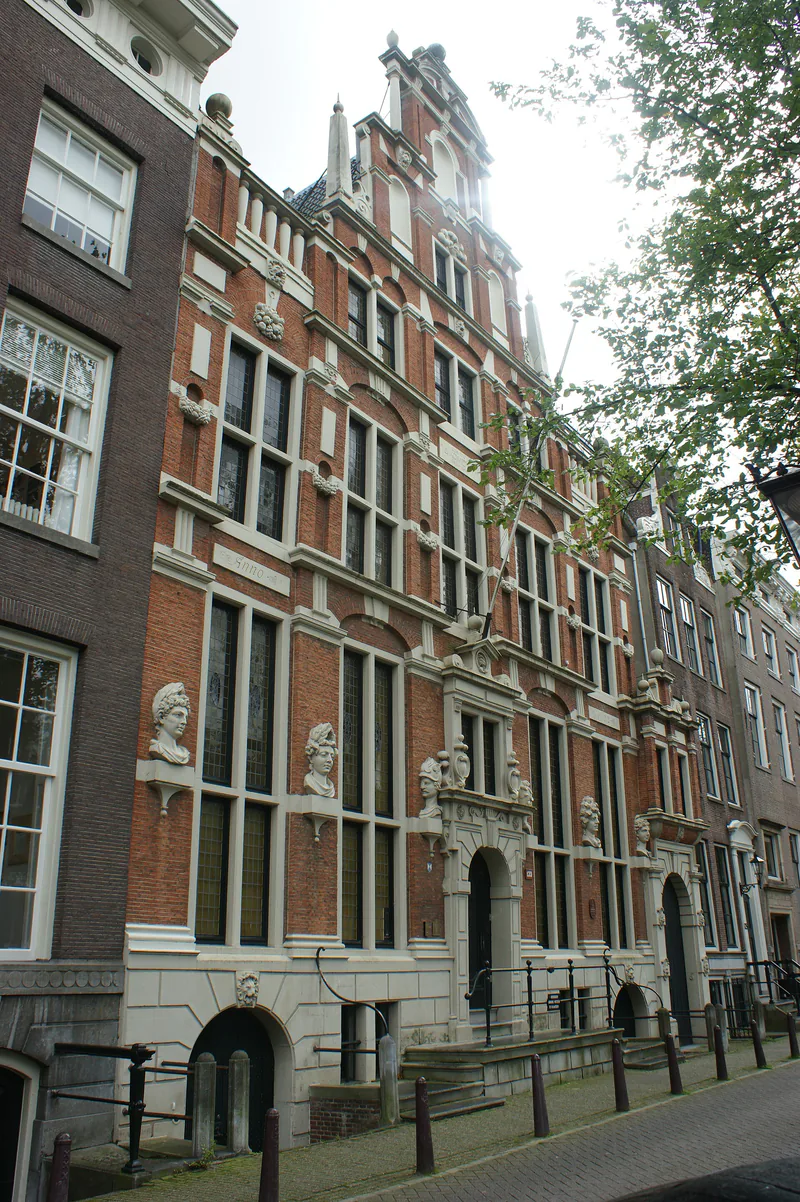
Some of the most important occult libraries were created not by universities but by collectors and movements. The Bibliotheca Philosophica Hermetica in Amsterdam, founded by the businessman Joost R. Ritman and opened to readers in 1984, assembled one of the world's finest collections of Hermetic, Rosicrucian, alchemical and mystical books, including much of the literature of Jacob Boehme and the Rosicrucian manifestos. Since 2017 it has been housed in the seventeenth-century House with the Heads on the Keizersgracht under the name Embassy of the Free Mind. Amsterdam's role was reinforced by the university chair described in the Amsterdam chair in Hermetic philosophy.
The Theosophical Society founded the Adyar Library at its headquarters near Madras (Chennai) in 1886, collecting Sanskrit and other Asian manuscripts as well as Theosophical literature. In Los Angeles the writer and lecturer Manly P. Hall built up a collection of alchemical, Rosicrucian and magical manuscripts for his Philosophical Research Society; in 1995 much of it was acquired by the Getty Research Institute, where it is now available to scholars.
Museums of Magic, Witchcraft and Amulets§
Museums preserve the material culture of magic: amulets, charms, wands, crystal balls, witch bottles and ritual regalia. The most famous is the Museum of Witchcraft and Magic at Boscastle in Cornwall, founded by Cecil Williamson and now holding a large collection of British folk magic and modern witchcraft objects. The Pitt Rivers Museum in Oxford holds charms and amulets from across the world, including a sealed bottle said to contain a witch, of the kind discussed in witch bottles, and the Wellcome Collection in London preserves the vast holdings of the pharmaceutical entrepreneur Henry Wellcome, who collected amulets, alchemical manuscripts and magical objects as part of the history of medicine.
Elsewhere, the Museum of Icelandic Sorcery and Witchcraft at Hólmavík presents Iceland's magical staves and seventeenth-century trials, and the Rosicrucian Egyptian Museum in San Jose, California, run by AMORC, combines Egyptology with the order's own esoteric history. Temporary exhibitions, such as Spellbound: Magic, Ritual and Witchcraft at the Ashmolean Museum in 2018–19, have brought such objects to wide audiences.
Digitisation and Access Today§
For most of history, studying occult manuscripts meant travelling to a reading room. Since the 2000s, libraries have digitised large parts of their magical holdings: the Wellcome, the British Library, the Bodleian and the Ritman Library have placed many manuscripts and rare books online, and research projects have transcribed sources such as the astrological casebooks of Forman and Napier. Practitioners now consult the same images as scholars, a change that has fuelled the careful source-based editions described in the grimoire revival.
Access raises its own questions. Collections reflect what earlier collectors valued and what survived persecution, so the records of learned male magicians are far richer than those of village healers or women practitioners. Many private archives of modern orders remain closed. Historians therefore treat archives not as neutral stores but as part of the history of the occult itself, an approach shared with the wider field surveyed in the occult today.
Frequently asked questions§
Where are the original grimoire manuscripts kept?§
Most surviving manuscripts of the Solomonic grimoires are in major research libraries, above all the British Library in London (Sloane, Harley and Lansdowne collections), the Bodleian Library in Oxford and the Bibliothèque nationale and Arsenal library in Paris. Many have now been digitised.
What is the Warburg Institute?§
It is a research institute of the University of London, founded on the library of the Hamburg scholar Aby Warburg and moved to London in 1933. It specialises in the survival of classical culture, including astrology, magic and the occult sciences, and is a leading centre for the history of esotericism.
Is there a museum of witchcraft?§
Yes. The best known is the Museum of Witchcraft and Magic at Boscastle in Cornwall, which holds one of the largest collections of objects connected with folk magic and modern witchcraft. Other museums, such as the Pitt Rivers Museum in Oxford and the Museum of Icelandic Sorcery and Witchcraft, also hold significant collections.
Sources and further reading§
- Aby Warburg: An Intellectual Biography — E. H. Gombrich, 1970
- Giordano Bruno and the Hermetic Tradition — Frances A. Yates, 1964
- Medicine and Magic in Elizabethan London: Simon Forman, Astrologer, Alchemist, and Physician — Lauren Kassell, 2005
- Spellbound: Magic, Ritual and Witchcraft — Sophie Page and Marina Wallace (eds.), 2018
- Grimoires: A History of Magic Books — Owen Davies, 2009
- The Occult World — Christopher Partridge (ed.), 2015