Liber XXVIII · Solomonic Magic
The Grimoire Revival: How Old Magic Books Returned to Print
The grimoire revival explained: how Mathers, Waite and Crowley, cheap occult printers, historians and modern critical editions brought Solomonic magic back.

The grimoire revival is the long process, beginning in the late nineteenth century and accelerating since the 1990s, by which the handwritten magic books of medieval and early modern Europe — the Key of Solomon, the Lemegeton, the Sworn Book of Honorius and many others — were transcribed, printed, translated and studied again. It was driven by three groups whose interests overlapped: occultists seeking practical traditions, commercial publishers serving a popular market, and historians who came to see these books as serious evidence for the religious and intellectual history of Europe.
What the Grimoire Revival Means§
For most of their history, grimoires circulated as manuscripts. Printed editions existed — Agrippa's Three Books, the pseudo-Agrippan Fourth Book, the French chapbook grimoires of the eighteenth century — but the core of the Solomonic tradition remained in private hands and, increasingly, in the great libraries that absorbed the collections of antiquaries such as Hans Sloane, whose manuscripts entered the British Museum in 1753. By the nineteenth century these texts were known to a few bibliophiles and occultists.
The revival is the story of how that changed. It has not been a single movement but a series of waves, each with its own purposes: the Victorian occultist's search for a lost Western wisdom, the mail-order publisher's search for customers, the historian's search for evidence, and, more recently, the practitioner's search for an authentic tradition behind the reinterpretations of the occult revival. The general background is told in What Is Solomonic Magic? and, for the wider occult world, in The Occult Revival.
Victorian Foundations: Mathers, Waite and Crowley§
The decisive first step was taken by S. L. MacGregor Mathers, co-founder of the Hermetic Order of the Golden Dawn. In 1889 he published The Key of Solomon the King, an English version compiled from several British Museum manuscripts, and in 1898 The Book of the Sacred Magic of Abramelin the Mage from a French manuscript in the Bibliothèque de l'Arsenal. Mathers' editions were learned for their time but freely edited: he corrected Hebrew, omitted material he considered black magic and assumed an antiquity the texts did not possess. The details are discussed in Key of Solomon.

Arthur Edward Waite took a different approach. His Book of Black Magic and of Pacts (1898), revised as The Book of Ceremonial Magic (1911), surveyed the grimoires — the Key, the Lemegeton, the Grimorium Verum, the Grand Grimoire and others — with a mixture of scholarship and moral disapproval, presenting them as degraded relics rather than sources of wisdom. In 1904 Aleister Crowley published The Goetia, Mathers' translation of the first book of the Lemegeton, with his own preliminary essay arguing that the spirits of ceremonial magic are "portions of the human brain". This psychological reading proved enormously influential.
Cheap Print and Global Circulation§
The Victorian editions were small and expensive. Their reach was multiplied by commercial publishers, often without permission. The Chicago publisher L. W. de Laurence reissued Crowley's Goetia under his own name in 1916 and republished Francis Barrett's The Magus in a disguised form. Sold by mail order, de Laurence's books travelled to the Caribbean and West Africa, where they acquired a reputation so formidable that colonial authorities in Jamaica banned them.
German and American printers likewise kept the Sixth and Seventh Books of Moses in circulation, and its seals and those of the Key entered African American hoodoo, Caribbean folk religion and West African practice. This popular wave is often overlooked in histories that focus on elite occultism, but it brought more readers to the grimoires than any scholarly edition. Owen Davies's Grimoires: A History of Magic Books (2009) was among the first studies to give it full attention.
The Academic Rediscovery§
Serious historians had long known that the grimoires existed. Lynn Thorndike's eight-volume History of Magic and Experimental Science (1923–1958) described many magical manuscripts, and E. M. Butler's Ritual Magic (1949) surveyed the tradition from a literary point of view. D. P. Walker's Spiritual and Demonic Magic from Ficino to Campanella (1958) and Frances Yates's work on Renaissance Hermeticism showed how central magic had been to Renaissance thought.
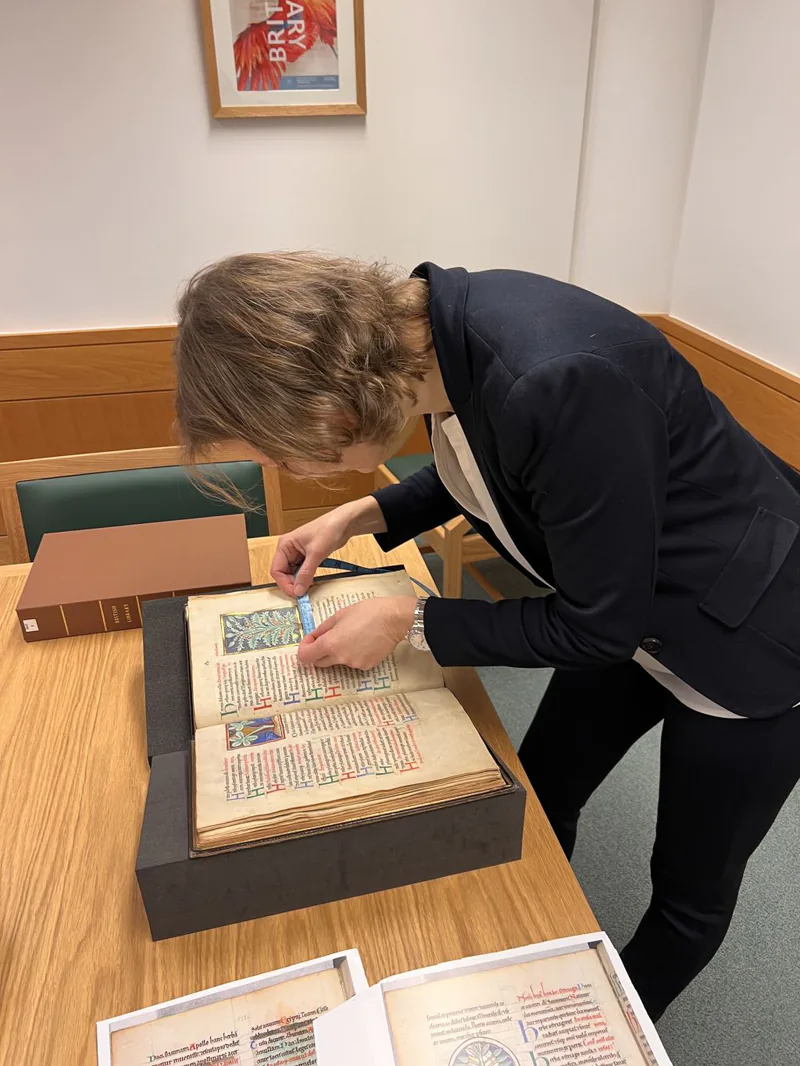
The turning point for the medieval grimoires came in the late 1980s and 1990s. Richard Kieckhefer's Magic in the Middle Ages (1989) treated learned ritual magic as part of the religious culture of the clergy, and his Forbidden Rites (1997) edited the fifteenth-century Munich Manual of Demonic Magic. The collection Conjuring Spirits, edited by Claire Fanger (1998), gathered new research on the Ars notoria, the Sworn Book and related texts. Since then a generation of scholars — among them Frank Klaassen, Sophie Page, Julien Véronèse, Jean-Patrice Boudet and Benedek Láng — has mapped the manuscript traditions in detail. Western esotericism also acquired its own institutions, including university chairs and programmes, the European Society for the Study of Western Esotericism (founded 2005) and journals such as Magic, Ritual, and Witchcraft (from 2006).
Critical Editions and Small Presses§
Alongside academic research, a new kind of edition appeared: careful transcriptions and translations prepared for a general and practitioner readership, but based on the manuscripts and openly documenting their variants. Joseph H. Peterson's The Lesser Key of Solomon (2001) was a landmark, followed by his editions of the Grimorium Verum, the Arbatel, the Sixth and Seventh Books of Moses and, with Daniel Harms and James R. Clark, the Elizabethan Book of Oberon (2015). Gösta Hedegård's critical Latin edition of the Liber iuratus Honorii (2002) and Julien Véronèse's work on the Ars notoria set new standards for the medieval texts.
Stephen Skinner and David Rankine launched the Sourceworks of Ceremonial Magic series in the 2000s, publishing manuscript texts such as The Goetia of Dr Rudd (2007) and The Veritable Key of Solomon (2008), and the series later included Ioannis Marathakis's translation of the Byzantine Hygromanteia (2011). Small presses devoted to finely made occult books flourished at the same time. The effect was to reveal the diversity of the tradition: there turned out to be not one Key of Solomon but many, and texts like the Ars Theurgia-Goetia, long overshadowed by the Goetia, could be read in full.
Practitioners, Reconstruction and Interpretation§
The new editions changed modern ritual magic as well as scholarship. For much of the twentieth century, practitioners encountered the grimoires through the lens of the Golden Dawn and Crowley, which interpreted them psychologically and absorbed them into a system of initiation. From the 1990s a current often called "traditional" or "Solomonic" magic sought instead to work from the grimoires on their own terms, with their Christian prayers, planetary timing and consecrated tools. Writers such as Jake Stratton-Kent, whose The True Grimoire (2009) reinterpreted the Grimorium Verum, also argued for older, pre-Christian roots of goetic practice, a thesis historians regard with caution.
These developments raise questions that the article cannot settle but can describe. Practitioners debate whether a ritual can be "authentic" when its manuscripts disagree; historians debate how to write about living users of their sources; and both note that the grimoires contain operations — curses, coercion, demonic pacts — that were condemned in their own time and are treated on this site purely as history, as in How Theologians and Inquisitors Judged Demonic Magic.
Manuscripts Online and the Grimoire in Popular Culture§
Since the 2000s, libraries including the British Library, the Wellcome Collection, the Folger Shakespeare Library and the Bavarian State Library have digitised many magical manuscripts, so that images of the Key of Solomon or the Munich manual can now be studied without travelling to the reading room. Online transcription projects and digital archives have further widened access, and the catalogue entries on this site, such as the Lemegeton, point to the principal editions.
At the same time the grimoires have entered popular culture. The names of the seventy-two spirits of the Goetia appear in novels, comics, video games and Japanese anime, usually stripped of their original Christian framework. Invented grimoires, such as the Necronomicon derived from the fiction of H. P. Lovecraft, sit on bookshop shelves beside genuine ones. Part of the value of the scholarly revival lies in the ability it gives readers to tell the two apart and to see the real grimoires as documents of their own times.
Frequently asked questions§
When did the grimoire revival begin?§
Its first major phase came in the late nineteenth century, when Mathers published the Key of Solomon (1889) and Waite and Crowley followed with surveys and editions. A second, larger phase began in the 1990s with academic studies and critical editions based on the manuscripts.
Who published the first modern edition of the Key of Solomon?§
S. L. MacGregor Mathers published The Key of Solomon the King in London in 1889. It was compiled from several manuscripts in the British Museum and remained the standard English text for more than a century.
Are modern grimoire editions reliable?§
The best modern editions transcribe specific manuscripts, record variants and explain their sources, and are far more reliable than Victorian versions. Cheap reprints and online copies often reproduce older, edited texts without saying so, so readers should check who prepared an edition and from which manuscripts.
Sources and further reading§
- Grimoires: A History of Magic Books — Owen Davies, 2009
- Forbidden Rites: A Necromancer's Manual of the Fifteenth Century — Richard Kieckhefer, 1997
- Conjuring Spirits: Texts and Traditions of Medieval Ritual Magic — Claire Fanger (ed.), 1998
- The Transformations of Magic: Illicit Learned Magic in the Later Middle Ages and Renaissance — Frank Klaassen, 2013
- The Lesser Key of Solomon — Joseph H. Peterson, 2001
- The Book of Ceremonial Magic — Arthur Edward Waite, 1911
- Ritual Magic — E. M. Butler, 1949