Liber XV · History & Scholarship · Chapter IV: Periods & Movements
Esotericism in Late Antiquity: Hermetism, Gnosis and Theurgy
Esotericism in late antiquity: the Hermetica, Gnostic movements, Neoplatonic theurgy, the Greek magical papyri and how later ages read them as ancient wisdom.

Late antiquity, roughly the second to the sixth centuries CE, produced most of the texts that later Western esotericism treated as its foundations: the Greek Hermetic treatises, the Gnostic gospels and myths, the Chaldean Oracles, Neoplatonic theurgy and the ritual handbooks of the Greek magical papyri. None of their authors thought of themselves as "esotericists"; that category was built much later, when Renaissance readers gathered these writings into a single story of ancient wisdom.
Late antiquity as a starting point for esotericism§
Historians of religion use "late antiquity" for the long transition from the Roman Empire of the second century to the early Byzantine and Islamic worlds, a period made familiar by Peter Brown's The World of Late Antiquity (1971). It was an age of intense religious experiment. Traditional civic cults coexisted with mystery initiations, Jewish and Christian communities, philosophical schools that had become spiritual disciplines, and freelance ritual specialists who sold amulets, curses and oracles.
For the history of esotericism, the period matters for a specific reason. When Marsilio Ficino and his contemporaries looked for the oldest wisdom of mankind in the fifteenth century, the texts they found were almost all late antique: the Greek Corpus Hermeticum, the Latin Asclepius, the Chaldean Oracles and the works of Plotinus, Porphyry, Iamblichus and Proclus. Believing these to be far older than they were, they built from them the idea of a prisca theologia, an ancient theology passed from Hermes and Zoroaster to Pythagoras and Plato. Wouter Hanegraaff calls this reading "Platonic Orientalism": the conviction that Greek philosophy had its roots in Egyptian and Persian revelation. Late antiquity is therefore both a real historical period and a retrospective origin myth.
The Hermetic writings and the figure of Hermes§
The philosophical Hermetica are a group of Greek dialogues in which Hermes Trismegistus, "thrice-greatest", teaches his son Tat, the physician Asclepius or the disciple Ammon about God, the cosmos and the soul. They are usually dated between the first and third centuries CE and were written in Roman Egypt, where Greek-speaking intellectuals identified the Greek Hermes with the Egyptian Thoth, god of writing and wisdom. The first treatise, the Poimandres, describes a vision of creation, the fall of the archetypal Human into nature and the soul's ascent through the planetary spheres back to God.
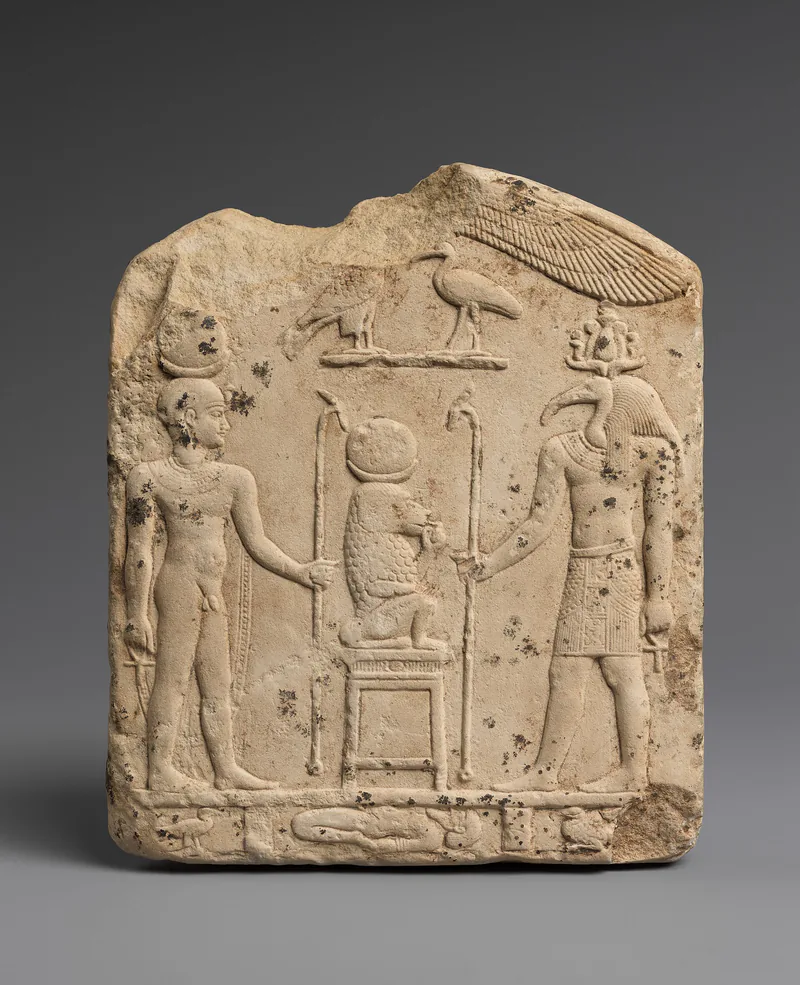
Garth Fowden's The Egyptian Hermes (1986) persuaded most scholars that the philosophical treatises belong together with a much larger "technical" Hermetic literature of astrology, alchemy and magic. The same authority who taught rebirth and the vision of God was also credited with lists of plants and stones, decans and talismans. The alchemist Zosimos of Panopolis, writing around 300 CE, already cites Hermes as an authority. The discovery of Hermetic texts among the Nag Hammadi codices, including the Discourse on the Eighth and Ninth, a Prayer of Thanksgiving and part of the Asclepius, showed that some readers used these writings in a devotional setting, perhaps in small study circles, although there is no evidence of an organised Hermetic church.
Gnostic movements and the Nag Hammadi codices§
The second great late antique current is the cluster of Christian and para-Christian movements that their opponents called Gnostic. Teachers such as Basilides and Valentinus in second-century Alexandria and Rome taught that the visible world was made by an inferior creator, the Demiurge, and that a spark of the true God was trapped in some human beings, who could be awakened by a saving knowledge (gnosis). Until the twentieth century these systems were known mainly from hostile church writers such as Irenaeus of Lyon, whose Against Heresies dates from about 180.
The discovery of the Nag Hammadi library in Upper Egypt in December 1945 changed the field. Its thirteen leather-bound codices, copied in Coptic in the fourth century, preserve dozens of texts such as the Apocryphon of John, the Gospel of Truth and the Gospel of Thomas. Scholars now distinguish currents such as Sethian and Valentinian Christianity, and some, following Michael Williams's Rethinking "Gnosticism" (1996), question whether "Gnosticism" names a single religion at all. In the third century the prophet Mani founded a dualist world religion that spread from Mesopotamia to North Africa and China, the most successful of the late antique revelations of light trapped in darkness.
Neoplatonism, theurgy and the Chaldean Oracles§
The philosophical backbone of late antique esotericism was Platonism. Plotinus (c. 205–270) taught in Rome that all reality flows from a transcendent One through Intellect and Soul, and that the philosopher can return inwardly to the source in contemplative union. His pupil Porphyry edited his treatises as the Enneads and doubted whether ritual could purify the higher soul.
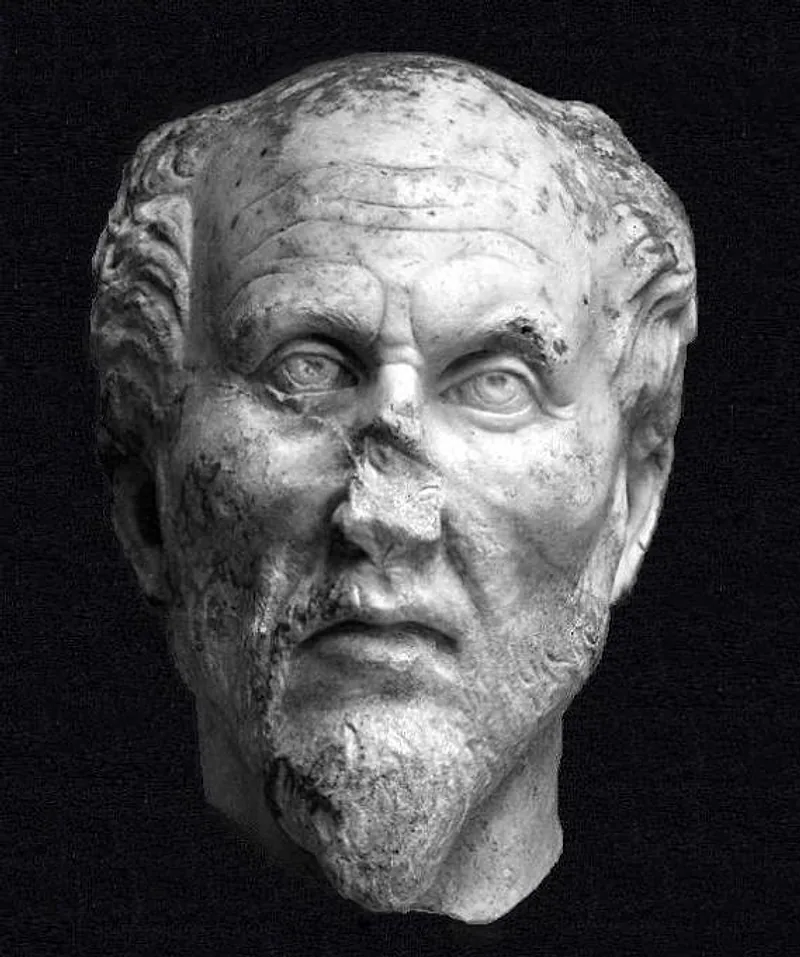
Iamblichus (c. 245–c. 325) answered that it could. In the work known as On the Mysteries he defended theurgy, "divine work": rites using names, symbols, stones, plants and sacrifices that the gods themselves had placed in the world as tokens (synthemata) of their presence. Theurgy did not compel the gods, he argued, but allowed the soul to be lifted by them. An important source for this ritual philosophy was the Chaldean Oracles, hexameter verses attributed to Julian the Chaldean and his son Julian the Theurgist in the reign of Marcus Aurelius, which later Platonists treated almost as scripture. The Athenian school culminated in Proclus (412–485), whose systematic theology and hymns joined philosophy and cult. The Neoplatonism and theurgy of this tradition passed into Christian thought through Pseudo-Dionysius and into Islamic philosophy through Arabic paraphrases of Plotinus and Proclus.
Ritual magic in the Greek magical papyri§
Alongside philosophy stood a living practice of ritual magic. The Greek magical papyri, mostly from Roman Egypt and dated between the second century BCE and the fifth century CE, are working handbooks containing recipes for divination, healing, protection, love spells, curses and the summoning of divine assistants. Many came from a single cache, sometimes called the Theban magical library, acquired in Egypt in the early nineteenth century and dispersed among European museums.
The papyri mix Egyptian, Greek, Jewish and Mesopotamian elements: Egyptian gods appear beside the Hebrew divine name Iao, angels and Greek deities. Their long sequences of vowels and secret names (voces magicae) are an important background to later grimoires. The so-called Mithras Liturgy describes a visionary ascent through the heavens that resembles Hermetic and theurgic ideas, which shows how blurred the line between "philosophy" and "magic" could be. Lead curse tablets from across the Mediterranean show the same ritual world at a humbler level.
Jewish and Christian currents of hidden knowledge§
Judaism and Christianity contributed their own forms of restricted or revealed knowledge. Apocalyptic writings such as the Book of Enoch presented secrets of heaven disclosed to ancient patriarchs. The Hebrew Hekhalot texts of Merkavah mysticism, whose dating is debated but which reflect late antique and early medieval circles, describe journeys through heavenly palaces and the use of divine names, while the brief Sefer Yetzirah explained creation through the Hebrew letters and numbers. The Testament of Solomon tied the biblical king to the control of demons.
Within mainstream Christianity, Clement of Alexandria and Origen spoke of deeper teachings reserved for the spiritually advanced and called the perfect Christian a true "gnostic". At the same time church writers condemned pagan theurgy; Augustine's City of God argued that its "gods" were demons. The destruction of the Serapeum in Alexandria around 391–392 and the end of public pagan cult marked the political defeat of these traditions, though not the disappearance of their texts.
How late antique texts survived§
The late antique corpus reached later readers by several routes. In Byzantium, Michael Psellus in the eleventh century preserved and commented on the Chaldean Oracles, and Greek manuscripts of the Hermetica survived in monastic libraries. In the Arabic world, Hermes became a prophet-sage associated with Idris, and astrological and alchemical texts circulated under his name, a story told in our article on the Middle Ages. The Latin West knew the Asclepius throughout the medieval period.
The decisive moment came in 1463, when Ficino translated the Greek Corpus Hermeticum for Cosimo de' Medici; it was printed in 1471. In 1614 Isaac Casaubon showed on linguistic grounds that the Hermetica belonged to the early Christian era, not to the age of Moses. Modern scholarship has completed that redating, but it has also shown that the Hermetica genuinely draw on Egyptian religious ideas, so that neither the old legend nor its simple refutation tells the whole story.
Frequently asked questions§
Did esotericism exist in late antiquity?§
Not as a self-conscious category. The word "esotericism" was coined only in the nineteenth century, and late antique Hermetists, Gnostics and Platonists did not see themselves as one tradition. Historians speak of late antique esotericism because these writings became the authoritative sources of later currents.
How old are the Hermetic writings?§
The Greek philosophical Hermetica are usually dated between the first and third centuries CE, although some material may be older. Renaissance readers believed they came from an Egyptian sage contemporary with Moses, a view refuted by Isaac Casaubon in 1614.
What is the difference between theurgy and magic?§
Iamblichus presented theurgy as divine work that elevates the soul through rites the gods themselves had given, and contrasted it with manipulative sorcery. Modern scholars note that the two shared many methods, such as divine names and sacred objects, so the distinction was partly a matter of intention and social status.
What is Platonic Orientalism?§
It is Wouter Hanegraaff's term for the belief, common from the Renaissance onward, that Platonic philosophy derived from older Egyptian, Persian and Hebrew revelations. It explains why late antique texts were treated as primeval wisdom.
Sources and further reading§
- The World of Late Antiquity — Peter Brown, 1971
- Hermetica: The Greek Corpus Hermeticum and the Latin Asclepius in a New English Translation — Brian P. Copenhaver, 1992
- The Egyptian Hermes: A Historical Approach to the Late Pagan Mind — Garth Fowden, 1986
- The Nag Hammadi Scriptures — Marvin Meyer (ed.), 2007
- Rethinking "Gnosticism": An Argument for Dismantling a Dubious Category — Michael Allen Williams, 1996
- Theurgy and the Soul: The Neoplatonism of Iamblichus — Gregory Shaw, 1995
- The Greek Magical Papyri in Translation — Hans Dieter Betz (ed.), 1986
- Esotericism and the Academy: Rejected Knowledge in Western Culture — Wouter J. Hanegraaff, 2012