Liber XV · History & Scholarship · Chapter IV: Periods & Movements
Esotericism in the Middle Ages: Magic, Kabbalah and Hermes
Esotericism in the Middle Ages: the Arabic Hermes, Latin translations, astral and ritual magic, alchemy, Kabbalah and the theologians who judged the occult.

Esotericism in the Middle Ages is best understood as the history of the occult sciences, ritual magic and mystical speculation between about 500 and 1500: the Arabic transformation of Hermes into a prophet of science, the Latin translations of astral magic and alchemy, the angel and spirit magic of clerical handbooks, and the birth of Kabbalah in Provence and Spain. These traditions were learned, often controversial and closely watched by theologians, and they supplied much of the material the Renaissance would later reorganise as "occult philosophy".
Was there a medieval esotericism?§
Antoine Faivre, who shaped the modern field, treated Western esotericism as a form of thought that crystallised in the Renaissance, and regarded medieval materials as important precursors rather than esotericism proper. Later scholars have been less strict. Wouter Hanegraaff and others note that the medieval period transmitted, and in many ways created, the occult sciences that later esotericists took for granted, and that medieval Jewish, Christian and Islamic thinkers developed their own theories of hidden knowledge, correspondences and spiritual ascent.
The question also touches the word "Western". Much of what reached Latin Europe was first developed in Arabic in Baghdad, Cairo or al-Andalus, and Jewish scholars were often the translators. Any history of medieval esotericism is therefore a history of exchange between three religions and several languages, as our survey of Islamic occult sciences shows from the other side.
Hermes in Arabic: the Islamic transmission§
During the eighth to tenth centuries, the translation movement centred on Abbasid Baghdad rendered Greek, Syriac and Persian science into Arabic. Astrology, alchemy and talismanic magic came with it, and many texts circulated under the name of Hermes. Kevin van Bladel's The Arabic Hermes (2009) traces how Muslim scholars turned the Greek god into an antediluvian sage and prophet, identified with the Qur'anic Idris and the biblical Enoch. The astrologer Abu Ma'shar (787–886) popularised a scheme of three Hermeses who preserved knowledge across the Flood.
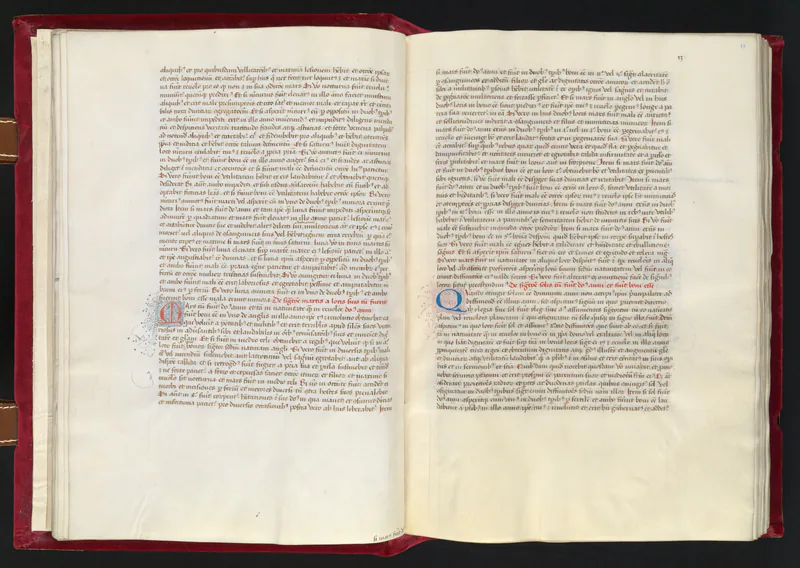
Arabic authors produced some of the most influential occult works of the age. The alchemical corpus attributed to Jabir ibn Hayyan, mostly composed in the ninth and tenth centuries, taught a theory of metals and a science of balance. The Emerald Tablet first appears in Arabic, in a book on the secret of creation attributed to Apollonius of Tyana. The Ghayat al-hakim, usually dated to eleventh-century al-Andalus, gathered astral magic, planetary prayers and talismans into a vast compendium, later known in Latin as the Picatrix. Philosophers such as al-Kindi wrote on the rays emitted by stars, words and images, giving magic a natural explanation. Mystical philosophers such as Suhrawardi and Ibn Arabi developed theories of light, imagination and correspondence that modern scholars often compare with Western esotericism.
Latin translations and the occult sciences§
From the early twelfth century, scholars working in Spain, southern Italy and the Crusader states translated Arabic texts into Latin. Robert of Chester's version of a treatise attributed to Morienus, completed in 1144, is usually counted as the first Latin alchemical text. Adelard of Bath, Gerard of Cremona and others translated astronomical tables, astrological manuals and books of talismanic images such as Thabit ibn Qurra's De imaginibus. The pseudo-Aristotelian Secretum secretorum, a mirror for princes full of astrology, physiognomy and occult remedies, became one of the most copied books of the Middle Ages. In 1256 the court of Alfonso X of Castile sponsored a Spanish translation of the Ghayat al-hakim, from which the Latin Picatrix was made.
These translations created a Latin culture of the occult sciences. Western alchemy flourished in the thirteenth century, from the experiments of Roger Bacon to the Summa perfectionis ascribed to "Geber", which the historian William Newman attributes to the Franciscan Paul of Taranto. Astrology was taught in universities as part of astronomy and medicine. The Speculum astronomiae, traditionally attributed to Albertus Magnus, tried to separate legitimate astrological images from "abominable" ones that addressed spirits, a distinction that shaped debates for three centuries.
Ritual magic and the clerical underworld§
Alongside natural magic stood a literature of ritual magic addressed to angels, planetary spirits and demons. The Ars notoria, attributed to Solomon and known from the twelfth or thirteenth century, promised knowledge of the liberal arts through prayers, unknown names and contemplated figures. The Sworn Book of Honorius, probably from the thirteenth or fourteenth century, described a rite for obtaining the vision of God and command over spirits. The Ars Paulina and Ars Almadel, the Catalan Summa sacre magice and the Solomonic books that would become the Key of Solomon belong to the same world.

Richard Kieckhefer has described a "clerical underworld" of literate men, minor clerics, monks and university students, who copied and experimented with these books. His edition of the fifteenth-century Munich manual shows conjurations for divination, illusion and erotic compulsion. The history of medieval necromancy is told from these manuscripts and from the trials and polemics they provoked. Sophie Page's study of the library of St Augustine's Abbey in Canterbury showed that monks could own magical texts alongside devotional works, often for motives they considered pious.
Kabbalah, mysticism and contemplative knowledge§
The medieval period also saw the birth of Kabbalah. The Sefer ha-Bahir, which appeared in Provence in the late twelfth century, introduced the doctrine of the ten divine powers later called sefirot. Kabbalistic circles in Girona and Castile developed it, and around 1280–1300 the Zohar appeared, a vast Aramaic commentary on the Torah attributed to the second-century sage Shimon bar Yochai and associated by most scholars with Moses de León. Abraham Abulafia (1240–after 1291) taught a prophetic Kabbalah of letter combination and meditation on divine names. Gershom Scholem's Major Trends in Jewish Mysticism (1941) remains the classic introduction.
Christian contemplatives such as Meister Eckhart and the anonymous author of The Cloud of Unknowing belong to the history of mysticism rather than esotericism, but they drew on the same Neoplatonic sources. The Catalan philosopher Ramon Llull (c. 1232–1316) built a combinatory art of divine attributes intended to convert Jews and Muslims; a large pseudo-Lullian alchemical corpus later grew around his name, and Renaissance thinkers read his art as a key to universal knowledge.
Theologians and the limits of licit knowledge§
Medieval churchmen did not reject the occult sciences wholesale. Most accepted that stars influence bodies and that stones and plants have hidden virtues, and they called the study of such powers natural magic. What they opposed was any rite that addressed spirits, because, in the analysis of William of Auvergne and Thomas Aquinas, any sign or invocation directed to a non-human intelligence implied at least a tacit pact with demons. This argument, described in our article on how theologians judged demonic magic, was formalised by the Paris faculty of theology in 1398, when it condemned twenty-eight propositions defending magic.
During the fifteenth century the image of the magician changed. Learned necromancy, once a matter of individual clerics, merged in the minds of inquisitors and demonologists with popular sorcery to produce the idea of a diabolical sect of witches, a development that led to the European witch trials. The same century, however, also brought the recovery of Greek texts that let humanists defend a purified, Platonic magic, the subject of esotericism in the Renaissance.
Frequently asked questions§
Did the medieval Church forbid all magic?§
No. Theologians distinguished natural magic, which used hidden properties of stones, plants and stars, from demonic magic, which involved spirits. The first was often tolerated or even studied in universities, while the second was condemned as idolatry and implicit pact with demons.
What was the Picatrix?§
The Picatrix is the Latin version of the Arabic Ghayat al-hakim, an eleventh-century compendium of astral magic usually linked to al-Andalus. Translated at the court of Alfonso X in the 1250s, it taught how to make talismans and address planetary spirits and became a key source for Renaissance magic.
Is Kabbalah a medieval tradition?§
Kabbalah in the strict sense emerged in Provence and Spain in the late twelfth and thirteenth centuries, although it drew on older Jewish mystical texts such as the Hekhalot writings and Sefer Yetzirah. Its classic work, the Zohar, appeared around the end of the thirteenth century.
Who studies medieval magic today?§
Key historians include Lynn Thorndike, Richard Kieckhefer, Claire Fanger, Benedek Láng, Sophie Page, Frank Klaassen and Jean-Patrice Boudet, whose work rests on the close study of surviving manuscripts.
Sources and further reading§
- Magic in the Middle Ages — Richard Kieckhefer, 1989
- Forbidden Rites: A Necromancer's Manual of the Fifteenth Century — Richard Kieckhefer, 1997
- The Arabic Hermes: From Pagan Sage to Prophet of Science — Kevin van Bladel, 2009
- Conjuring Spirits: Texts and Traditions of Medieval Ritual Magic — Claire Fanger (ed.), 1998
- Unlocked Books: Manuscripts of Learned Magic in the Medieval Libraries of Central Europe — Benedek Láng, 2008
- Magic in the Cloister: Pious Motives, Illicit Interests, and Occult Approaches to the Medieval Universe — Sophie Page, 2013
- A History of Magic and Experimental Science — Lynn Thorndike, 1923
- Major Trends in Jewish Mysticism — Gershom Scholem, 1941